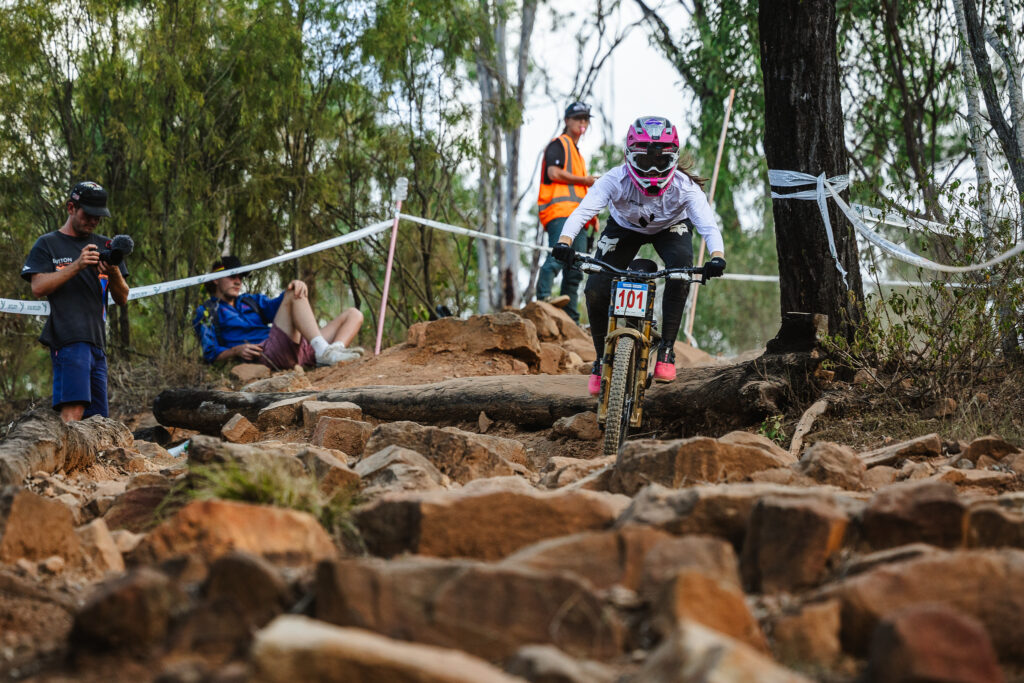

Emmerson Wilken takes us behind the lines for a glimpse of the teamwork, diplomacy, decision-making, and sheer physical grind that goes into building a Red Bull Rampage run long before the cameras begin to roll.
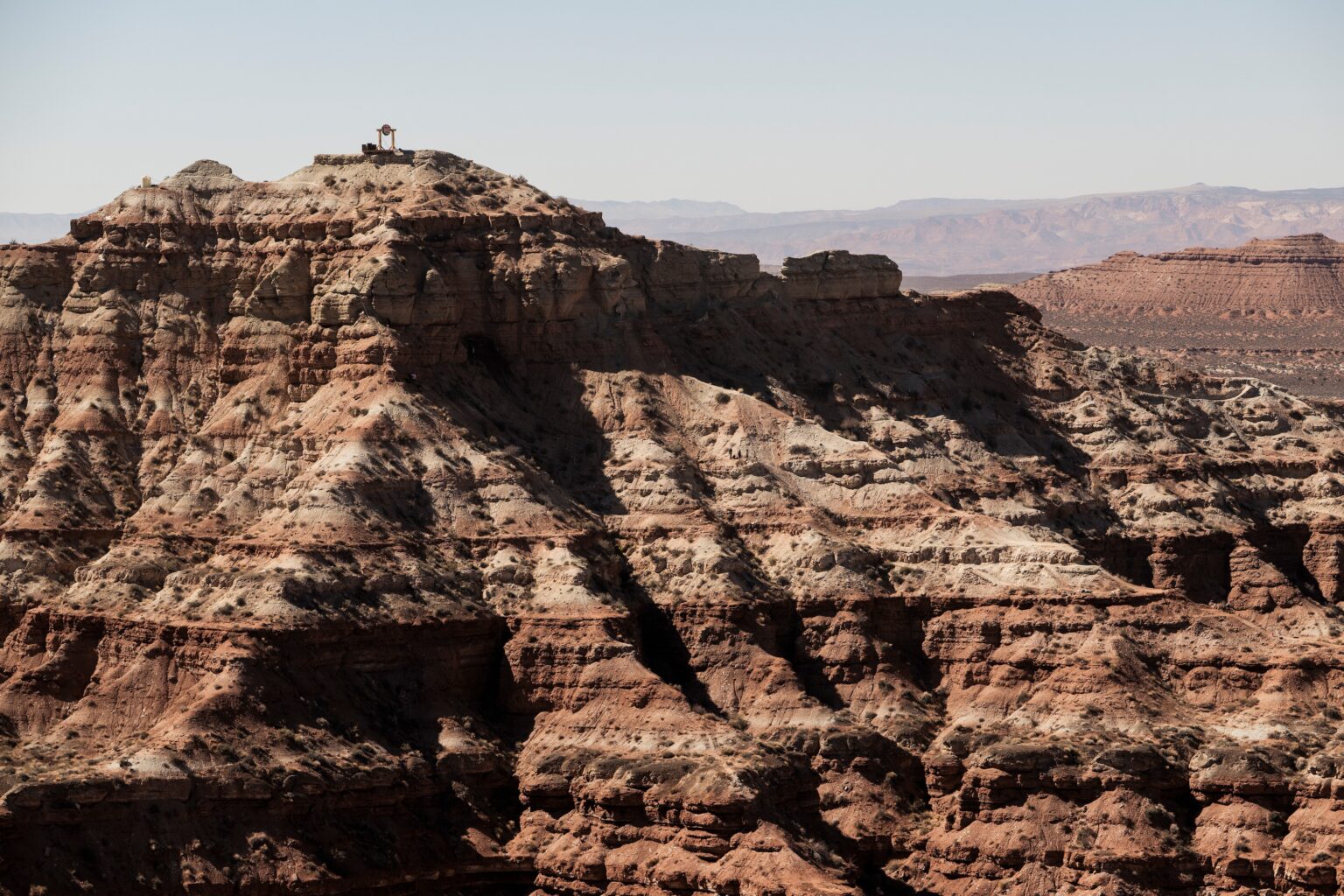
Red Bull Rampage is huge—the terrain, the tricks, and the risks riders take. On finals day, the spotlight is rightly on the athletes and the mind-blowing lines they throw down on Utah’s red dirt. But that’s not what truly sets Rampage apart in the mountain-biking world. What makes it unique is the Herculean effort riders and diggers pour into creating the theatre for this incredible spectacle.
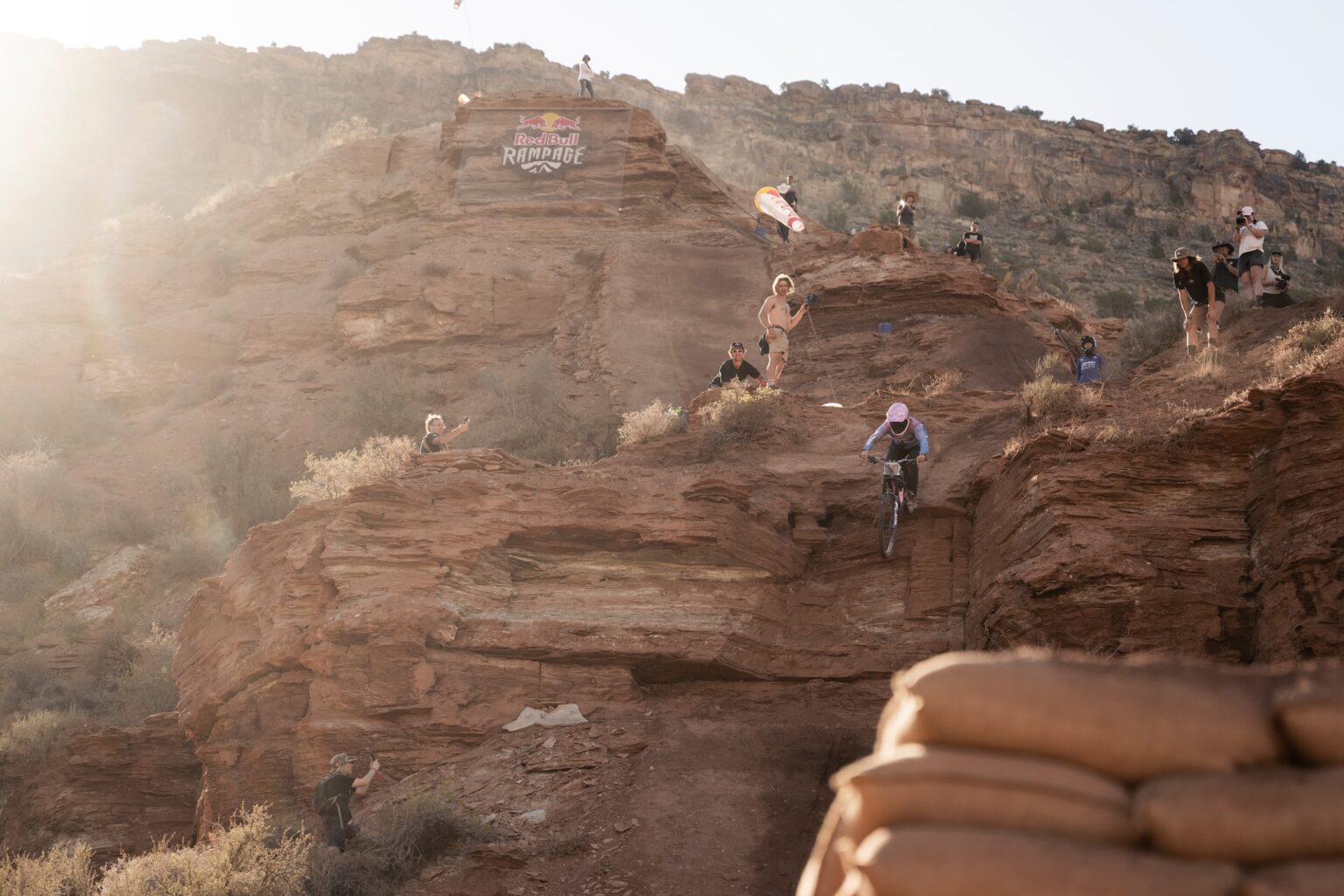
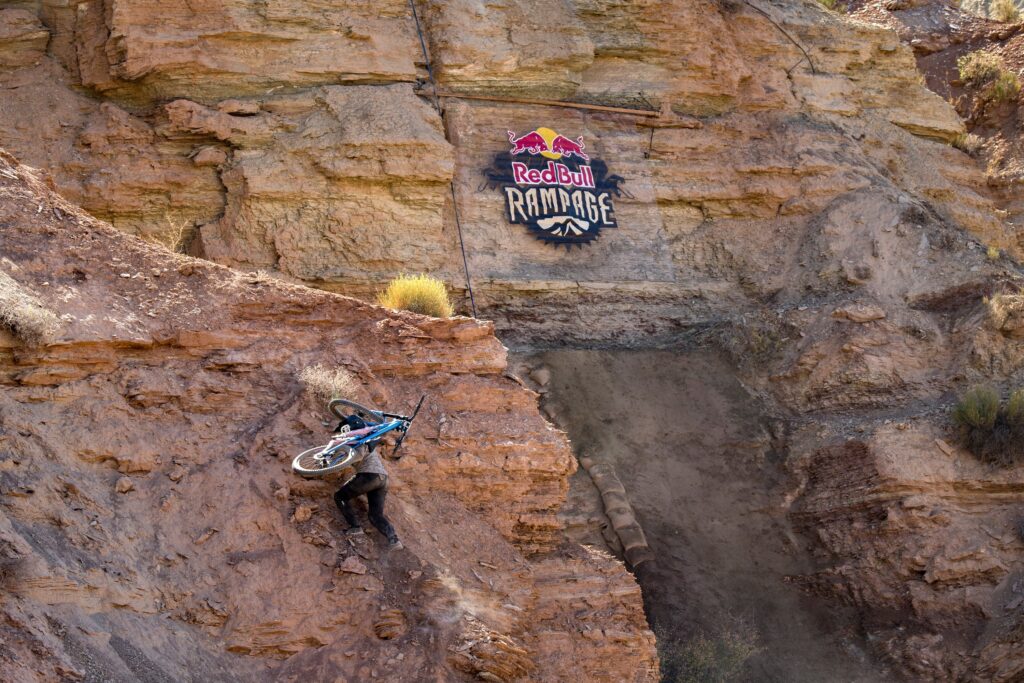
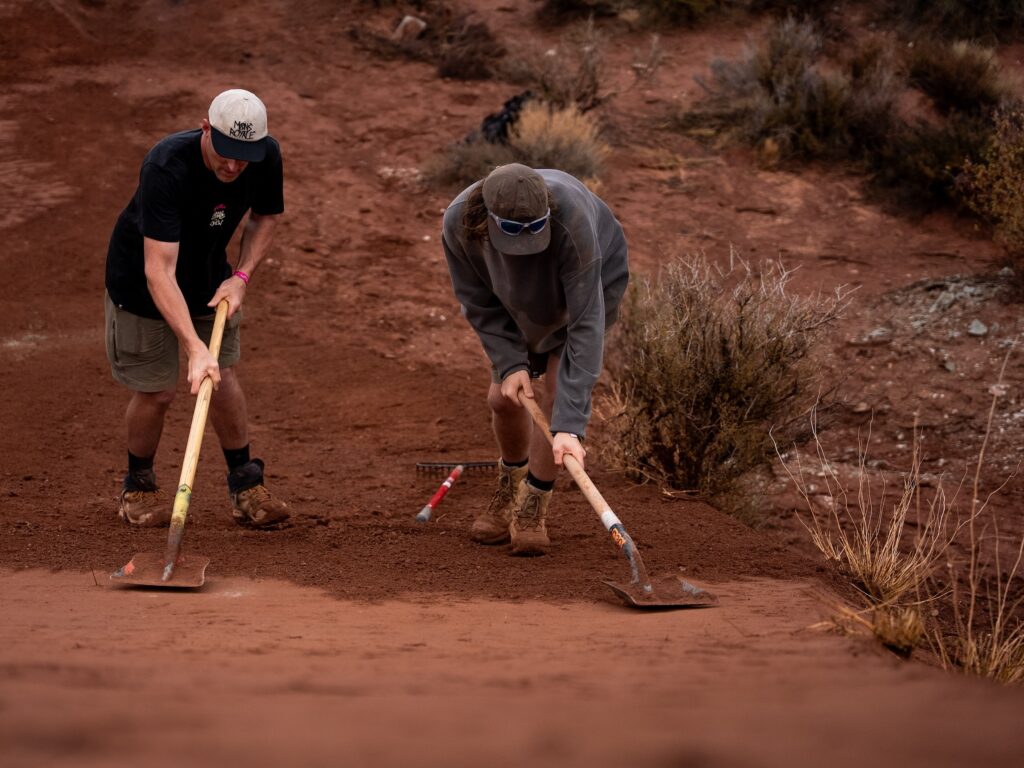
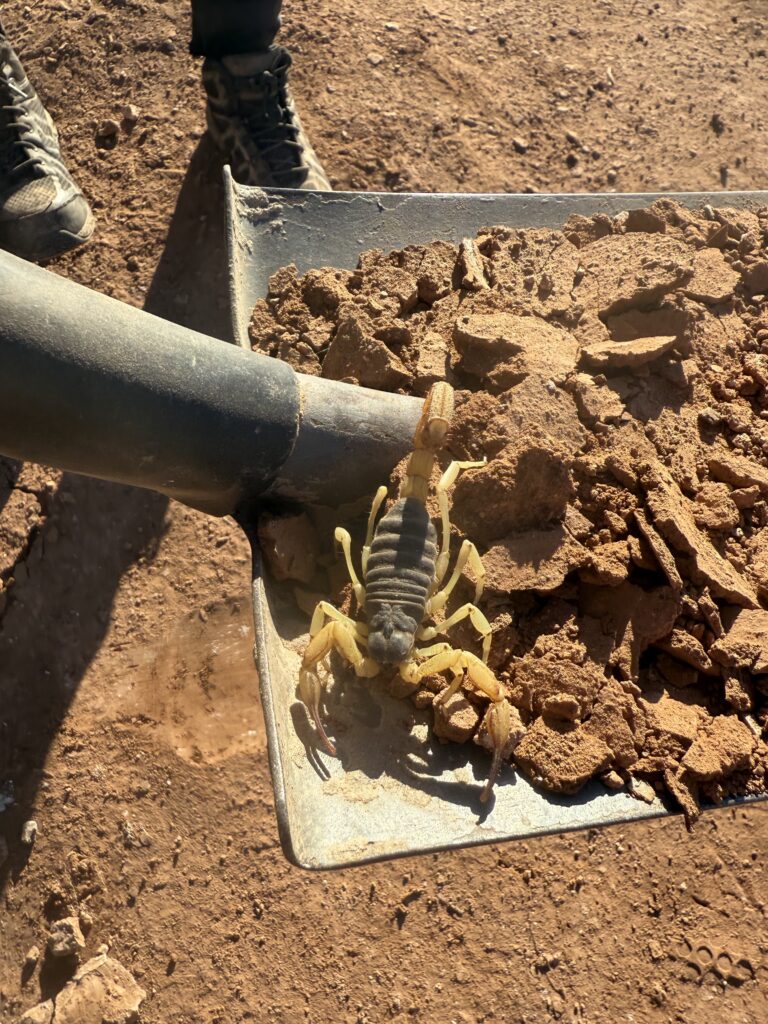
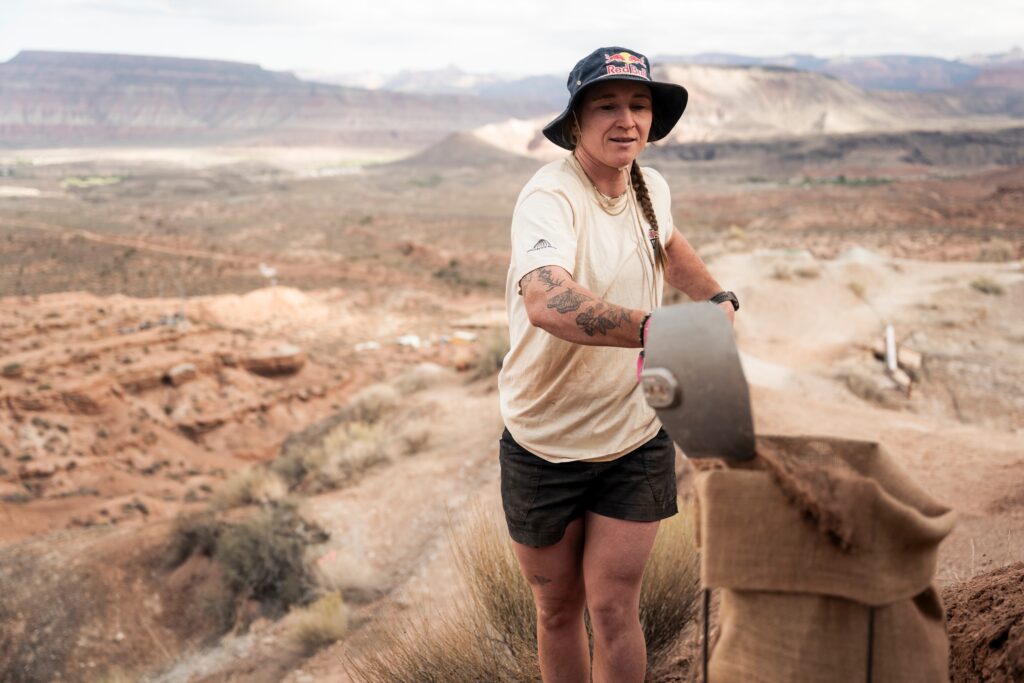
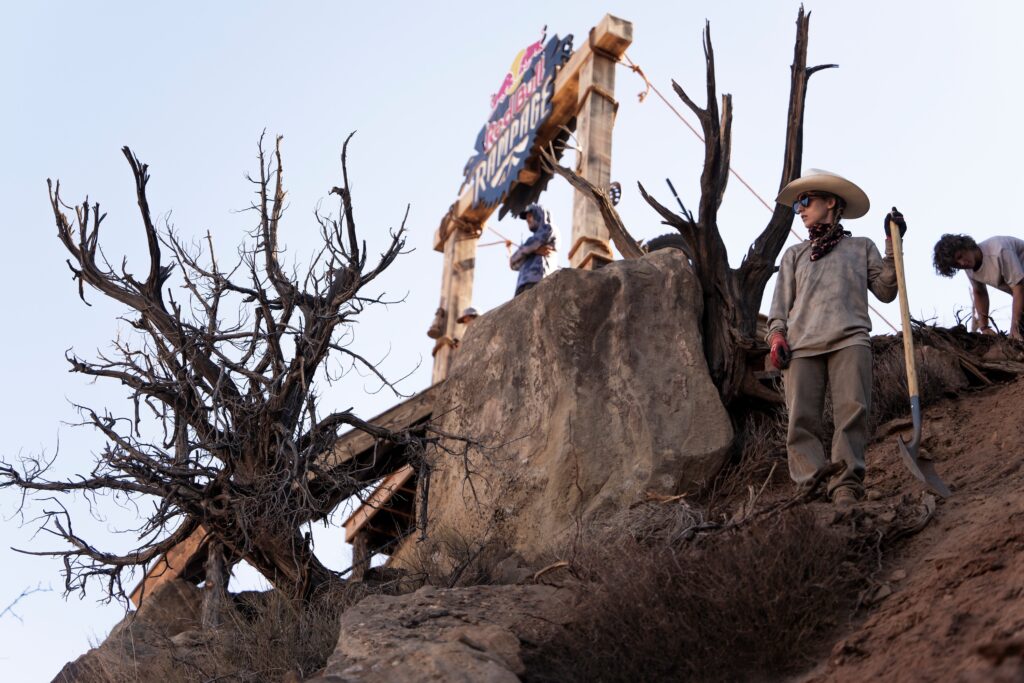
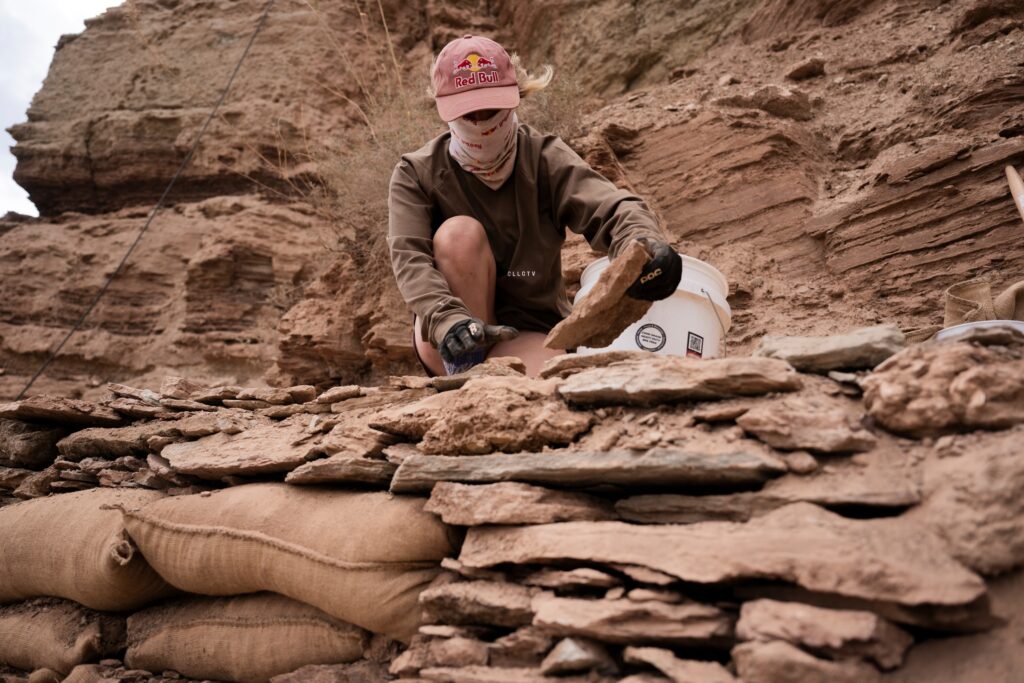
This isn’t slopestyle where you show up to a fully-built venue. It’s not downhill where tracks are curated and studied to the millimetre. At Rampage, each rider and a couple of dedicated diggers have just eight days to sculpt a line that will determine everything—success or failure, glory or carnage. It’s an unrelenting crucible of heat, dust, pressure, and logistics, where teams must navigate steep terrain, competing visions, frayed tempers, and the occasional scorpion.
Emmerson Wilken is a bloke who seems purpose-built for that environment. As warm as a Utah desert breeze and as chill as a winter zephyr off the Remarkables, he’s a mentor and a dad, the driving force behind Queenstown’s Dream Track, and an incredible rider himself with experience building trails for Crankworx and Natural Selection Bike.
The 2025 dig for Team Robin Goomes wasn’t his first Rampage rodeo either. Affectionately dubbed “Coach” by his crew, Wilken previously built for Conor McFarlane in 2017 and for Robin in 2024. So who better to dish the dirt on the frantic mix of hard yakka, epic terrain, terrifying features, and brutal timelines that define building a Red Bull Rampage line than the “Coach” himself?
Hi Emmerson. How many Rampages have you been a part of now?
It was my third one. My first was with Conor McFarland in 2017. It was weird because Kelly McGarry always asked me to come dig for him and every year I was like, “Next year, next year.” Sadly, we ran out of next years when he passed away. So when Conor asked me, it also wasn’t an ideal time, but I was like, “F*** it. I’ve learned my lesson.” Sometimes you’ve just got to make it happen.
How did you team up with Robin Goomes for the first ever women’s Rampage?
The Queenstown Bike Festival was the first place to hold a women’s slopestyle competition in New Zealand, so we’re pretty proud of that. Then when they started doing the Crankworx Rotorua slopestyle, that was awesome to be a part of. So when Rampage came around in the same year as the Crankworx stuff was coming about, it was in my brain, and I was like “I want to see what’s happening there and if I can help Robin”. So when Robin asked me I was quite excited about it because obviously I’ve been excited about women’s riding and progression for a long time.
I’ve known Robin since her early days of starting to learn how to flip. I was one of the coaches when she learned to flip here at Wynyard during a Mons Royale Future Ground Training Camp a few years ago. She stuck some of her first dirt to dirt flips at that event, so to come full circle and see her landing backflips at Rampage was pretty cool.
What was it like in that first year?
They were on a fresh site for the first year, so we could have three diggers and a rider where normally you’d have two diggers and a rider. That was because it was a fresh site and they only had eight riders competing so the overall digging group was smaller.
That was an epic one to be a part of and obviously Robin winning was pretty awesome—she won the first Crankworx women’s slopestyle and the first women’s Rampage in the same year, which is epic.
Is it fair to say your role is not just digging, but also a kind of support person?
The riders can’t just pick someone that’s good at digging—you’ve also got to have people that make the team dynamic really good. And I guess she picked me because I’ve known and ridden with her so long. That means I can give her speed checks and I can help her with the more mental side of it. The riders need that sort of person, because when you’re in a bit of a time crunch you need to decide whether to plan, practice or keep digging, so it’s important to have someone to calmly look from the outside in and help with some of those decisions. They’ve jokingly called me “Coach” for years (laughs) but I don’t know about that.
Tell me about the team?
Our other digger was Ronnie, who is a hell of a good digger and such an enthusiastic guy. He’s a hype guy—he kept us going on the long, difficult days. He always keeps things quite light-hearted, keeps the spirits up, which is pretty important sometimes.
A vital part of our team which you don’t see much was Robin’s partner, Kieran. He was really helpful in making sure we had everything we needed, like if your gloves were worn through, he’d be there in the afternoon with another set.
He was our cook too, so we always knew that when we’d come home after a massive day digging there’d always be really good food waiting for us. He was so important to keeping things running smoothly behind the scenes.
"If you just watch the comp, you don't get the scale of the work and everything that's gone into it. And even when you watch it, there's so much that happens outside of that that you don't see. "
We also had Martha Gill as our media person on the hill the whole way through the event to show people what happens before the event. If you just watch the comp, you don’t get the scale of the work and everything that’s gone into it. And even when you watch it, there’s so much that happens outside of that that you don’t see.
I think Robin put together a good team. It was the same team as last year and obviously when Robin asked us, we said yes. Not only was it the same team, but we somehow kept everything the same: the same house, in the same rental vehicle, everything. It was kind of by chance, but it was also like, if you’ve got a winning formula just leave it the same.
What was it like at the venue this time around?
Yeah, so I guess thinking last year was slightly different to this year because it was so hot last year, just like 40-plus degrees Celsius most days. Whereas this year was pretty cold and rainy—we even had snow on the hills one day which is not what you’d expect in the desert.
How did the weather affect the digging?
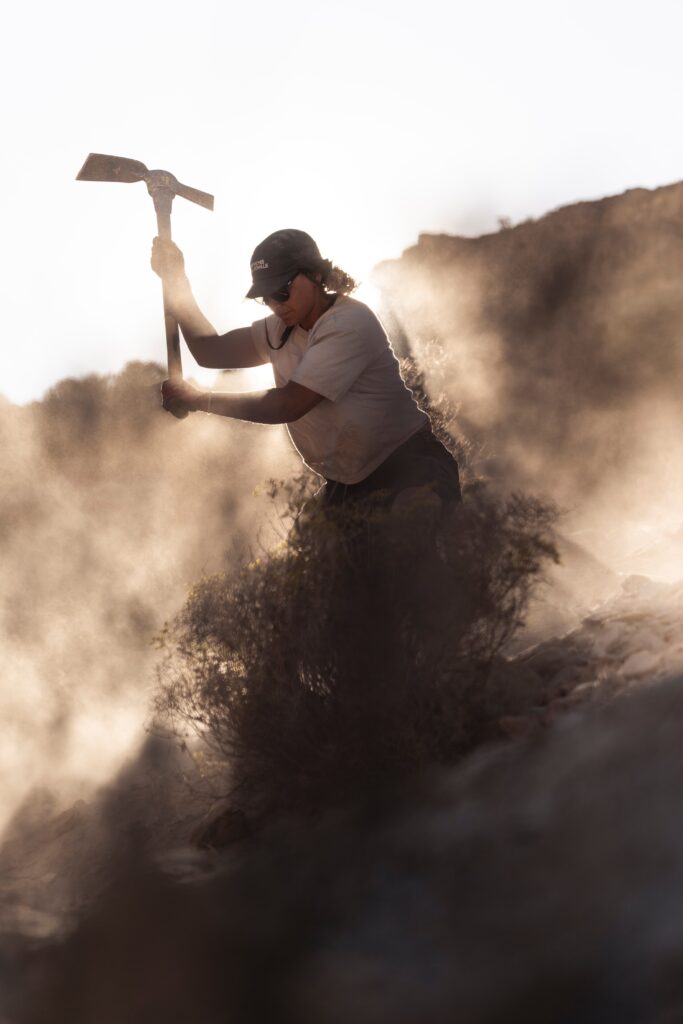
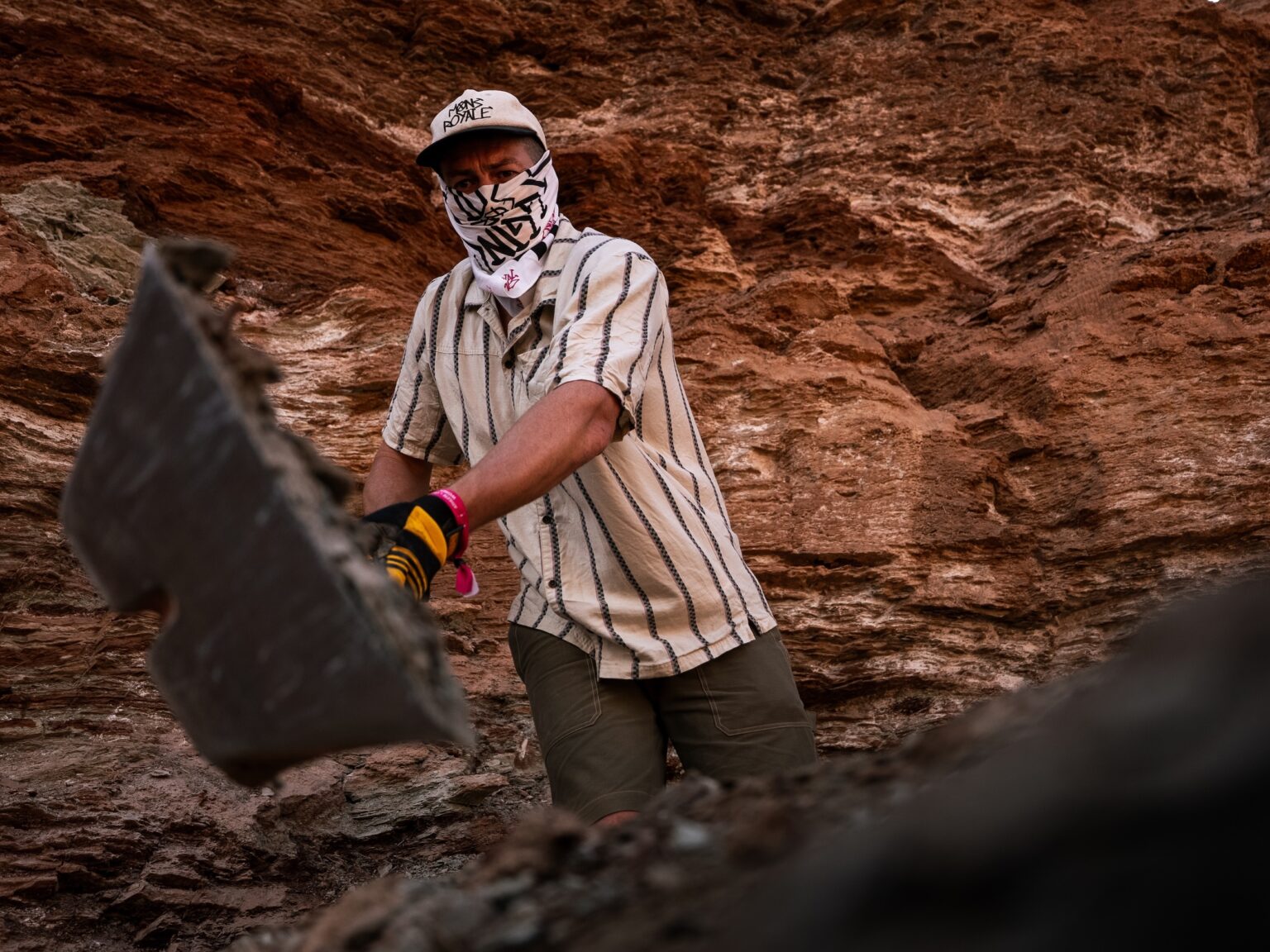
The rain makes the dirt easier to work with because it molds together and shapes really nicely, but it also makes it heavier. A lot of people say it’s an advantage, but when you have water on the end of a hose, you almost don’t need rain.
What’s so nice about that dirt there is it’s so light. And that means you can move big quantities of it and not get as tired because it just weighs less per shovel full. In 2024, it was incredible how much dirt you could move. Whereas this year it was so much heavier and so much more taxing on the body.
The dig windows are pretty tight for Rampage. How do you approach the planning and building?
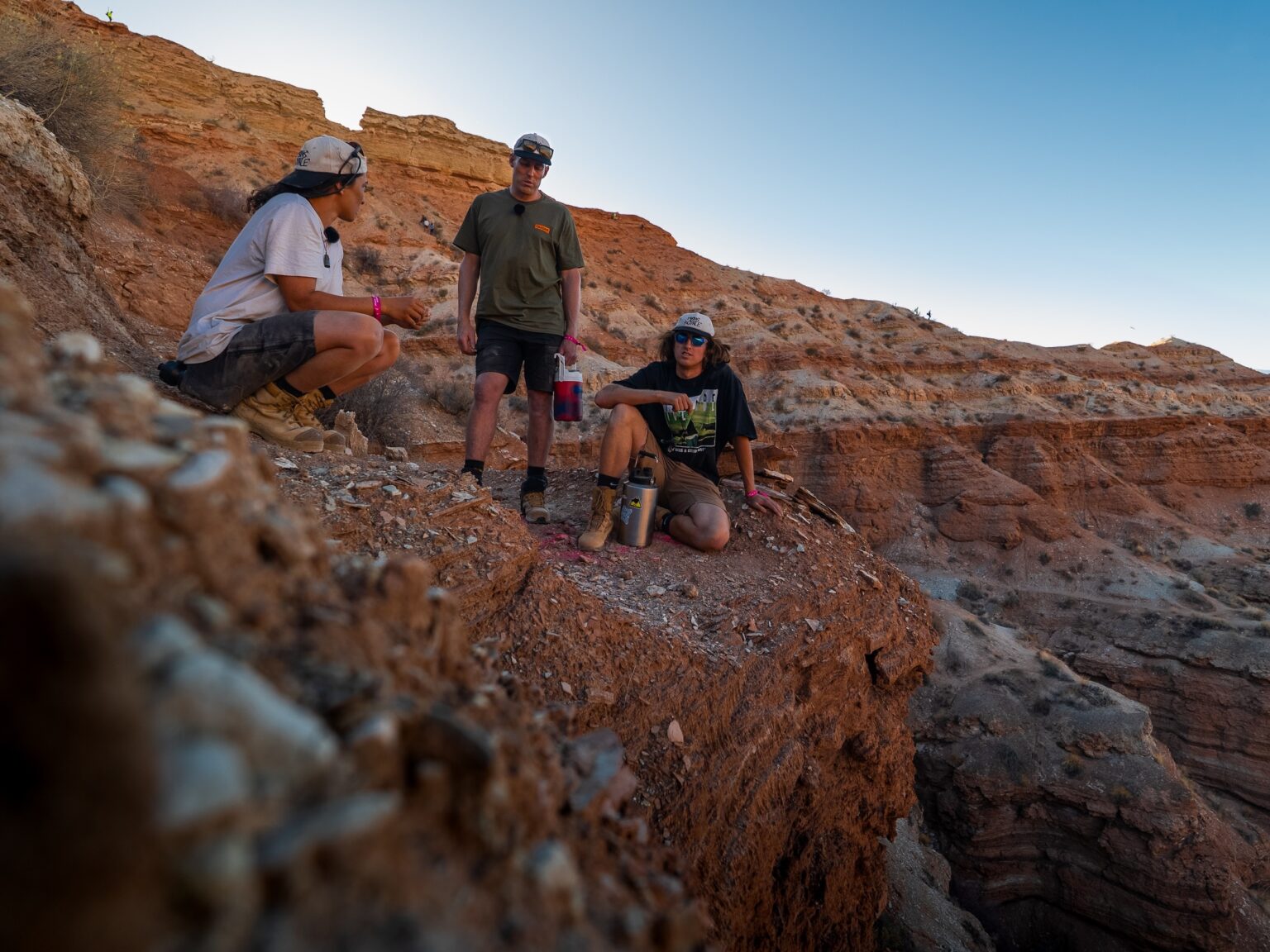
Day zero you go out and do a “Scope Day”. You can’t do any digging that day, it’s just about walking the mountain for a few hours and figuring out where you want to go. Some athletes use the Scope Day as an opportunity to find the gnarliest line down the hill and then other athletes, like Robin for instance, will have certain tricks they do to pull off, so for Robin we’ll find features on the hill we can link together to make those tricks a reality.
And then once you’ve found a line you’ve got to estimate how long it’s going to take you to build features. You can’t build too many big features because you’ll run out of time unless you have other teams to team up with.
So, that Scope Day is quite an important one for planning and figuring out where you want to go and what’s achievable in the amount of time you have.
In 2024, because we were in a new area without any established trails, some of the teams got a bit lost about what they wanted to do, what side of the hill they wanted and who they wanted to team up with—looking at a blank slate and being able to imagine features is quite difficult for some people. But because Ronnie and I do trail building for work—this is the sort of thing we do day to day—it came a bit easier. We can look at a site and be like “Yep we can put a jump there and it’ll take us two days to build it.”
But this year we went to a site that obviously had features on it already, so it was easier to envision the way down. Everybody was able to make use of the previous lines and try to add something fresh or just change it up to suit their style. It meant the creative side came out a lot more this year, which is quite cool. And then obviously, quite early on, people could start teaming up because they had a better idea of where they wanted to be and how it all works.
How does the collaboration between different teams work?
Pretty much from Scope Day, we had three of the girls teaming up most of the way down the hill. We’d figured out a line down about three quarters of the lower part of the hill and it was just the top part of the hill that we were unsure about.
Then we came across Casey Brown and Hannah Bergemann. We were looking at a big drop and it looked like a cool way down the hill and they were searching for people to team up with so they were like “You wanna join us for this?” And we’re like “Yeah yeah let’s do this!”
So basically Casey ended up coming down from top to bottom with us all the way, which was a relief because we suddenly had six people to finish the line.
And then we also had Hannah’s team and they were keen to do that top feature as well, so that’s another three people for that feature. And then a couple days in, Harriet Burbidge-Smith (Haz) asked if she could join in on our lower section because it was so close to our line.
That’s why it’s vital for the athletes, builders and different teams to figure out where to go in the first few days—sometimes teams will share a take-off or a landing, but sometimes you’ll have a different vision of how you want it to ride or which direction it needs to go, so you have to make it work for everybody that wants to share that feature.
At the bottom of the hill there was a big trick jump, which we wanted to get to, but about nine of the 12 girls wanted to use it and they all wanted different things from the jump—some wanted it to be a steeper trick jump and some wanted it slightly mellower. So we decided to go in a different direction and finish more in the centre of the course rather than at rider’s right, where most of the girls were going to go, so we could build a trick jump that suited what we were after. Which was cool because we had three teams—Haz, Casey and ourselves—so we could finish a jump that would be unique to the three riders.
What was the main focus of the build for your team?
One of the things Robin really wanted to achieve this year was a step-down flip because it’d never been done in competition by a female before. However, during Scope Day we couldn’t actually find anywhere really good to put it in—we were at a zone we could have done it but it would have been a kind of add-on in a weird sketchy place. But then after we decided to change direction we found a spot that worked perfectly. And the other girls were keen on it too because it meant less conflict with the other riders.
Were there any difficulties around parts of the line you were sharing?
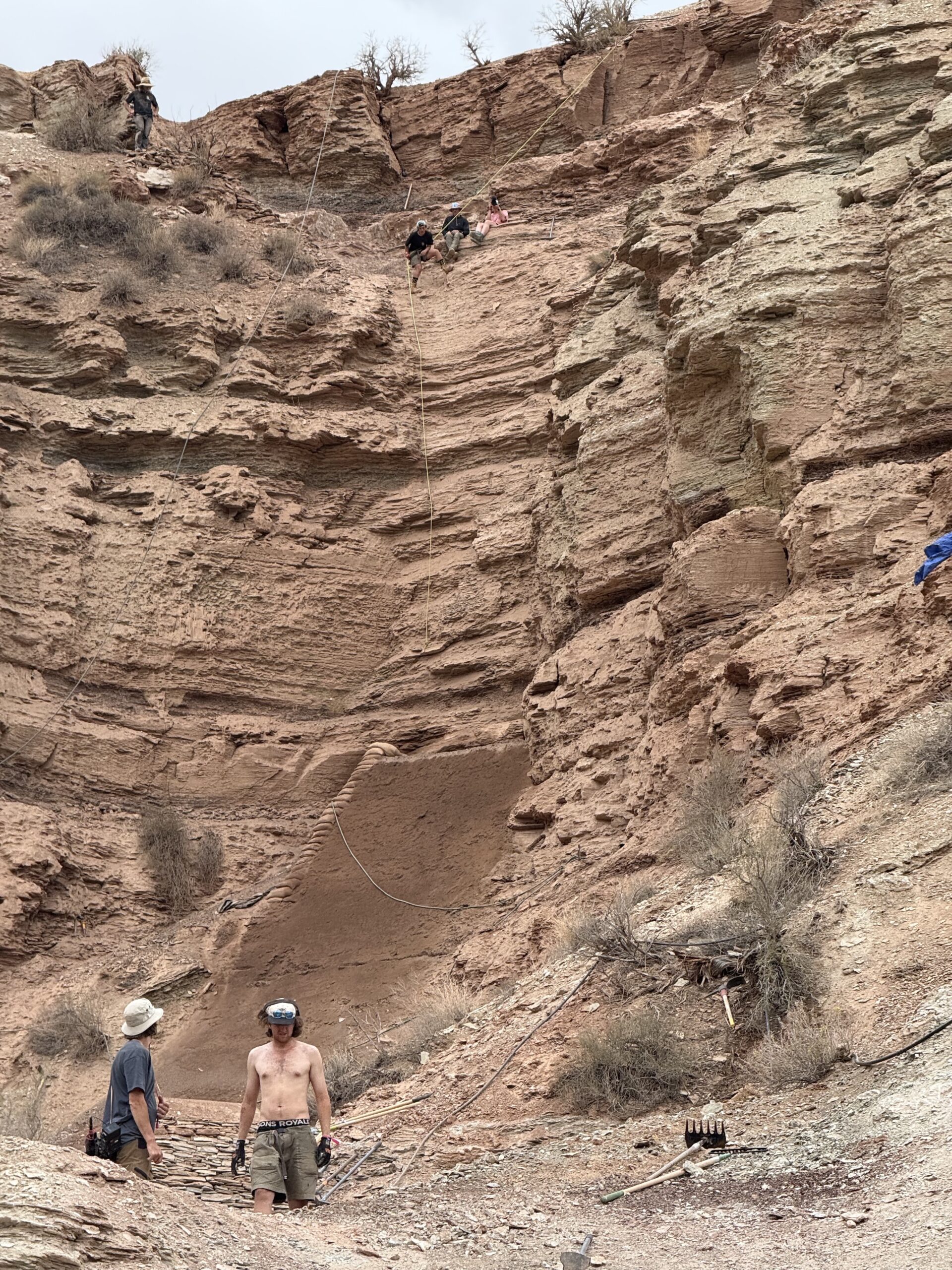
After Casey crashed on the top feature, we realised the build wasn’t quite right. I felt bad as I’d been so busy on the rest of the line that I hadn’t seen what all the crews had been doing up there. They did figure out a way to make it better, but we didn’t have the time for it. All three of our team all had the same thought and didn’t want to see Robin going down that drop, so needed another way down the top. Luckily Haz had already teamed up with us on the rest of the line so allowed Robin to use her top feature.
They tested it for the first time the afternoon before the final. Haz did the first run and crashed. Robin did a run and cleared the drop, but had way too much speed to get into the next feature Haz’s team had built. The only option was to change a part of that line to make it work.
Problem was it was about 5.30pm on the night before finals. So we ran down the hill, got some tools, and ran back to the top and dug furiously until 7.30pm, which was the official tools down time and well after dark.
Luckily you have to be on site at 6am on finals morning and can dig until 10.30am for an 11am start. So we ran up the hill in the morning and dug our hearts out again. Luckily both Casey’s and Haz’s teams came up to help even though the girls couldn’t compete after their crashes. They saved the day and helped us finish the line just in time for Robin to test it once before her finals run.
It was super stressful, but we were so thankful the other teams came up to help get a line going for Robin.
From a physical point of view, how do you manage lots of consecutive days of digging in the desert?
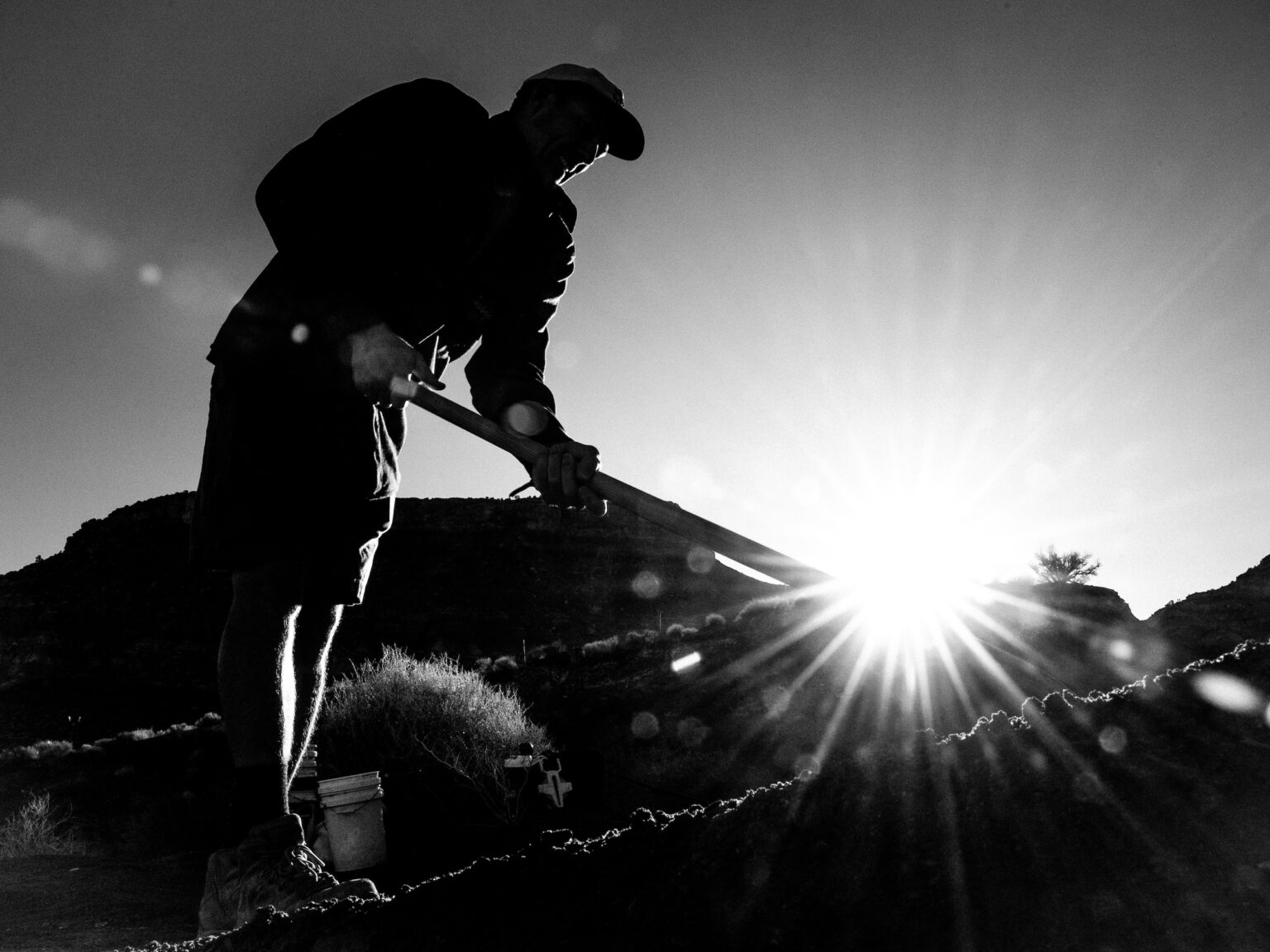
You just graft away. You kind of get there as early as you can to try and work in the shade in the morning and then in the day you go for lunch when it’s normally at its warmest and you go back and find the shady spots in the afternoon again. Yeah, it’s about conserving energy in the right way. So, probably wasn’t as vital this year with us getting colder temps, but last year it was, you know, you just get drained by the heat. So, you kind of dig into areas where we are in the shade as much as you can.
Obviously, I do a lot of training just to get fit and strong even before going over because we’ve come out of a winter where I haven’t been digging or riding much. So I’ll do a bunch of training just to try to be as prepared as possible.
Were there any other considerations around building Robin’s line besides the features she wanted?
Part of our tactic this year was building a line that was out of the wind. The prevailing wind kind of came from the rider’s right, so we built most of our line on the rider’s left of the ridge. We wanted to shield the line from the wind because we found last year that wind very much dictated when you could ride or when you could practice. That’s why most of the girls didn’t do a second run, because it just got so windy. It worked out well because it was windy on the morning of the competition and basically only Robin could do any practice. A lot of the girls had to almost drop into their Rampage run cold only having practiced it 24 hours before.
That’d be incredibly tough—dropping in without a lot of practice.
It’s one thing riding it, but if you want to do tricks on something, you’ve got to be so accustomed to it. The big thing with Rampage is that you have to brake so much between the different features because it’s so steep. That makes the braking zones between features just so vital for speed control and that’s something you really have to practice.
Beyond the builder-team aspect of it, which is unique to Rampage, there’s also a lot of cross-team collaboration. How do you make that collaboration work when there are multiple teams using the same areas?
That’s probably one of the toughest parts, to be honest. Last year the site was a lot narrower, so most of the teams came down through the same area. And there was one area where all the different teams were trying to criss-cross the same region in different directions and building their own jumps.
On Scope Day you could see there was going to be an area where lots of teams were going to converge, so you kind of watch what they do and then you meet them in that area when they’re there so you can have an open conversation so everyone’s on the same page.
Was there much conflict and how did you deal with that?
There was a bit of conflict. And it’s tough for everybody involved, because everyone’s there to try and do well. And it is a high stress situation for the whole eight days of digging and then competition day is pretty stressful for everybody involved—your body is tired, you’re mentally tired, there’s the stress of the testing coming up, and you sometimes have too many people trying to try to make decisions or trying to chime in at the same time.
Last year we just got Robin to leave. I just told her “There’s no point in you getting worked up about this. I’ll sort out some sort of a solution.” So I spoke to the other teams and we did come to the solution so it was good.
It was just a matter of realising that everybody’s stressed and everybody wants their perfect way down the hill but everyone needs to compromise a bit.
Does that sort of stress affect Robin’s riding?
In any competition, never mind one where your actual life’s at risk, the stress around things having to be right for when you compete is mega, you know. And unless you’ve had something like that before yourself, it’s hard to comprehend what they’re going through. I mean I’ve had it in a smaller circumstance personally and I’ve also just been around competitions like Crankworx so much that I’ve just seen how different athletes deal with it. Some athletes are pretty good at dealing with stress and some are more affected by it.
With Robin, the build up to the main day can be stressful but then on competition day she’s so good at switching off when it’s her time. When her name’s called and she’s got to drop, she can just switch it all off and just focus on the task at hand.
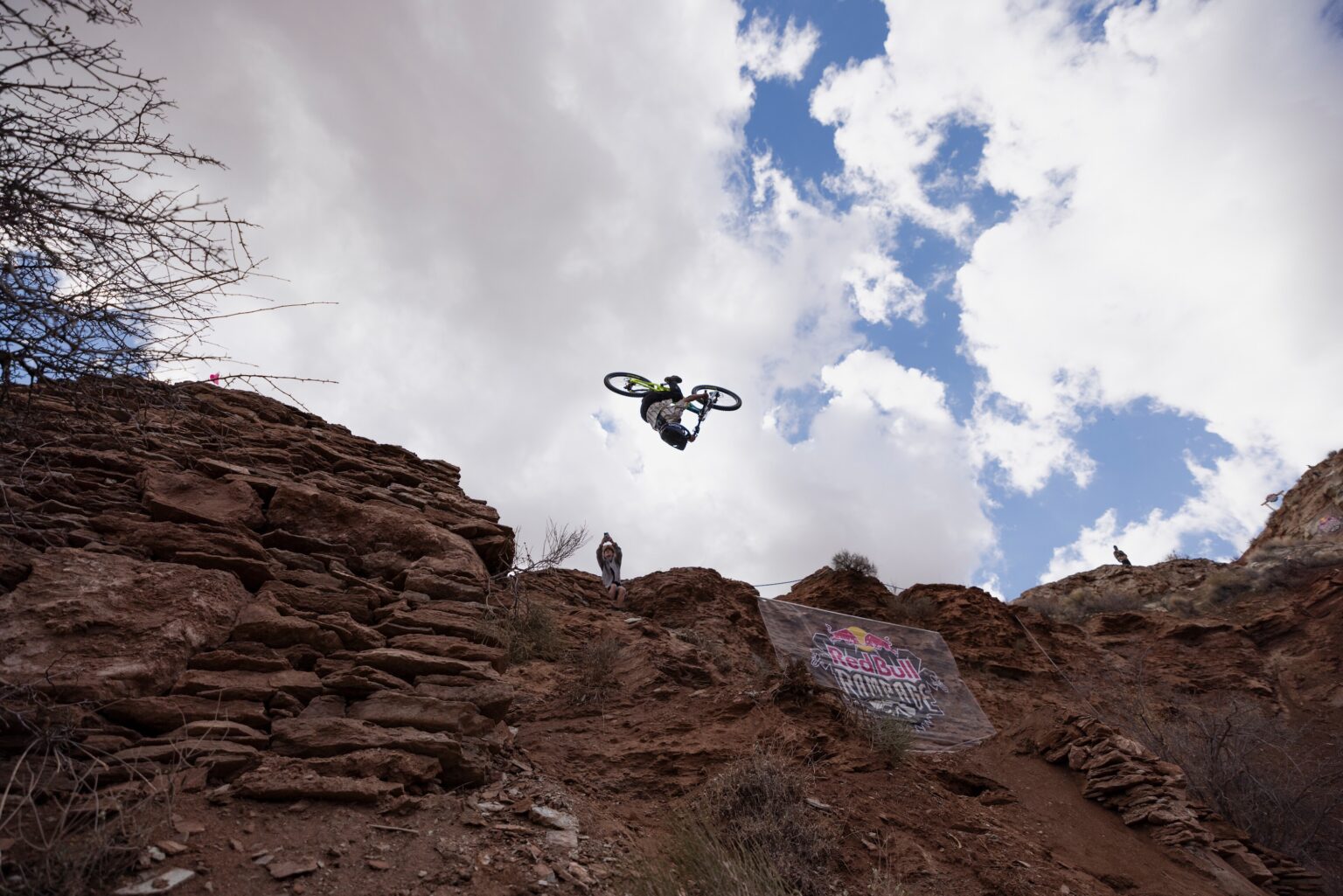
Do you get nervous when it comes to finals?
Massively. Oh, massively. We all know the risks that are involved. Any of those points you could get it wrong. Like we’ve seen this year, there were some terrible crashes and life-altering injuries. And there’s a high risk of that happening to any of those girls or guys. It doesn’t matter what tricks they’re trying to do.
On finals day, we’d be at the top and I’d just be talking to Robin trying to keep her calm. We’d always do visualisations of her run because when you’re in that zone it’s easy to forget where your braking points are, or how much to brake, or what trick you’re doing on what jump. So we just sit there and do a verbal run through of her run and she visualises it as she goes. That’s what helps her keep calm and keep it all together.
Last year the camera guy was behind me when she dropped and without realising it I was talking through all her visualisation cues as she was doing the run—I’m like “Okay do the flip” and commentating all the way down not even realising it.
"I went too overboard and I started feeling light headed and getting vertigo. I was like 'Hang on, I'm on top of the cliff, I better sit down.'"
This year there was a section of the hill where I was standing with a GoPro but the camera went into auto shutdown when she was about to drop. I hit the button and didn’t make a noise and I was like “Oh s*** it’s turned off and she’s coming.” I’m trying to turn it on and I was like, “I don’t know if this is running now or not, but I’ll point in that direction.” All the way through her run, you could just hear me yelling on the GoPro doing a full commentary. It wasn’t even facing the right direction half the time.
But then when she lands at the bottom, it’s just, oh man, the rush that you get … even just as a teammate, it’s so intense. I just scream and holler and shout. Actually I went too overboard and I started feeling light headed and getting vertigo. I was like “Hang on, I’m on top of the cliff, I better sit down.”
It must be just immensely satisfying seeing Robin come down the hill, nailing the run, everything having worked perfectly.
Like, yeah, it’s pretty good. It’s pretty good. I guess because I’ve had that experience of a rider crashing out, I also know it’s such a possibility. So when she does make it to the bottom clean, it’s such a relief. For one, she’s achieved what she wanted to achieve, and secondly, she’s come out unscathed.
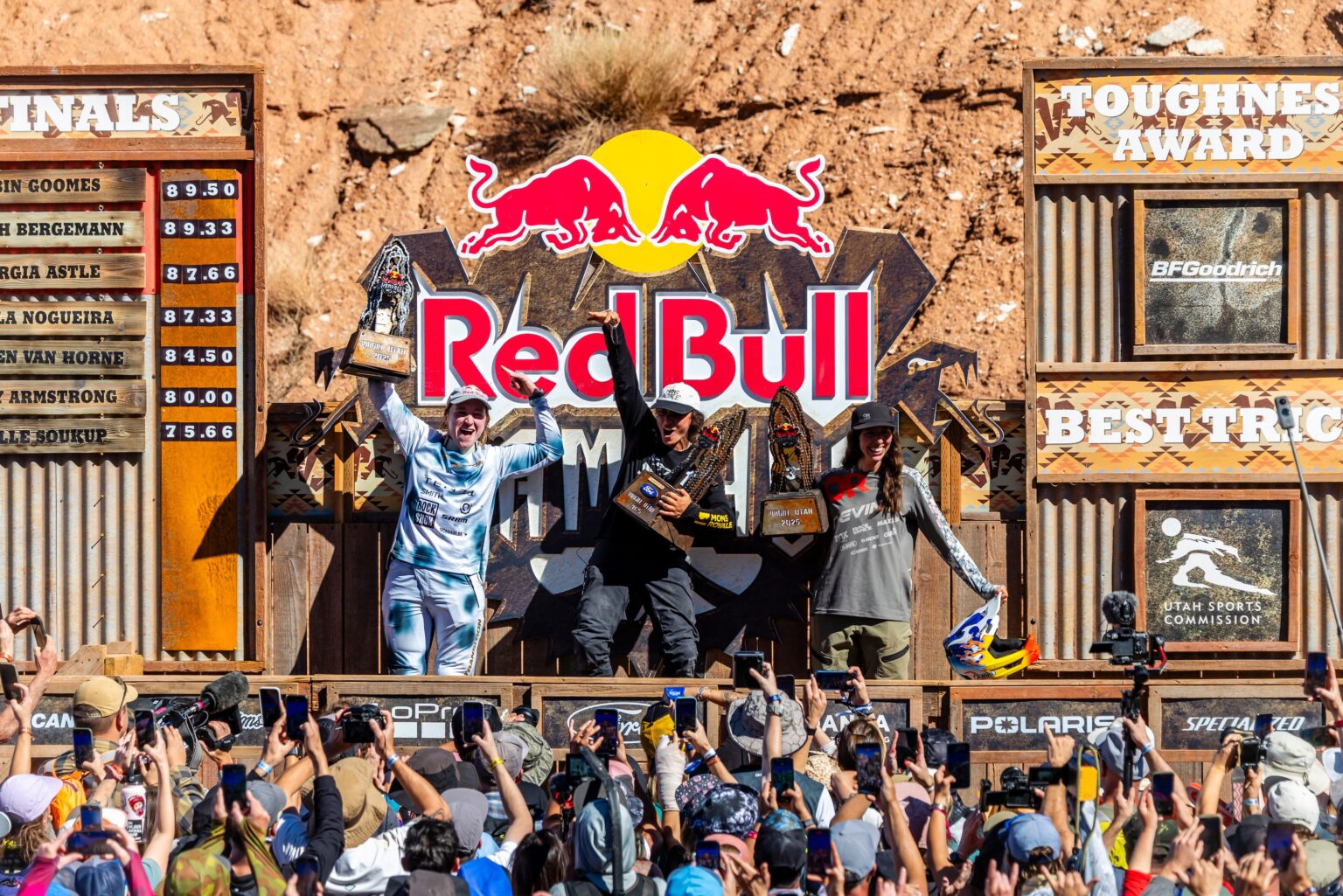
What’s your favorite moment over that week or so during the whole process?
I mean it’s hard not to say that final run where she gets announced first. You know, like obviously that’s an easy one to say, but it’s such a combination of not just that moment, but the whole time leading into it.
But I guess a big one for me is the day Robin guinea pigs all the features. You know, you’ve built this thing, it’s ready to ride but those first hits … it’s such a stressful situation. And then when it works out, it’s so rewarding.
And then finals day, that’s just a bigger version of that same thing—we built all these features, they all work and not only does your rider like it but the judges and the crowd like it too. And then, I guess in the last two years it’s also been that moment where the score gets read out and that satisfaction that Robin’s won and everything that’s come together to that point.
So do you think you’ll be back for another year?
Probably …Yeah. (laughing) Robin’s asked me already and I was like, “Probably, yeah.” I’ve left a bunch of my gear out there, so my tools, my boots and all my s***’s still there.
The year I went with Connor, I found that I didn’t really like the shovels they have in America—there’s not enough curve to the shovel head, which means, as a tall guy, you have to lean over heaps. So I brought a shovel that I like from New Zealand. There’s no way I can bring them back and there’s no one to leave them with, so we decided to bury them there. So we dug a big grave basically and marked a little waypoint so we can find them next time.