
As Ellie prepares to step into elite World Cup DH, she tells us about what nearly derailed her racing season and how a shift in mindset made all the difference.
Ellie Hulsebosch grew up in the classic Kiwi chaos of too many sports and not enough weekends, chasing her brother, defying anyone who told her she couldn’t do something, and hunting for that hit of adrenaline that came from two wheels pointed downhill.
There’s a clarity to Ellie and an honesty that feels rare in a sport built on bravado. She talks about racing the way some people talk about growing up: messy, thrilling, full of gut checks and small victories that don’t show up on results sheets. And that’s because she has grown up racing, with all the usual ups and downs, but a lot more pressure. From kids’ loops in the Redwoods to the white-knuckle intensity of World Cup downhill racing, her rise has been a series of sharp corners, sometimes railed, sometimes taken too fast. But somewhere among the crashes, the podiums, the nerves, the self-talk, and the long flights back to New Zealand, she found a philosophy to compliment her drive and speed—one corner at a time.
As Ellie prepares to step into elites—still 18, still smiling, still as competitive as ever—there’s no big team switch, no dramatic reset, just the same bike, the same crew, and a rider who’s figuring out how to be both a hammer and a nail, sometimes in the same week. What follows is the story of how she got here, what nearly derailed her, and why she’s riding stronger than ever before.
Hi Ellie. First of all, tell us how you got into mountain biking?
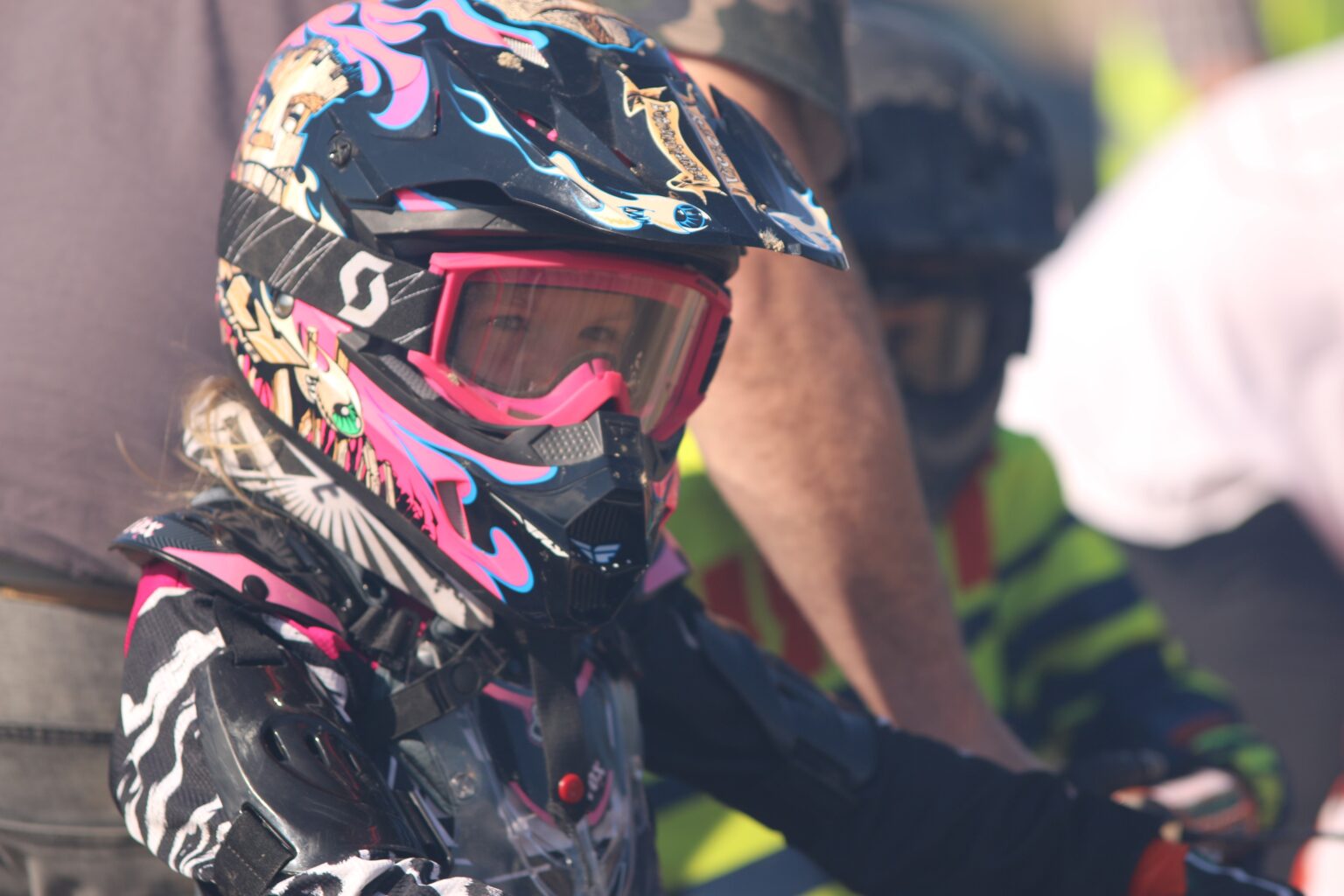
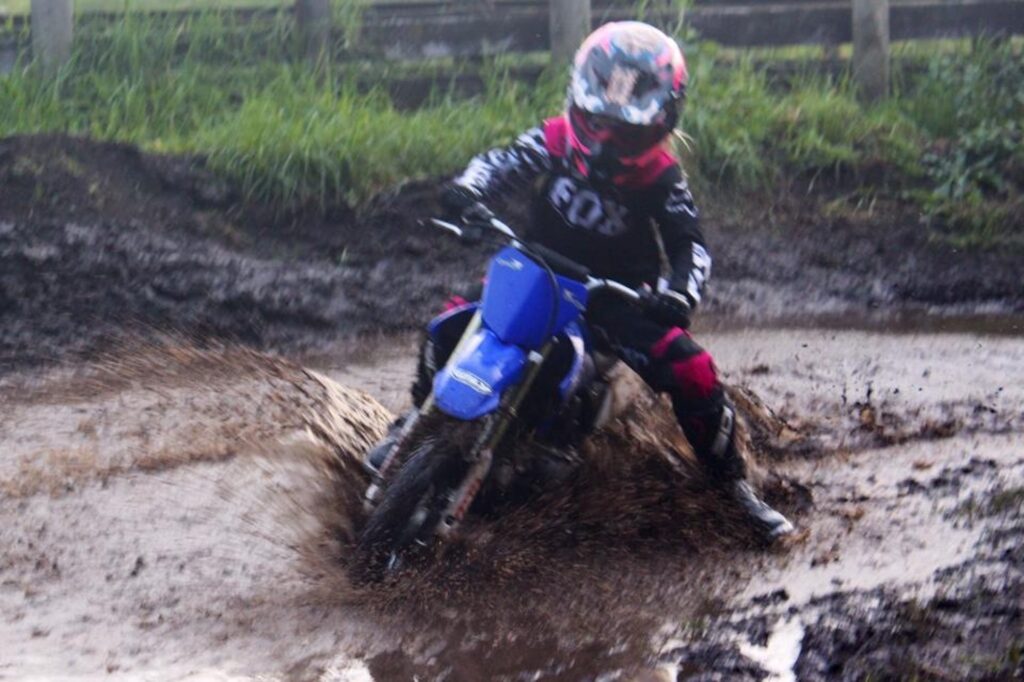
It started out pretty organically. Me and my brother used to race motocross with Dad on the weekends but we were into all kinds of sports so our weeks were jam packed with volleyball, netball, rugby, tennis, dance, swimming—I just really tried everything and my parents fully supported that.
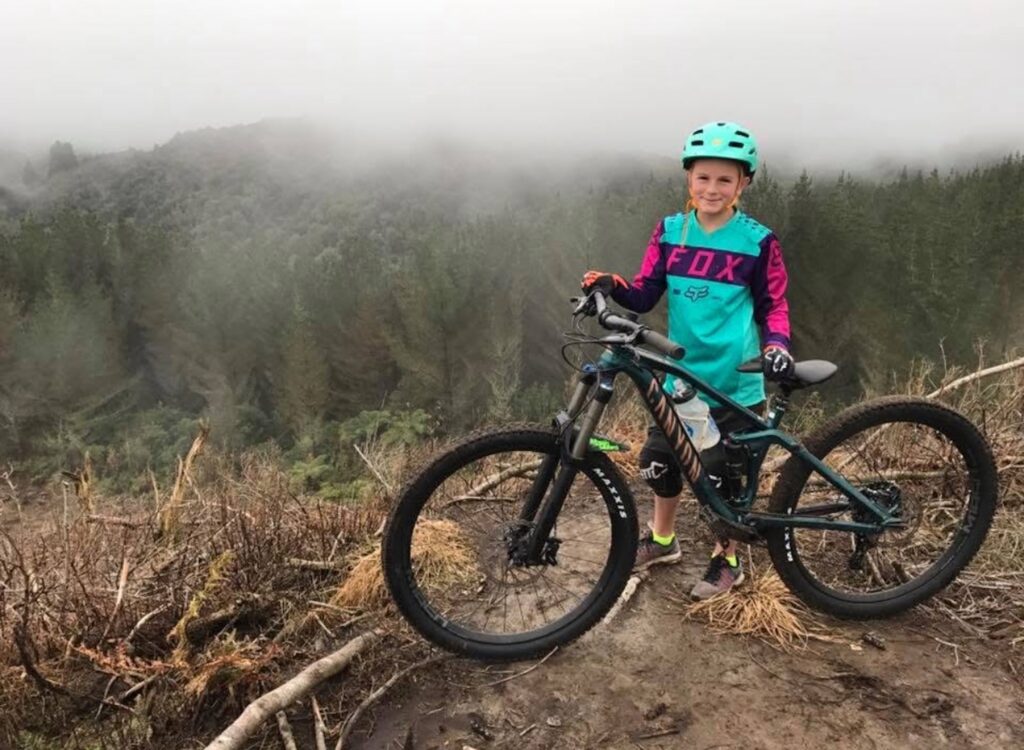
We got into biking through Dad because Mum wasn’t that much of a fan of motocross because she couldn’t do it. It was very different from all the other sports. I just kind of clicked with it and I knew that I really liked it compared to everything else that I tried. We just started riding on the weekends in the redwoods, nothing crazy, literally kid’s loops just to get out and do something.
And then Dad started getting more into it and got a friend group and he started doing races. He would drag us along to the races and me and my brother would go riding every weekend with our friends. It was really fun because we had a community and then the races in New Zealand really fostered that community and we built more friends and just kept doing it.
What was it about mountain biking that clicked for you?
Just the adrenaline. I used to be really into horse riding and I think it’s the same thing because when I was jumping my horse I’d get the same adrenaline rush as going fast downhill on a bike. I got quite bored of all the other sports because they weren’t exciting enough.
What was your first ever mountain bike race like?
I think it was a Giant 2W Enduro in Rotorua in 2018. I raced with my dad, only the fourth stage, but it took all day. When I got down to the bottom and got my ticket with all my stage times I remember I wasn’t stoked because I hadn’t got on the podium. That gave me a lot of motivation to keep riding and to race more—I didn’t like not winning.
Did you enjoy that first race or did it take a little while?
It definitely took a little while. I didn’t really start getting into racing until 2020, so it definitely took a while for it to click. But yeah, I do remember not being happy about my result. I think that just speaks a lot about who I am to this day—super competitive. When I don’t get the result I want, it just drives me more. And I think I got quite obsessed with the idea that I could win so that kept me coming back to the next race.
Where do you think your competitiveness comes from?
Mum and Dad always say to their friends and anyone who asks about me that I’ve always been super stubborn, I’ve always wanted to do things my way and for myself. Mum and Dad never pushed us to do anything, but they gave us the opportunities and would support us in doing whatever we wanted. My competitiveness came from within myself and it’s very different from my brother’s competitiveness. I guess how they raised us and it all came internally and organically.
How did you go from racing enduro to downhill?
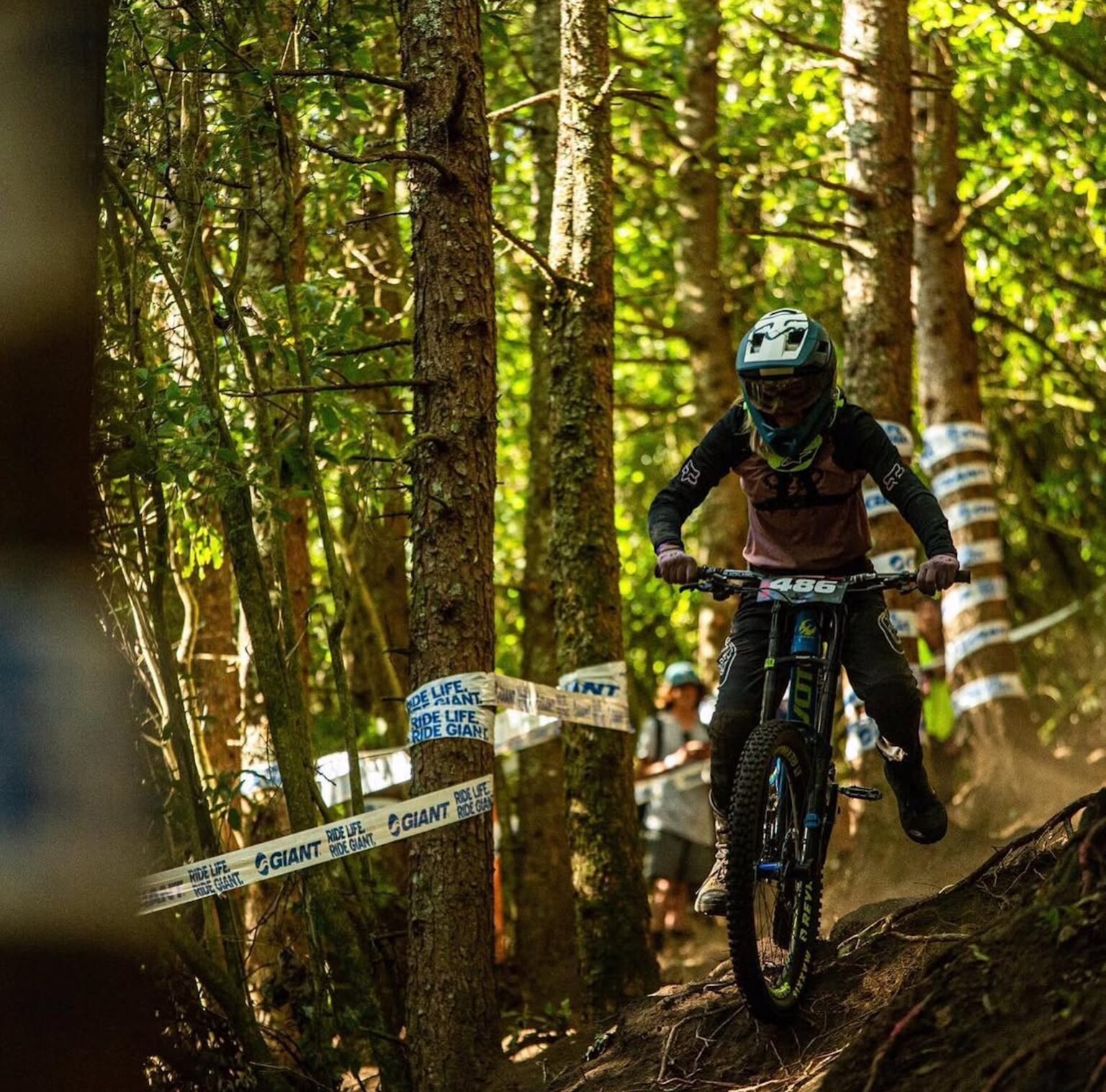
Because me and my brother shared a friend group, we all started out racing enduros. Then when we all got a bit better, we all moved to downhill racing. My first downhill race was in 2020 and I think I got third. There were only three of us racing, though, so I came last. It took me seven minutes to get down a three minute track, so I was a long way off Sacha Earnest who got first at that race.
I’d gotten better at enduro and had started winning, but then when I went to downhill racing I got annoyed at the fact that I wasn’t good at it and that just motivated me to go out and practice.
A lot of people would have been discouraged by that experience but it sounds like it fed your motivation.
Yeah, I think that’s how I’ve always been. A lot of our family friends have older sons so I grew up hanging out with a lot of boys and they’d always be like, “Oh, you can’t do something because you’re a girl.” And I remember always being like, “Well, because you said that now I’m gonna do it.” So I think that’s just how I’ve always been.
When did you think that you’d be able to take your downhill racing to the next level beyond the New Zealand racing scene?
I didn’t think I could until I went to the IXS races at the end of 2023. Obviously we have a really good circuit in New Zealand, but we’re so isolated from the World Cup-level tracks and all the other races overseas that we’re just racing our friends. So when I went to the IXS races I had no idea how I was gonna go.
The tracks were so different and some of the kids had mechanics and full pit setups, which is not something we have in New Zealand. It wasn’t until I did those races that I realised that I actually might have a shot at this.
After that experience, I started getting into training and I got a strength and conditioning coach and started working a lot more closely with a skills coach.
Did you find the courses in Europe a big step up in difficulty?
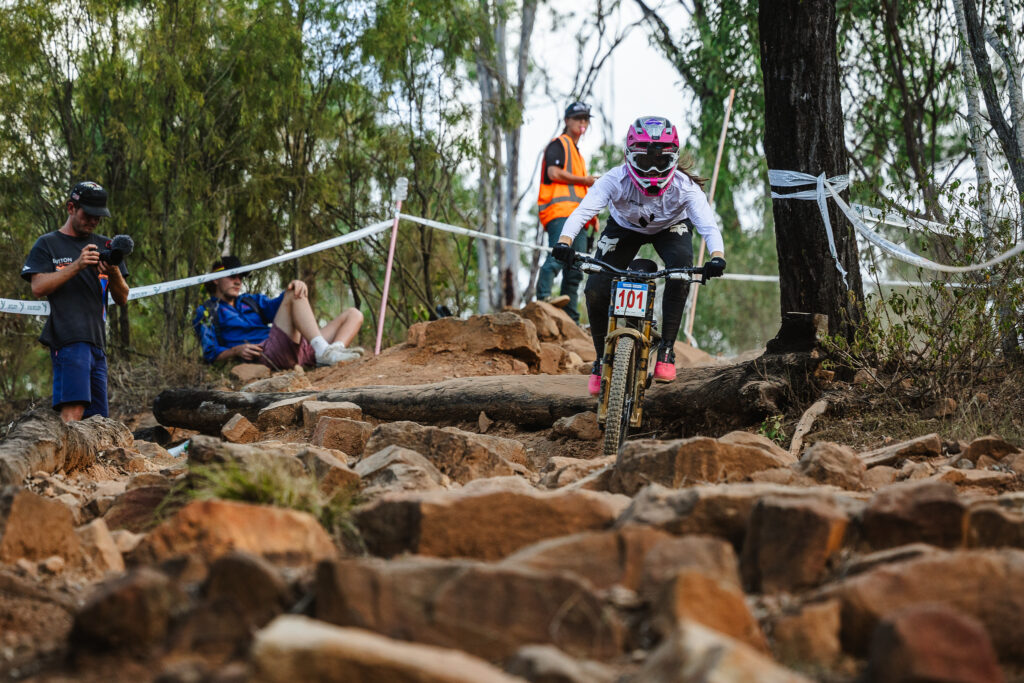
It is definitely a step up. Sometimes the tracks are double the length and a lot steeper because of the elevation. And because of that they have a lot more ground to play with, whether it’s bigger, longer rock gardens or bigger step downs. It took a while to get used to racing there because it was super big and super scary, but like anything it’s just experience and you get confidence from coming back and knowing what’s coming.
There are definitely places in New Zealand where you can go and practice but you’re not going to have a track that has everything you want. But if you’re looking for a rock garden you can go to Christchurch and you’ll find one pretty easily, for example. So there’s definitely the resources in New Zealand, you just have to go out with intent.
In Rotorua, we’re pretty lucky because of the climate. It’s not like being down south in Queenstown. We ride mud and loam, and there are fast straights, big jumps, and techie roots, so you do have a good variation of stuff.
Why do you think it is that New Zealanders can go anywhere in the world and compete with riders from countries with way more people and way more resources?
I’ve talked to a lot of people about this and I think it comes down to our mountain biking culture. In New Zealand we’re so lucky because we have a climate where you can ride throughout the year and we just have this culture where you just ride all the time, whereas in Europe they have better downhill tracks but they definitely don’t have the same Kiwi culture which I think separates us and also gives us a massive advantage.
In summer, everyone from the World Cup circuit is training in Queenstown. All the Kiwi boys are going out and doing 14 laps at Skyline and then riding until it closes at Coronet Peak. I mean, you’re never gonna beat someone who just has an insane amount of bike time.
So, I think we do have this mindset of mahi around our riding, and sport in general. If you look at rugby, for example, I feel like Kiwis work really really hard and we have a tendency to keep the main thing the main thing.
A lot of other people get caught up in doing meditation or stretching, which is all really good, but at the end of the day the people who are going fast, like Max and Till Alran, show a bit of that mindset—that appetite for bike time.
That ride time thing is really interesting because I guess that aligns with the weather stuff where in New Zealand you can ride all year round. Whereas you can’t in Northern Hemisphere countries.
Yeah, for sure. And I’d say also for the girls, I feel like New Zealand might be more relaxed in terms of participation. I’ve always been able to ride with the boys—they’ve always given me advice and helped me out with lines. So growing up at races, that’s always really helped and I’ve been super fortunate. And I had like a really cool group of riding buddies from Rotorua and they’d all just tow me over stuff and tow me up to speed. Whereas in some countries the culture doesn’t seem as welcoming, and that can show in the amount of women riders that come through.
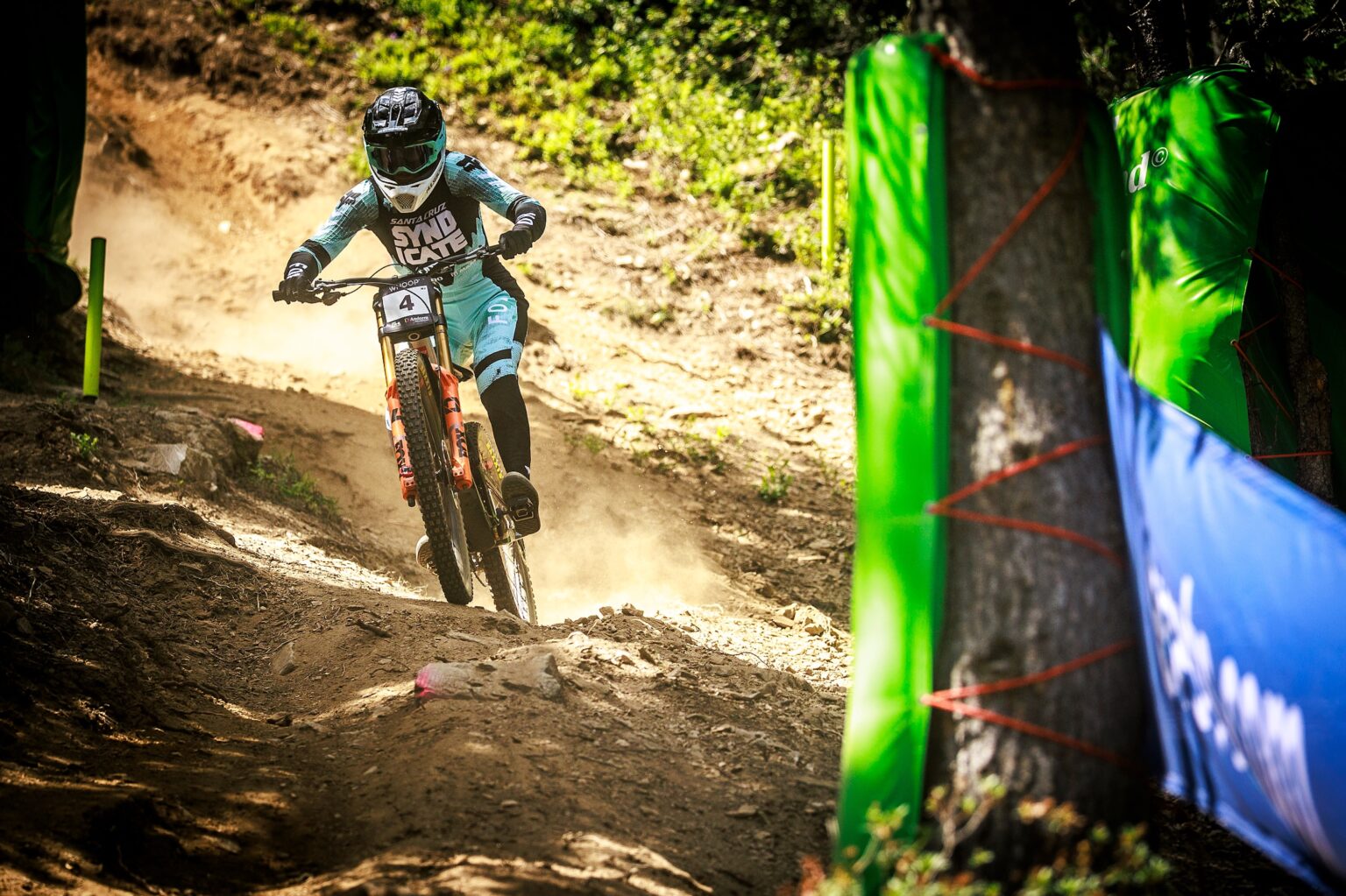
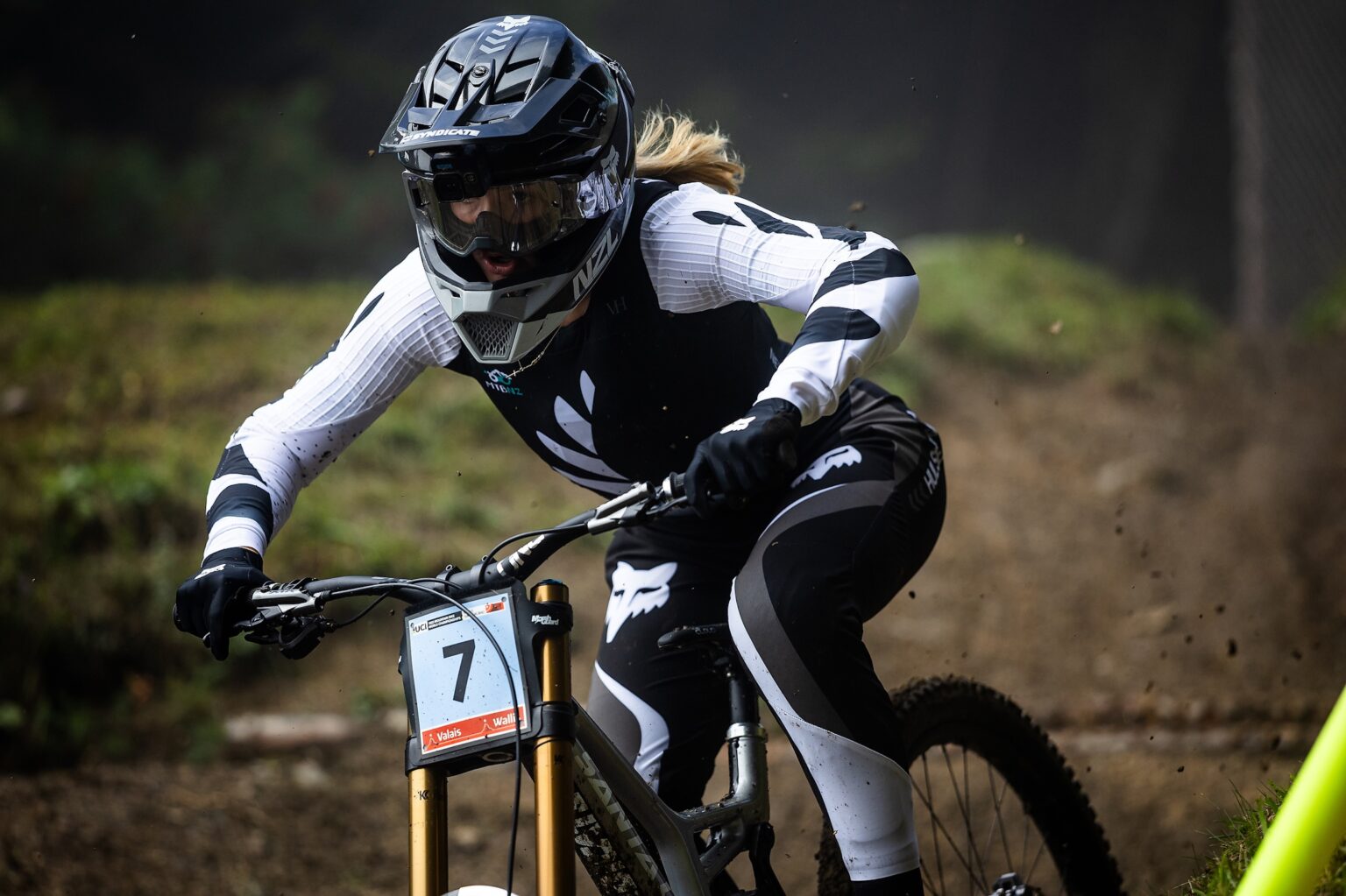
Your first year on the World Cup circuit as a junior was incredibly strong. You were always up there on the podium or pretty close to it in 2024. How did you click with top level racing so easily?
It definitely wasn’t easy, that’s for sure—there were a lot of mental battles behind the scenes. On race day, I wouldn’t eat because I’d be sick. So there was a lot of stuff like that going on behind the scenes.
But I had a really good support system with my team, the Union. It wasn’t a high performance team—it was purely about Joe Bowman and Rose Bromley supporting you being there. They just wanted the best for you and kept it super easy. Everything was a learning experience and there was never any pressure. It was all super good vibes and just about being a first year and being able to be there and experience it all. And when you look at it in that way, it made it fun and it made it easy. All I had to do was just ride my bike. So I’m super grateful for that. I’d say that their support played a massive role in my success in that first year.
So you had a really strong season that first year in 2024 and then you took that momentum into 2025. How was it going back for your second year as a junior?
I actually thought my second year was worse than my first year. I think I put expectations on myself like, “This is my second year, I’ve been here, I’ve done it, I should be good.” You’re already one step back with that mindset, so I think I was already at a disadvantage because of the way that I was approaching it. And it made it really difficult to perform when I had these voices in the back of my head saying, “Oh, you should do this or you have done this.” That mindset changed the whole trajectory of 2025 because of how it affected my performance.
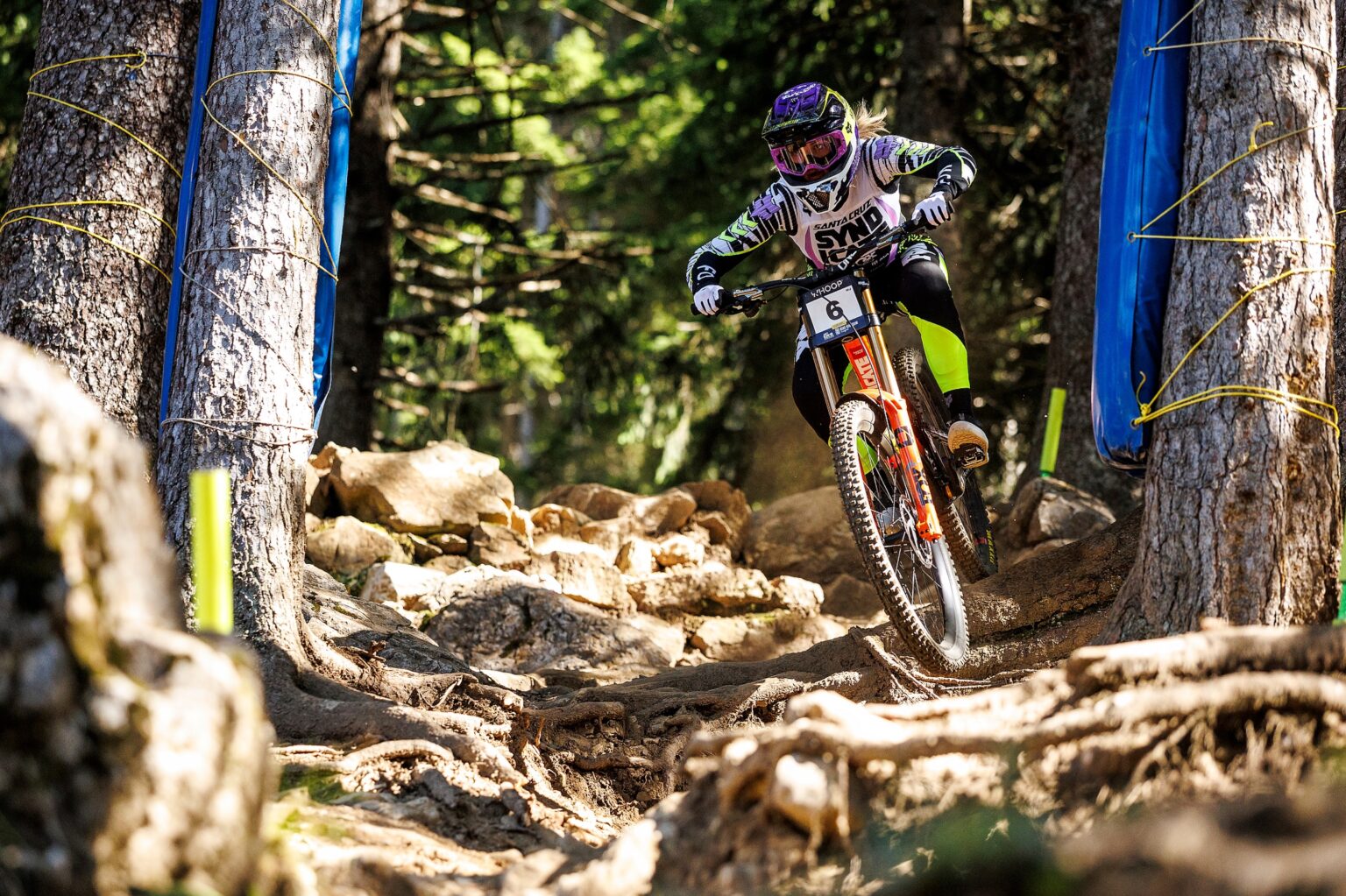

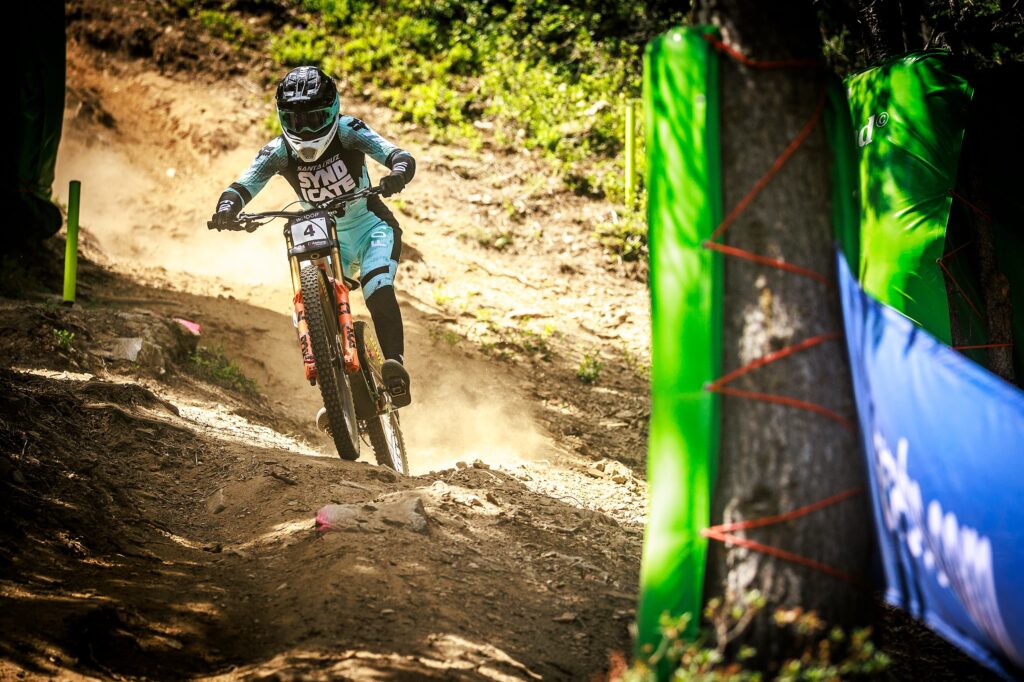
Despite that, you started the season strongly either on or near the podium for the first four races, but you had a slight dip finishing 7th and 8th in Val di Sole and La Thuile. What was behind that dip?
There was a lot of personal stuff happening behind the scenes in my life at the same time as those events. So most of my mind’s capacity was going into the personal challenges I was going through.
There’s a saying that Rose, my team manager from 2024, wrote on my mirror one morning: “Energy flows where intention goes.” I felt like all my energy was going into those personal challenges because that’s where my intentions were focused and that was taking up a lot of my capacity. So when it came to performance, I didn’t have the capacity and I felt like what was going on behind the scenes was also really affecting my confidence and my self talk and my self belief. And as an athlete, that’s one of the key things, especially for me—having confidence is a massive game changer.
Because I didn’t feel like myself, I really struggled to turn up as myself. And, when it got hard, I really struggled to feel like I was doing something good. As a result, when it went bad, it just kept getting worse because I was like, “Wow, this is going bad. And now my racing’s going bad. So I just must be bad.”
"Because I didn't feel like myself, I really struggled to turn up as myself. And, when it got hard, I really struggled to feel like I was doing something good."
Looking back at those races where I was struggling and crashing or just making mistakes, I think a lot of it was how I was mentally approaching it all. It was kind of like every mistake was this “end of the world” feeling. Whereas in reality, I learnt so much from those mistakes and it’s really shaped who I am and how I’m kind of looking at 2026.
It’s actually a super positive that I made those mistakes and I was able to learn from them and I was able to grow. In the moment, it felt like I was being picked apart and something was wrong with me but I remember Dad just saying: “There’s nothing wrong with you, Ellie. Life’s full of ups and downs and right now you’re just going through the down and you just have to ride it out.” I remember Chris Kilmurry of Point1 Athletic coaching telling me that right now I was a nail but I was going to be the hammer again soon. So, everyone goes through this sort of thing and it’s all just a part of life, but now I have the tools and the understanding and the mindset to cope with it.
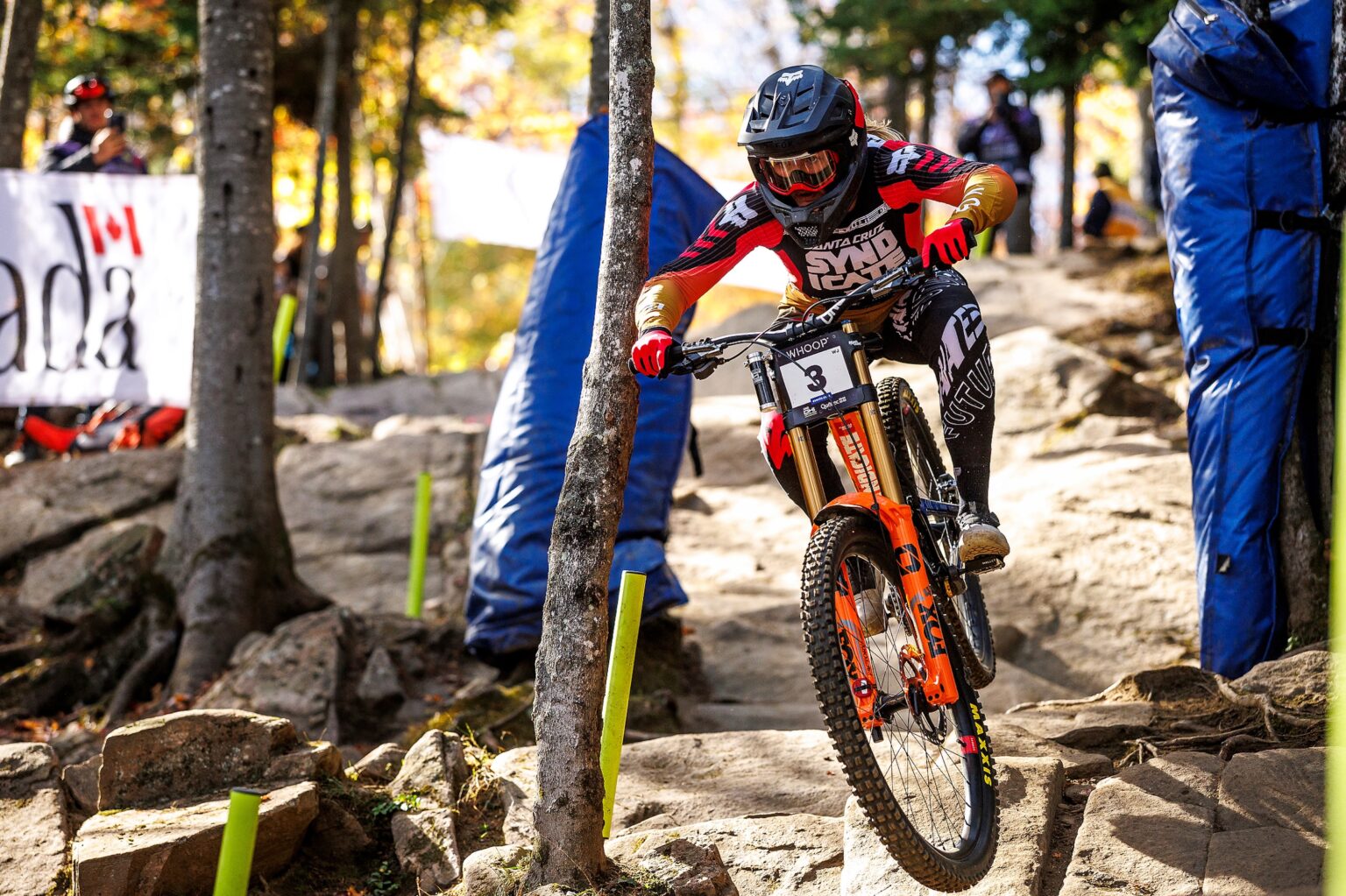
You came out of that period and finished strongly. What happened in the break that allowed you to come back strong?
I came home and went hard at training and I really worked on my mindset from listening to podcasts and working with a psychologist so that when I came back to racing I felt like I was approaching the races completely differently—I didn’t have those self doubts and I wasn’t putting pressure on myself.
I have a saying now which is: “One corner at a time.” I feel like that’s how I approach life now. Before, I was solely so focused on the result I should be getting, but for the second half of the season I was more focused on the now. For example, I knew that if I want that good result I first have to wake up and have a good breakfast—one corner at a time.
We’ve all got these big goals, but you can only eat an elephant one bite at a time—that’s been the big mindset shift for me. I guess it’s different for everyone, depending on what they relate to and what they’ve gone through. But for me, I needed to sort out how I was approaching it all and what I was saying to myself.
Self-talk can be a double-edged sword—you can be your own critic or cheerleader. Is that something that you’ve struggled with all your life or is it something that developed with the pressure of top-level racing?
It’s never been a problem for me before with racing. Last year I didn’t really have any negative self-talk pop up. But when it got hard, I’d never felt internal pressure from myself before. It’s not something I’d paid attention to before.
And likewise with other things, I’d never paid attention to my mindset or any of the psychological stuff when it comes to racing—that all came from my experience with the challenges of racing.
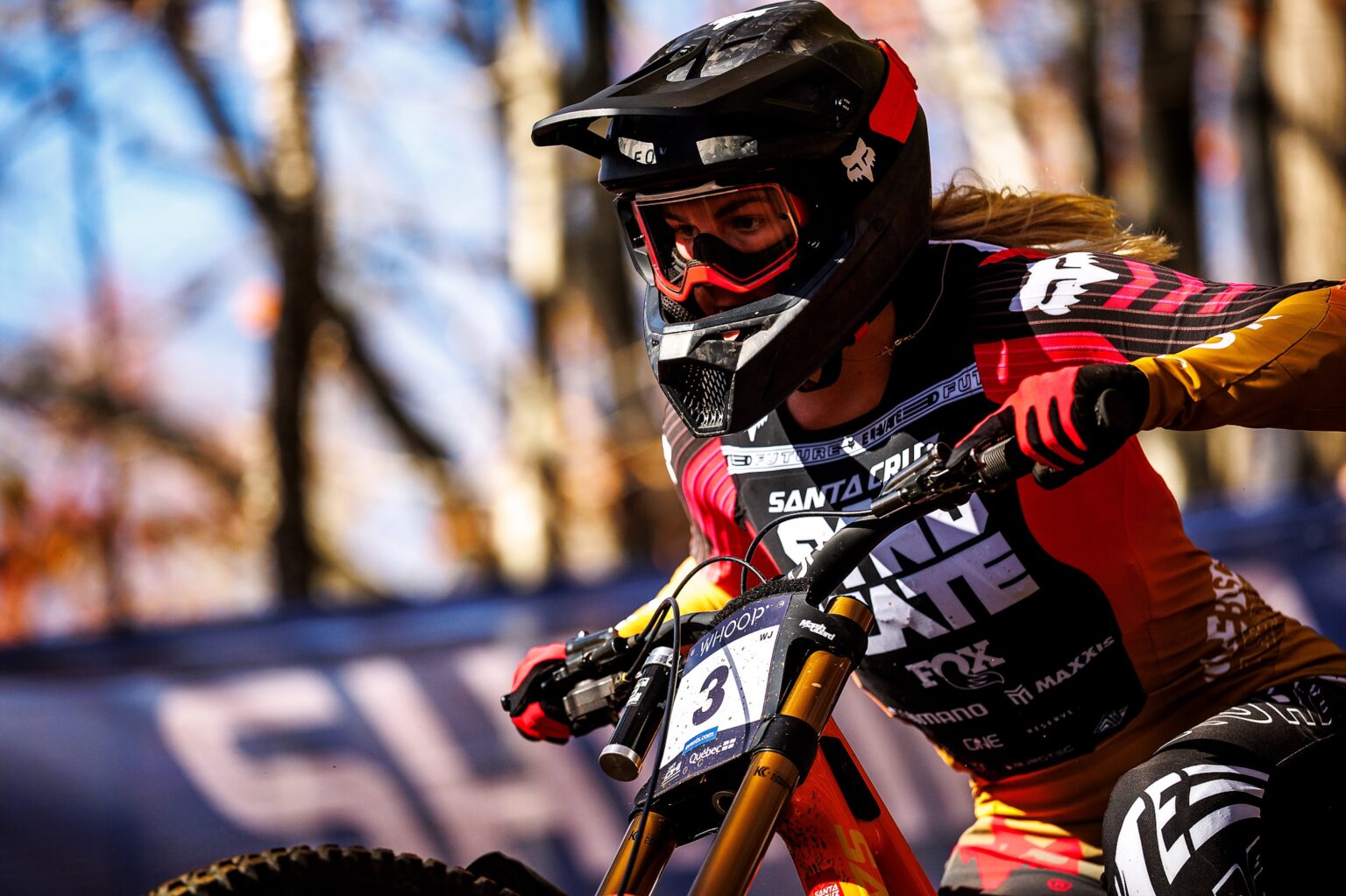
Do you know when you’re riding well: is there a feeling or sensation?
For me it’s just about being super present. I also know I’m riding well when I’m super happy, when I have a big smile on my face. As soon as I try to take it too seriously or the expectations or pressure starts creeping in, I just remind myself of “one corner at a time” and it brings me back to the present moment doing what I love, riding my bike. That’s kind of how I make sure that I ride well—just having the same process that kind of eliminates it being one-off. Last year I didn’t have that and it was definitely a one-off whether I knew that I was riding good or not but I’ve kind of got it figured out now.
"As soon as I try to take it too seriously or the expectations or pressure starts creeping in, I just remind myself of 'one corner at a time' and it brings me back to the present moment doing what I love, riding my bike."
What for you is the best feeling on the bike?
I think for me it’s probably when I’m attacking. As soon as I try to ride precise, or if I try to ride super calculated, I feel like I just get really stiff on the bike and I don’t ride like me. But when I’m attacking and when I’m going fast, I feel like I hit the corners tapped and I can pump out of things way better and it’s way more fun for me because it feels like it all flows as one.
The line spotters get annoyed because sometimes I’ve come through fast but I won’t be super precise on a line, but I know that it’s way better than me riding through it. So yeah, sorry to the line spotters, ha ha.
Is there a rider that you really look up to that you would like to emulate?
I’d say it’s a mix. I rate Vali Höll. I think she is so strong on a bike and her riding is unreal. She’s also a proper racer. Watching her, she turns up and she gets business done and I think that’s so sick. I also love Miriam Nicole. She’s always been super supportive of me throughout my junior career.
Looking forward to the next season, you’ll be racing elite. How do you feel about that?
I feel like there’s less pressure, because once you’re there, you’re there. I could be in elites for 10 or 12 more years so I feel like there’s really no pressure because it’s such a long period of time that so much is going to happen and so much is going to change within the sport itself but with also me as a person—my frontal lobe doesn’t develop until 25—I feel like I still have so much time to learn and grow as a person.
Whereas with juniors, you’re in it for two years, so it feels like you have to be at the top of juniors to really make a mark to really get an opportunity. It’s almost your time to find a team and to show you have the potential.
Because there’s less of a time limit with elites, I’ll just be racing the best women and it’s just gonna come down to who’s willing to train the hardest and who does the best on that day.
What are your goals for your first year in elite?
I’d love to consistently be in the top five. I had times this year that were in the top five of the elite field, so I know I have the potential for that. But at the same time, I’m not putting that expectation on myself. I’m more looking at it from the angle that I want to give myself the best opportunity to do well and I know what I’m capable of doing, so it’s super exciting.
I think I definitely have the ability to podium next year. And I think I’m willing to do what it takes to get to that point as well, which is really cool, but I’m just going to do my best and make sure my best is as good as it can be.
Are there any other major changes for you going into the next racing season?
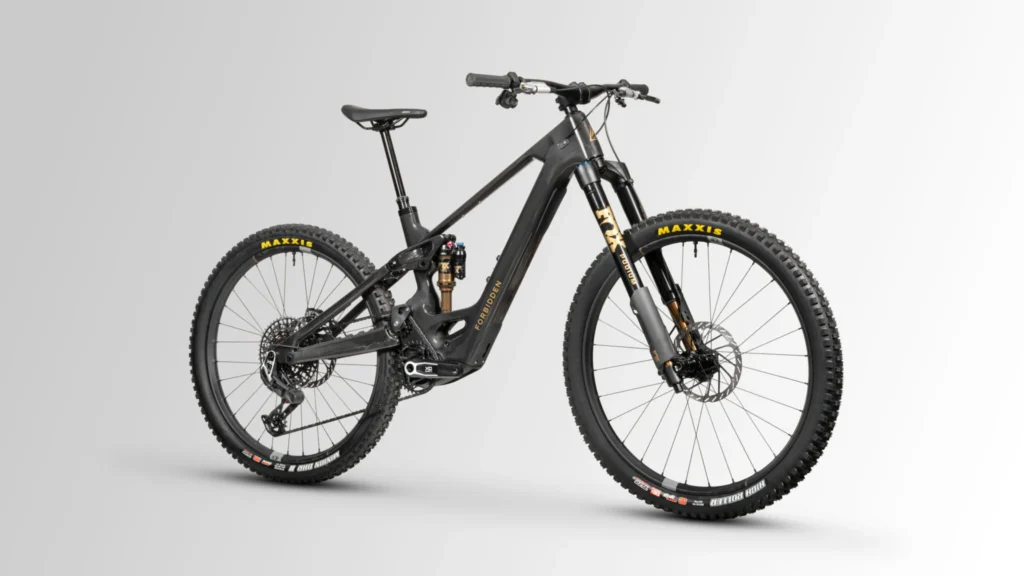
Literally nothing. Still on the same team, still on the same bike and same kit. So yeah, it’s quite nice as well. I had no more changes the next year, so I know I can obviously do my testing in the off-season and build off what we’ve already built from 2025 and just keep building on it for 2026. So I’m super familiar with everything and I think it’s gonna be good.
What advice would you give to a young Ellie who’s just starting her racing career?
I would say just keep riding, have fun and if you’re doing that, everything else will just naturally come. I think quite often we get caught up in comparing ourselves to others, like “Oh, they’re doing this so I have to do that.” But you’re on your own path and everything will work out exactly how it’s supposed to for you as long as you just keep going.