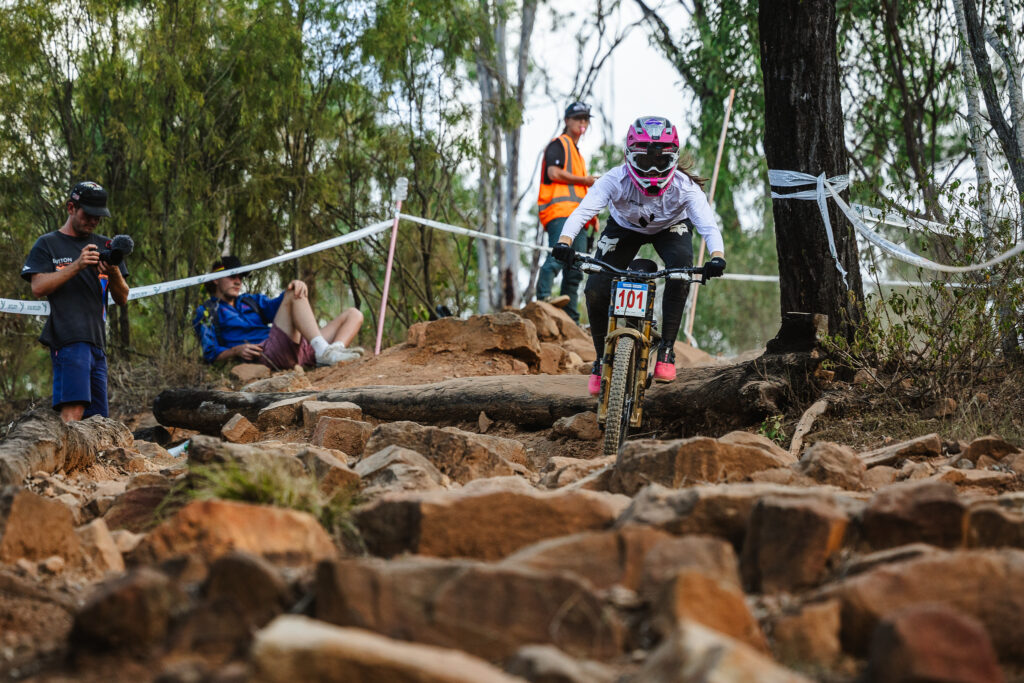


Simply put, good body position is all about control. It’s the most important skill you can learn to stay safe and confident on your bike and the key to progression.
A strong and stable stance on the bike will help you react to features on the trail and get the most out of your tyres. By keeping your weight centered and balanced between the front and back tires, you’ll gain maximum traction and stability, which is what keeps you in control.
Ultimately, proper body positioning is the core of every other skill you’ll use on the trail. It keeps you stable, balanced, and ready for anything. Without it, even easy trails can feel unsafe, but with it, you’ll be ready to ride with confidence.
Good body position
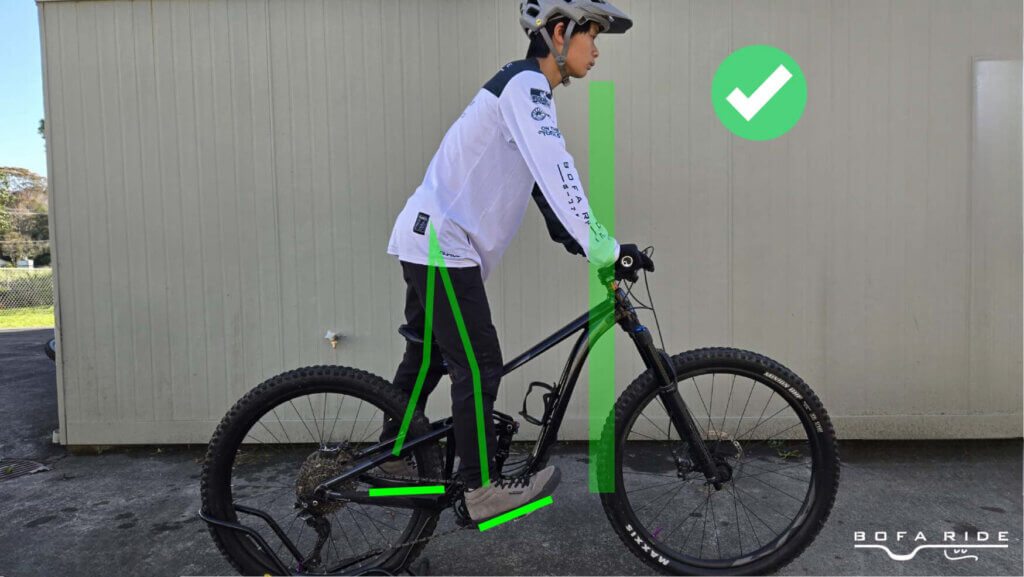

Balance position
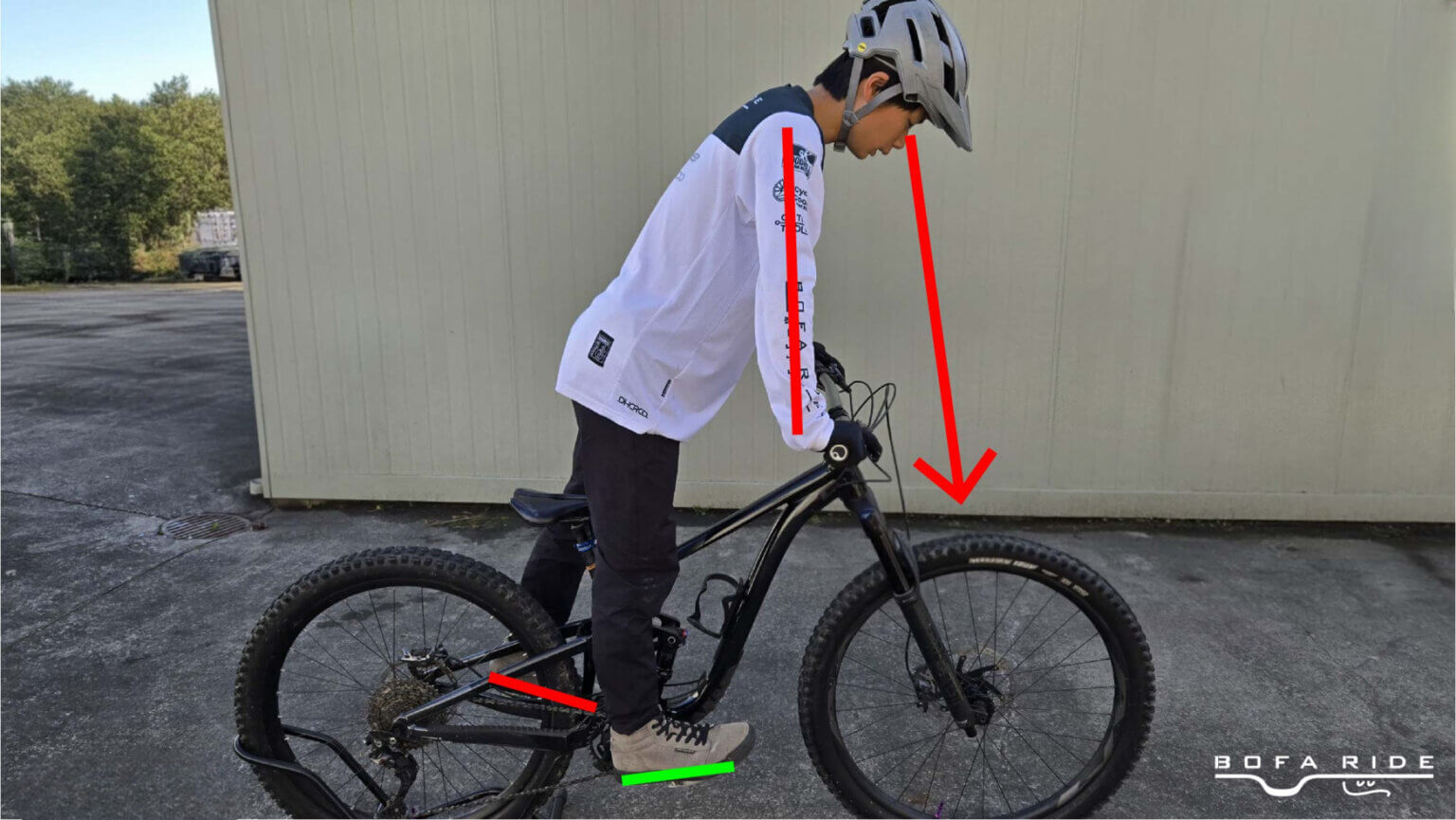
Extend your knees: Keep your legs long and relaxed, letting the bike move underneath you.
Drop your heels: Especially your front foot — this helps anchor your weight and adds stability.
Relax your arms: Imagine hugging a dinosaur egg — keep a little bend in your elbows
Head and eyes: Your chin should roughly line up over the stem’s top cap.

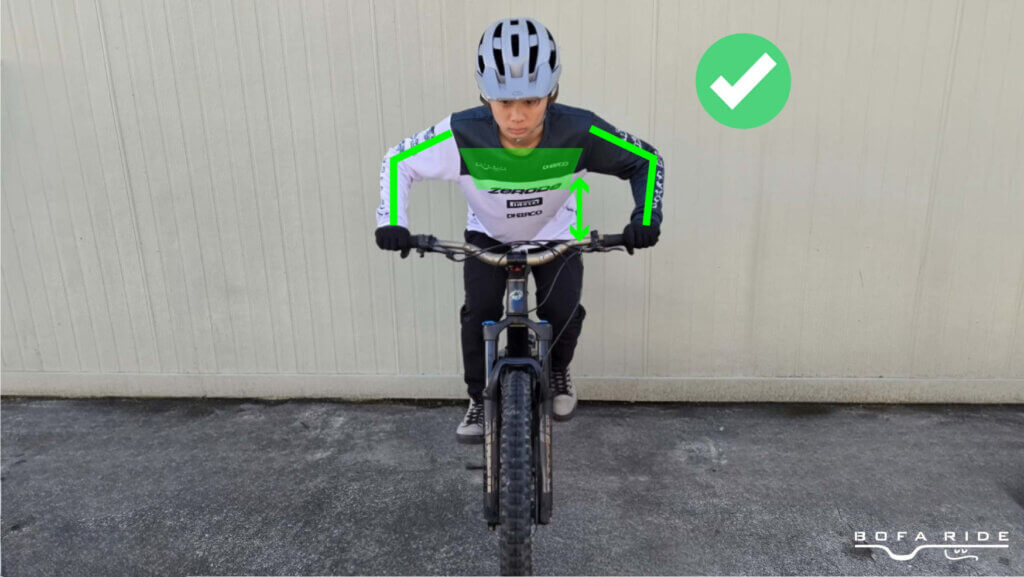
Ready position
“Close the drawer”: Imagine there’s a drawer left open behind you — drop your hips down as if you’re closing it with your backside, like a deadlift at the gym.
Heels down: Keep your heels pressed down the whole time for stability and grip.
Chin over stem: Just like in the Balance Position, your chin should line up roughly over the stem’s top cap.
Stay off the saddle: Your hips should hover above the seat — don’t sit down.
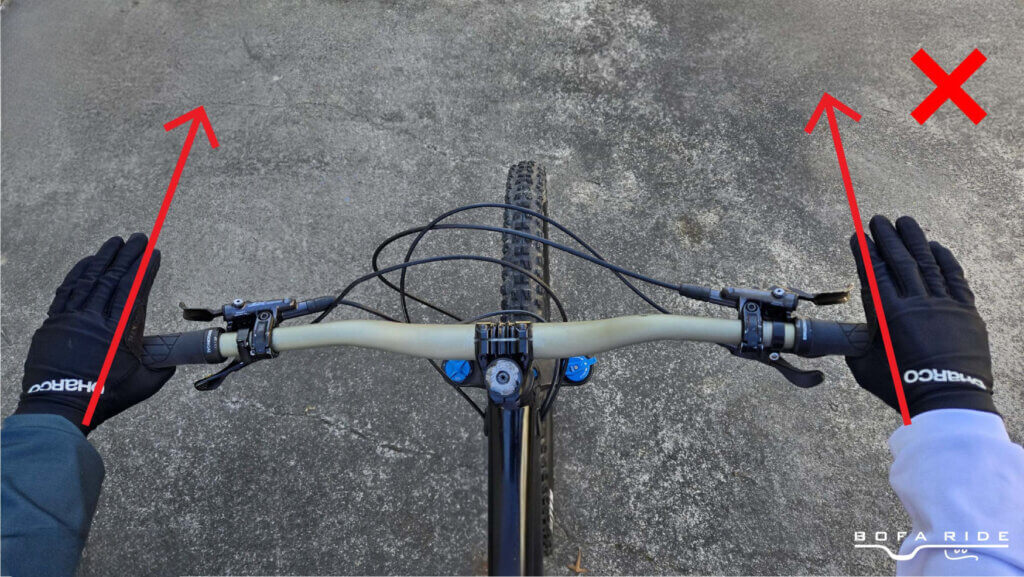
Elbows out: Bring your chest closer to the bars and think of slightly tucking your arms inward, not just your forearms. This keeps your elbows pointing out and creates a strong, stable stance without locking up your upper body.
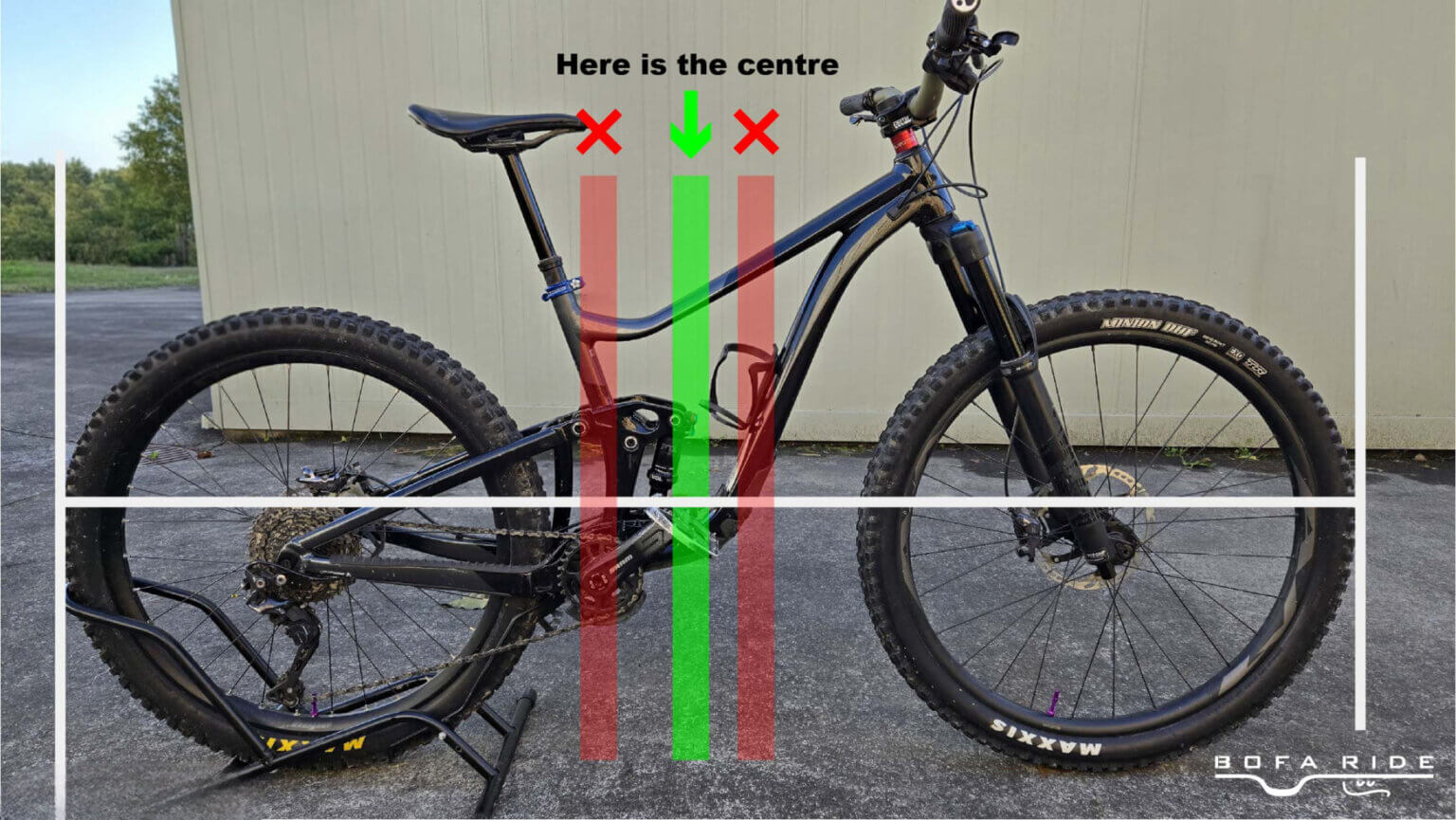
Test: Are you really centred?
You can check for yourself if you’re staying centred on the bike.
Ask someone to hold your bike steady while you get into either the Balance Position or the Ready Position. Then, without moving your body, take both hands off the bars.
Three things can happen:
- Too much weight forward: you tip over the bars because your hands were holding your weight.
- Too much weight back: you fall into a “manual” position with your weight too far behind the saddle.
- Correct position, but weak core: you’re centred, but you can’t hold the posture because your core muscles aren’t strong enough. If you can stay balanced without using your hands, you’re in the right place on the bike.
Being dynamic with good body position
Both the Balance Position and the Ready Position are used on descents, and the skill is knowing when to switch between them.
The steeper the slope, the lower you drop your hips and centre of gravity to keep the bike stable.
Good riders stay dynamic. They let the bike move underneath them and use their arms and legs like suspension — absorbing impacts and keeping traction.
Staying loose and active means more control, more confidence, and more flow on the trail.

Body position mistakes
- Back heel up: Lifting the back heel locks your ankle, reduces range of motion, and makes you unstable. Keep both heels down — front heel pressed slightly more.
- Sitting on the saddle: Sitting stops your arms and legs from absorbing bumps, so the whole impact goes through your body and you lose control.
- Locking your arms: Straight elbows can’t absorb impacts and throw you off balance.
- Looking down: Watching your front wheel slows your reactions. Keep your eyes ahead.
- Not staying centred: Too far forward overloads the front wheel, too far back loses grip. Balance evenly for traction.
FAQ
Q. Why is body position so important for riding a bike?
A. Good body position about control and safety. It’s the core skill that allows you to react to the trail, maximise your tyre grip, and stay balanced and confident. Without it, even easy trails can feel unsafe.
Q. What’s the difference between the Balance and Ready positions?
A. The Balance Position is a relaxed stance for general riding. You keep your knees extended, arms relaxed, and your chin aligned over the stem. The Ready Position is for more demanding terrain, like descents. It involves dropping your hips lower, bringing your chest closer to the handlebars, and keeping your elbows out to create a strong, stable stance.
Q. How do I know if I’m in the right position on my bike?
A. You can test this by getting into either the Balance or Ready position and carefully taking your hands off the handlebars. If you can stay balanced without using your hands, you’re in the correct, centred position. If you fall forward or backward, you need to adjust your weight distribution.
Q. What are the most common mistakes with body position?
Common mistakes include:
- Sitting on the saddle on descents, which prevents your legs from absorbing impacts.
- Locking your arms straight, which also stops you from absorbing bumps.
- Lifting your back heel, which makes you unstable.
- Looking down at your front wheel instead of ahead on the trail.
- Not staying centred on the bike, which can lead to a loss of traction.
About BOFA RIDE
BOFA RIDE (Breath of Fresh Air) is a mountain bike coaching business in New Zealand.
We believe that riding is more than speed—it’s about safety, confidence, and finding “your thing” to enjoy for life.
Our lessons focus on solid fundamentals so every rider, from kids to adults, can build skills, reduce injuries, and ride with pride.
Website: bofaride.co.nz
Instagram: mountainbike_bofaride
Facebook: mountainbikebofaride