

Sophie Luther on bringing the raw terrain and soul of Natural Selection Snowsports to the dirt slopes of Queenstown
There’s a purity to mountain bike competition—the kind that reduces everything to milliseconds and millimetres. Riders laser-locked on a finish line. Trick sequences dialled to the decimal. Tucks and tweaks bent through muscle memory and instinct. Every move sculpted, every moment sliced thinner and cleaner than the last.
But in that pursuit of perfection, something slips away. The wider frame fades. The crowd blurs. The mountain becomes a backdrop instead of the reason.
It’s that disconnection—between the rider and the riding environment—that Travis Rice set out to recalibrate with the first Natural Selection Snow back in 2008. He called it “full-spectrum snowboarding”—a vision that elevated terrain, storytelling, and soul as much as it did performance.
Now, that same ethos has landed on dirt.
Natural Selection Bike isn’t bike park riding. It’s not freeriding. It’s not slopestyle. It’s something more elemental. Something harder to define. It’s full-spectrum mountain biking—where line choice matters as much as flow, where style and speed share space, and where the mountain is not just the venue, it’s one of the stars of the show.
But how do you go about translating the NST Snow philosophy to mountain biking?
And how do you do it in a place as raw and revered as Queenstown?
We sat down with Aotearoa Event Director Sophie Luther to find out how Natural Selection Bike came to life in New Zealand—and why this might be one of the most important shifts in mountain biking’s modern evolution.

Photo | Rachel Hadfield
Hi Sophie. Thanks for taking the time to talk to us. Can you please tell us about how you got involved with helping to create Natural Selection Bike in New Zealand?
My business partner, Ed Leigh and I had joked for years that we should start a business together but the way this started was quite fortuitous. Ed, who’s a presenter for the Natural Selection Tour Broadcasts, is good friends with snowboarder Travis Rice, one of the founders of the Natural Selection Tour (NST). We had all talked about wanting to do something special for New Zealand and bring something cool to the region, in particular South Island, so it kind of came through a load of us brainstorming the idea.
And then Rod Drury, who knows Travis as well, came to us with a similar kind of idea. Rod has invested a lot of money into developing the trail infrastructure network around New Zealand and particularly in Queenstown. The vision was and is still to elevate Queenstown to be the Whistler of the Southern Hemisphere. And that was where the idea was born for an international mountain biking event which would focus the world’s attention on Queenstown.
About that time, Travis bought Proving Grounds from Red Bull Rampage owner Todd Barber. So we all kind of came together on these phone calls and realised this could be the icing on the cake. Then Travis brought it into the NST stable, and it was renamed Natural Selection Bike.
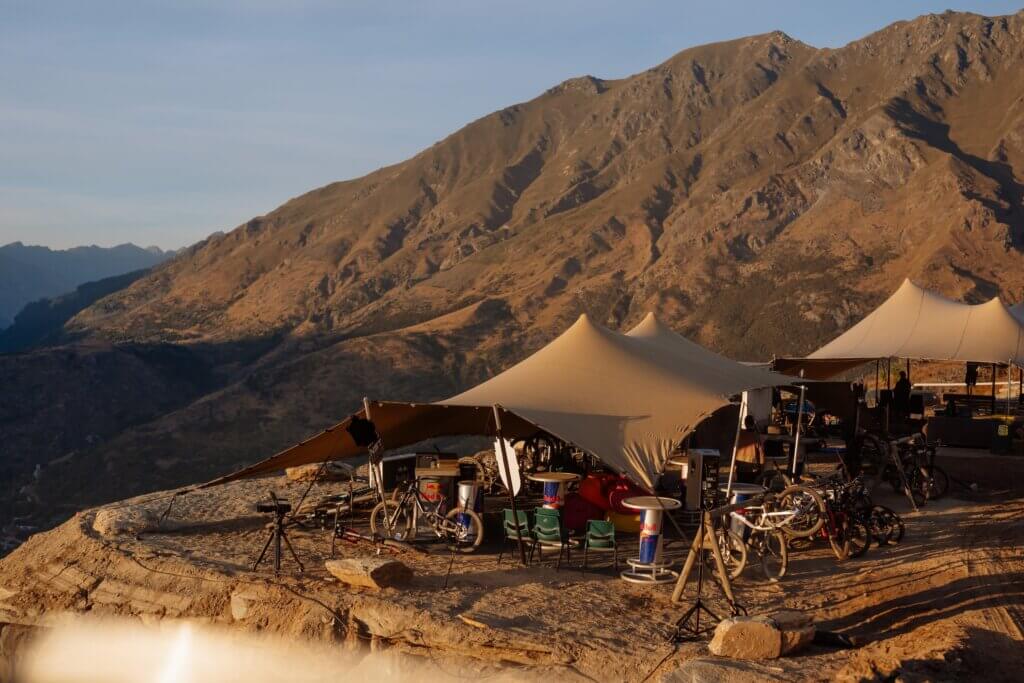
We all loved the idea, but we didn’t know where to do it. Rod kindly put up some seed funding that allowed me to basically go around all of the amazing spots in the Southern Lakes to try and find a spot to build a course.


Photos | Rachel Hadfield
What was it about Mt Dewar that was so special?
It was all about the terrain. Early on, Todd visited with Carson Storch and they fell in love with the terrain and the weather—how the site is positioned for the predominant wind is actually really good compared to other sites.
Then also working with Treespace. So Mt Dewar is owned by Adam Smith and Treespace is a forest regeneration project for the area, alongside an extremely thoughtful property development. Through Treespace, Adam is trying to bring back the native beech forest across Mount Dewar and connect it to the work being done across the entire Wakatapu basin. So we collaborated closely with Adam, JT (Mountain Manager) and Treespace.
When we first went up there, we wanted to figure out how we could build the course on the upper mountain with a really light touch. So you’ll see that our course is very light and we’ve sought to avoid disturbing too much of the terrain on the upper mountain. And then, as you get further down into what was the old commercial forestry block, we were able to use diggers to build the larger features. But even with those larger features, Emmerson Wilkin and Tom Hey from Elevate Trail Building were just masterful with their planning. So it was a masterpiece, but yet it wasn’t visible to the people below in Arthur’s Point and the bits that are visible we’re planting out.
We’re really proud of how, essentially, in three to five years, there’ll be substantial growth of natives through that whole section of their mountain. It was definitely on the plans, but NST helped push that forward.

Photo | Chad Chomlack
Tell us about your involvement with Dark Horse?
So Dark Horse is Casey Brown’s event. I met Casey when she was down here for a documentary called The Search For The Next Proving Grounds. That’s when we had Carson and Casey, Robin Goomes, Brett Rheeder and Reed Boggs down to help find the NST Bike site.
One of the things that sets NST apart is its athlete focus. We’ve got athlete advisory boards for each sport and their feedback is integral to the decision making. So we brought them down and showed them all the spots and they essentially chose the site. They just fell in love with the site as much as we did. And they loved the philosophy of Adam and JT as much as we did.
But that’s how I met Casey. And then she came down again for NST and we just really clicked. She just liked the way I worked, and I liked the way she works. So she said, “Oh, could you come over and help me run Dark Horse. I’d really like to grow it.”
I was just super honoured to be asked to be part of it, because I think what she’s doing is amazing. So after NST wrapped up, I kind of got my teeth stuck into that.
"It’s not just freeride, it’s not just slopestyle, it’s not downhill, it’s a blend of the best of all those things."
What is it about NST that you think makes it stand apart from events like Crankworks, Rampage and Dark Fest?
Those events all have their unique and beautiful differences. But with NST we want Mother Nature to be at the forefront of the spectacle and for the athletes to be closely involved in the decision making. It’s not just freeride, it’s not just slopestyle, it’s not downhill, it’s a blend of the best of all those things.
Rampage is a very different thing, obviously—nobody can compare to that. And Dark Fest, I love what they do with their vibe. I really like that they’re the ultimate safe space for athletes to progress.
So we’re all different. We’ve all got our unique qualities and there’s room for everybody.
Tell us about the practical steps NST has taken around sustainability and caring for the environment.
Well, Ed and I always want sustainability to have a seat at the decision-making table. The reality is we are an international bike event where people fly from across the world to compete and watch. They have to get here, there’s nothing we can do about that. So we focused on what we can do around the event. For instance, we had recycling and composting on site because we didn’t want to have any waste bins.
We also worked with Flying Trestles Catering, to provide all the food onsite with local ingredients, utilising no packaging and creating healthy meals. We also used reusable plates, knives and forks which we washed every day to minimise waste. We did our best to avoid any plastic on site. We tried to use all local providers for everything. So our volunteers were local, the contractors were local. All our signage is made of wood and our trophies were pieces of granite from the site.
We tried to have a hybrid battery system for generators so we don’t rely on fossil fuels as much. There’s no power onsite, so we need some way of powering broadcast equipment and water supply for trail maintenance. That wasn’t viable this year, but we’re working on that for the next event. So yeah, it’s all a work in progress.
In the next iteration I would love people to be able to ride to the event and have a bike valet.
"NST is a love letter to the world about how beautiful New Zealand is."
A big part of the environmental story is also Treespace’s recloaking project, which is a huge reforestation initiative in the area that will cover almost the whole mountain. Treespace wants to restore 400ha of former forestry block and wilding pine into native forest. There are also plans to build a network of public walking and mountain biking trails.
It’s a slice of paradise. I’ve been very privileged to go to many different places in the world through the Volvo Ocean Racing and the America’s Cup, but when I moved to New Zealand I was just like “Oh my God”. Everywhere you go there’s another amazing view. This event was a really good avenue to showcase to the world how beautiful it is here—NST is a love letter to the world about how beautiful New Zealand is.
Of course it’s an international sporting event of the highest calibre but we wanted to bring the landscape and the community into play so that you got the feeling that you weren’t just seeing a bike event you were seeing a place as well. When you’re showcasing the community and the place as well as the sport, it gives the event a different depth in my opinion. I think it’s more authentic
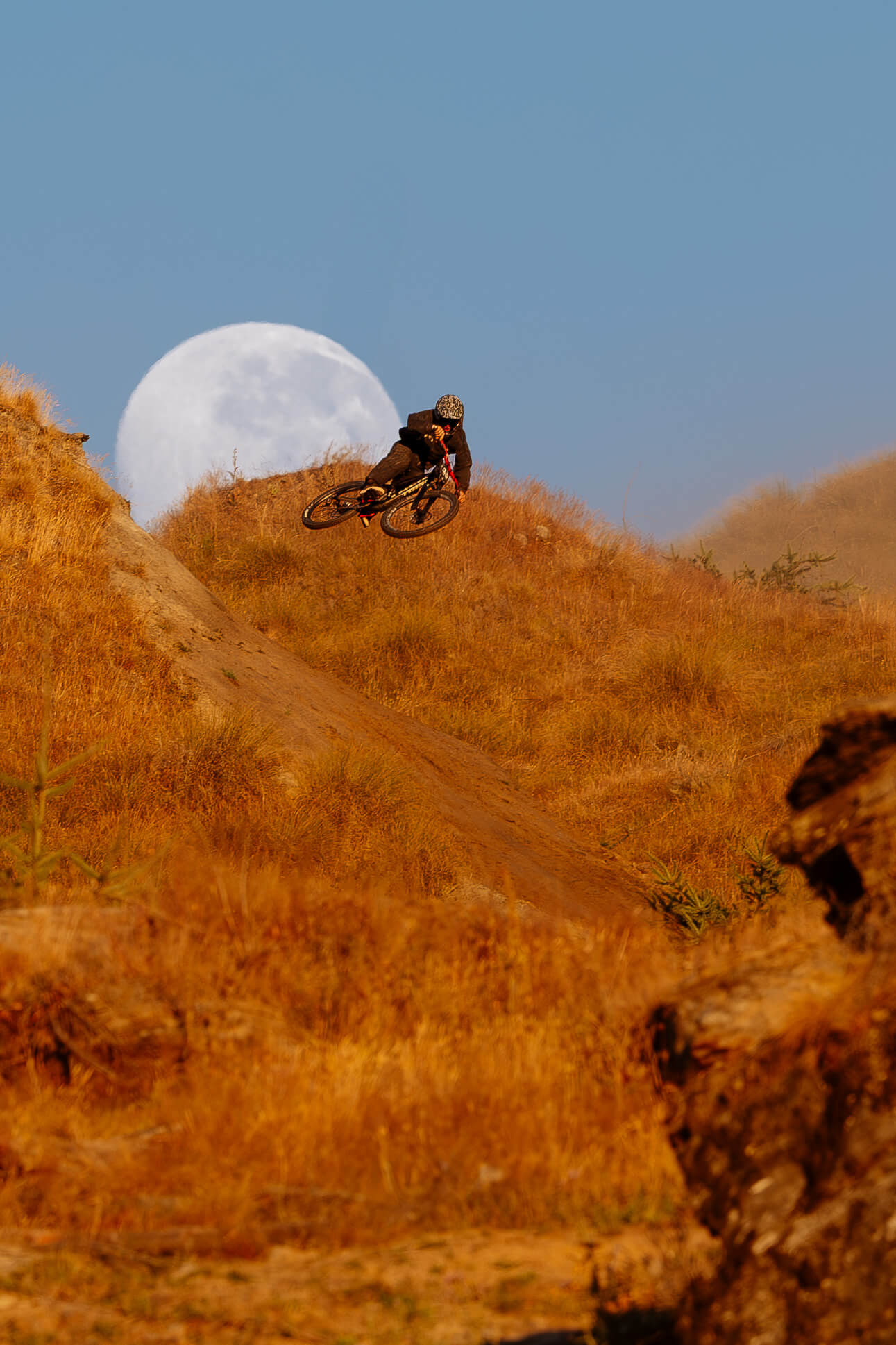
Photo | Rachel Hadfield
And you mentioned your working with different partners like Rod Drury as well as Adam Smith of Treespace. What did those collaborations mean for their success and integrity of the event?
Oh, without Rod the event wouldn’t have happened, so he was an incredibly important part of bringing the event to life.
But another big part of it was the NST team from the United States giving us the opportunity and funding to take their baby and grow it here without having people on the ground for the majority. So there was a lot of trust there. But it was very much Travis, Todd Barber, Carter Westfall and Liam Griffin’s brainchild that we were basically bringing to life over here.
But that said we also wanted to make sure that it felt like local people had a stake in it and had some feeling and passion around. It was really important to Ed and I that everybody felt like they were part of NST, that it wasn’t just people coming from overseas to do something in their backyard. That’s why we made sure there were lots of local people being employed and the IP was being transferred to us locally so that we could bring up people in the events industry here.
We’ve got an amazing pool of people here in the Southern Lakes but it’s fantastic to be able to bring in more people. We’re blessed by the talent that gets drawn to this place. So it’s making sure that we could bring people in and give them experiences and pay them an alright wage.
We just genuinely wanted everybody here to feel like it was part of their calendar and that they had some ownership of it too or could be involved if they wanted to be.
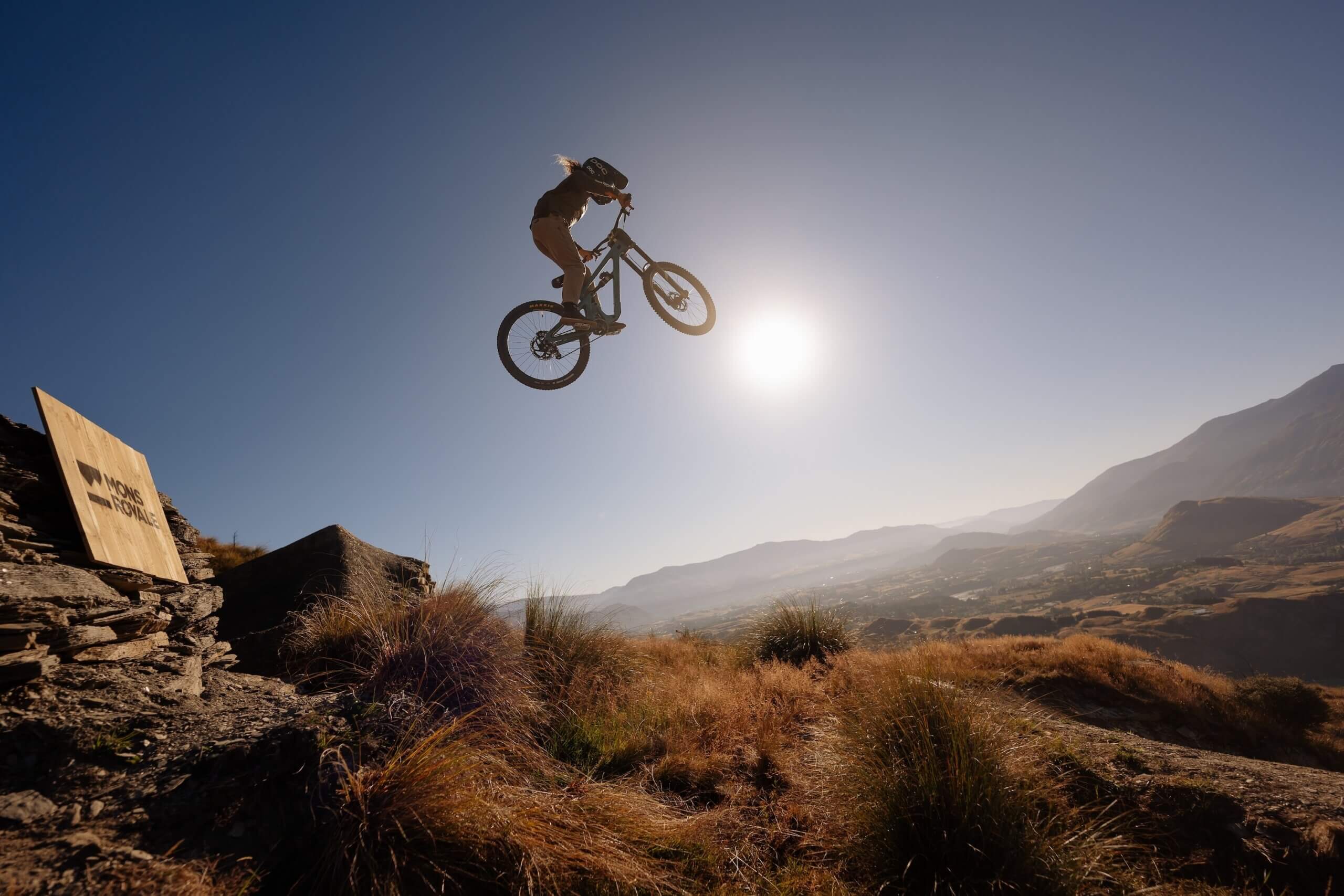


Photo | Rachel Hadfield
Tell me about the longer term bigger picture vision for natural selection. Where is it heading and where would you like it to go?
The elephant in the room is the fact that we had a full roster of women train for the week leading into the event, but unfortunately only had four women compete in the finals. We would love to see that number grow. It wasn’t for lack of trying or want. It was just that we built a fantastic course which was relatively difficult. So we need to make sure we give women the time and the space to perform to the potential that they know they can do. So that’s definitely one of the goals for us to really help that progression.
Also, you know, we’d love to see it grow into one of the premier mountain bike events in the world and you know, hopefully we’re on the way to that.
And I suppose if we can help draw even more international pro athletes to New Zealand for their summer training camps and compete in Crankworx and other Southern Hemisphere events. It puts a spotlight on New Zealand for the entire globe’s mountain bike community.
And my personal goal is always to help inspire the younger generation. So if in five years time somebody turns around to me or Ed and says, “Oh, the reason I’m mountain biking professionally is because I came to NST” — I would love that.
That’s always where I’ve been with whichever sport I’ve been involved with. I’ve always been very keen to be at the grassroots level as well as the pinnacle because I love to see that journey. But also inspiring normal people like me to get out there and be healthy.
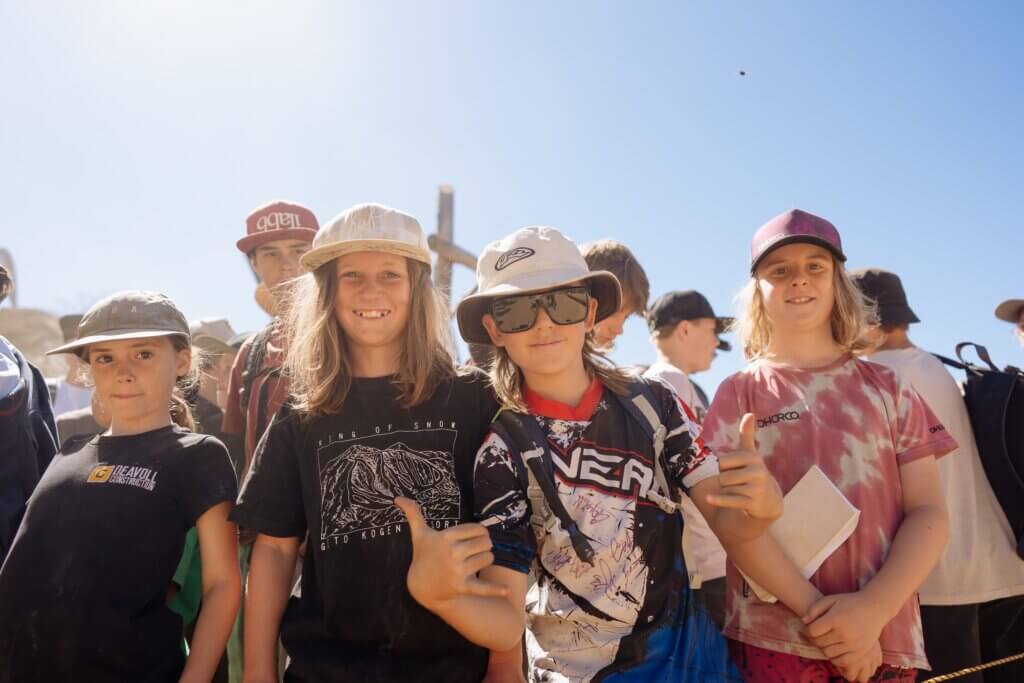
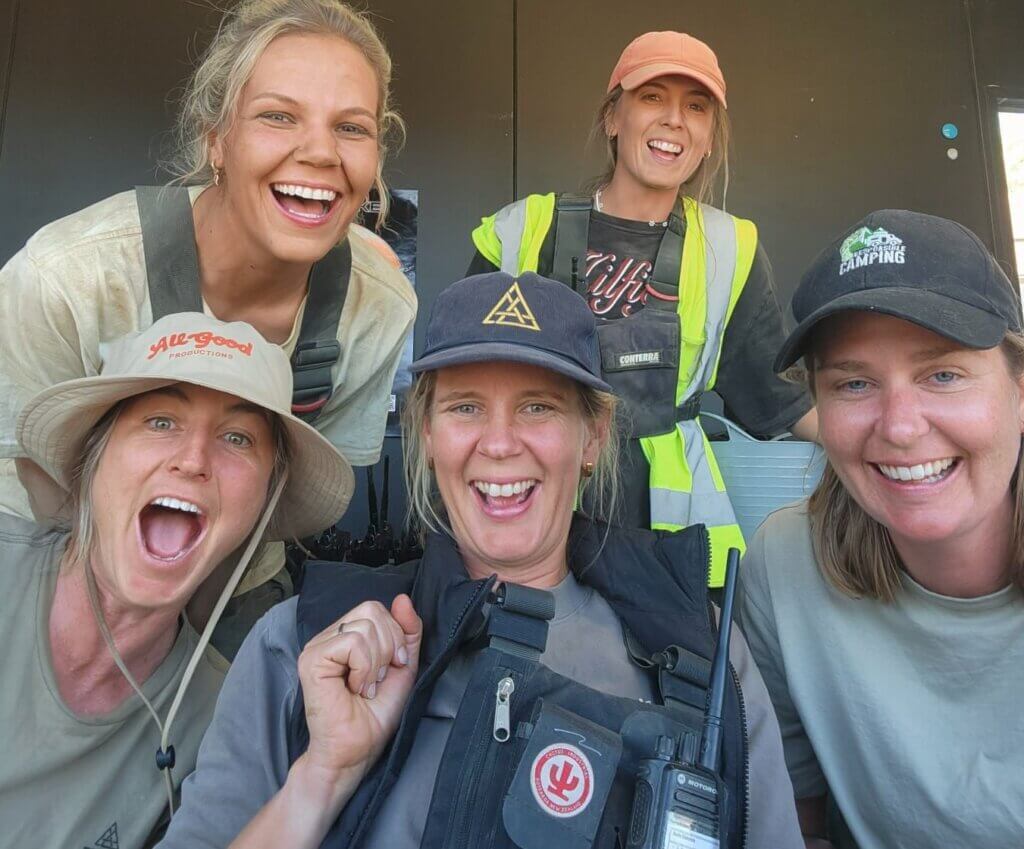
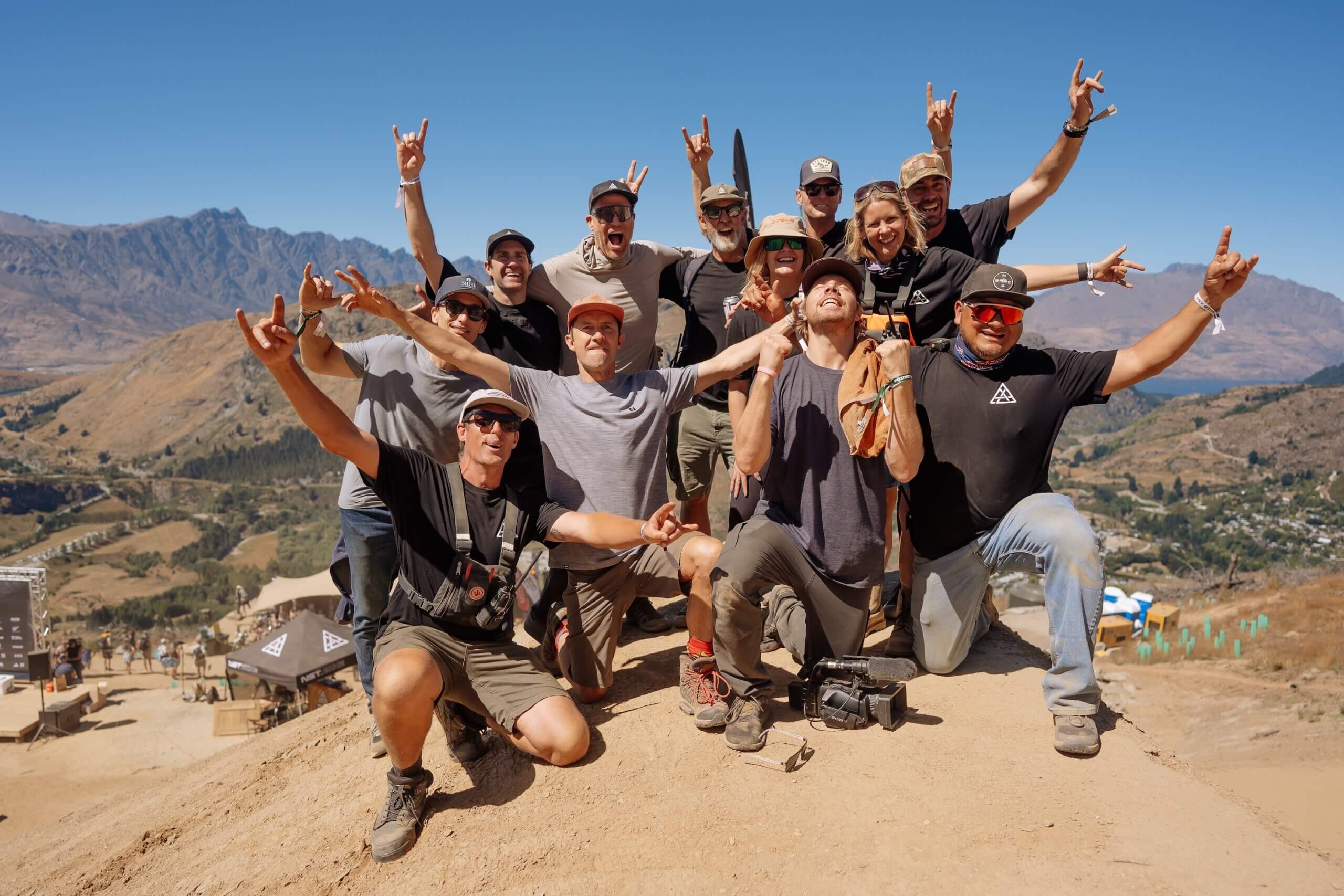
Photo | Rachel Hadfield
And so would you say that’s the most rewarding part of it for you?
Absolutely. I love seeing the kids and up and coming athletes succeeding.
The kids at the event were just frothing. And then the kids that missed the event and heard from their friends have now been coming up to me saying they have to get tickets because they heard it was just so amazing. I’m like, “Okay, that’s why you do it. That’s why you put in the hard work.”
To find out more, head to NST Bike.
Learn more about All Good Productions.