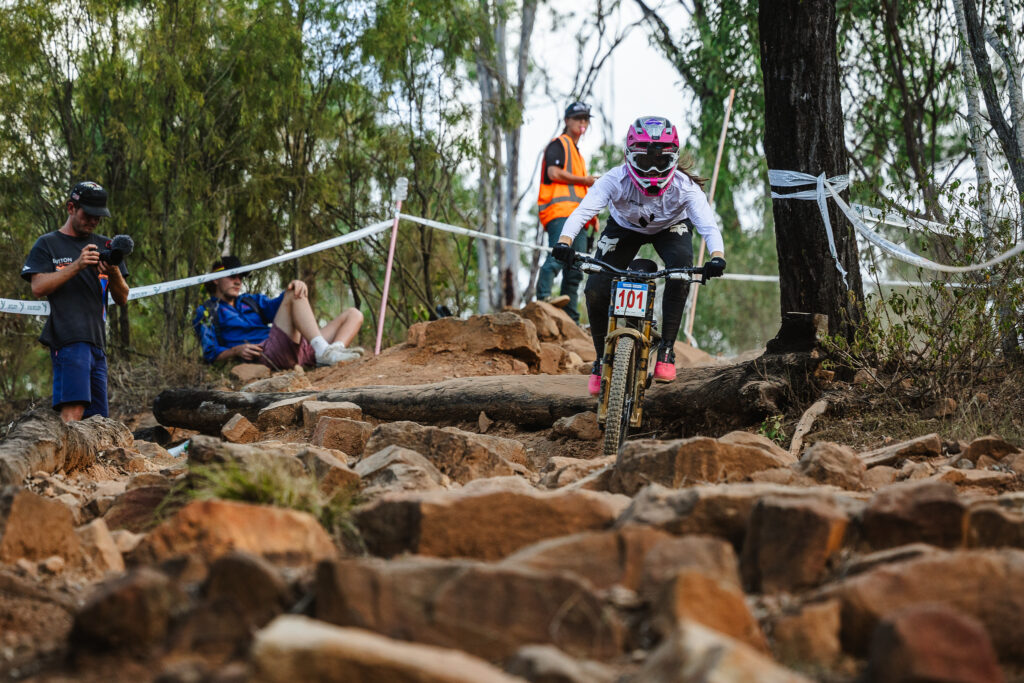


From starting out racing on a girl’s bike to taking the top step of a World Cup podium, when Oli Clark’s having fun, he’s riding fast.
There’s something in the dirt that keeps growing fast kids in small New Zealand towns. Maybe it’s the mix of mud, mischief and mild disregard for self-preservation. Maybe it’s just what happens when you give a farm kid a bike and a hill. Either way, Kaikōura’s Oli Clark is the latest to burst through that fertile loam—quick, quietly confident, and completely hooked on going faster.
Oli’s story starts the way a lot do: backroads and borrowed bikes, long days spent chasing mates, breaking things, fixing them, and breaking them again. From the foothills of Mt Hutt to Marlborough, it was less about training plans and more about that simple, addictive mix of fear and fun. But somewhere along the way—between motorbikes, muddy corners, and the Marlborough winter series—things started to click.
Now, at just 18, Oli’s already carved a name for himself among a new generation of Kiwi riders taking on the world’s best. He’s the sort of racer who digs in the off season, and doesn’t seem to have lost sight of why he started riding in the first place: because it’s bloody fun. There’s a simplicity to that mindset that feels quintessentially Kiwi—equal parts grit, humour, and just-get-on-with-it attitude.
This year, the kid who once turned up to races on a hand-me-down Liv Hail found himself standing on a World Cup podium. The same calm grin, just a bigger crowd. It’s a classic Kiwi arc: small town, big dreams, no fuss.
We caught up with Oli after his breakout junior season to talk about growing up in the New Zealand racing scene, what makes Kiwis so competitive on the world stage, the pressures of top level racing—and how, when it comes down to it, he’s still just trying to have a good time.
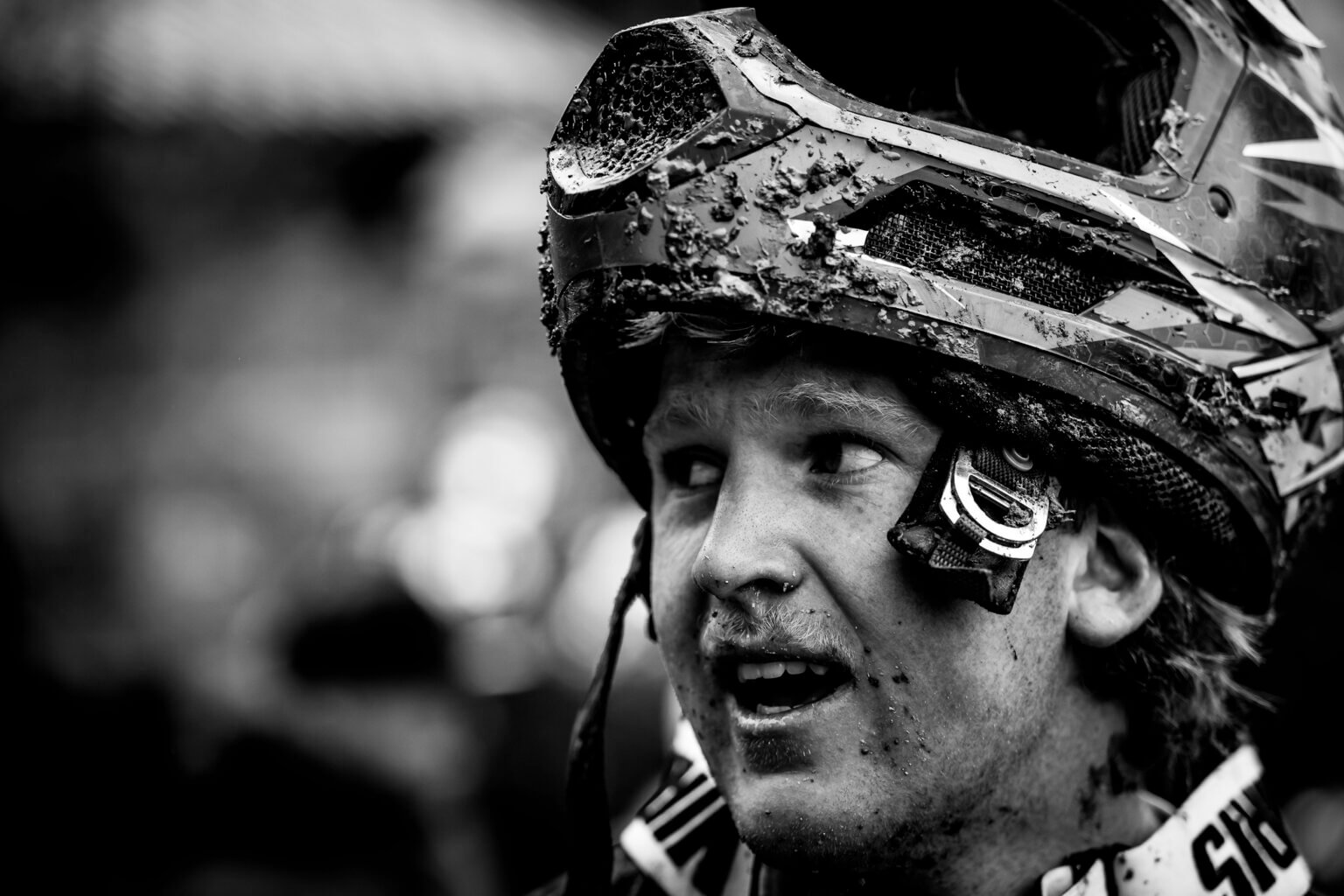
Hi Oli. Can you please introduce yourself and tell us how you got into mountain biking?
My name is Oli Clark. I’m 18 years old and I’m from Kaikōura, New Zealand. I’m originally from Methven, Mt Hutt area. I grew up skiing and motorbiking, living on a farm.
Dad was farming and he did joinery and Mum was a stay-at-home mum and they both love skiing. They travelled the world doing adventure tourism so they were pretty into all that.
I grew up skiing from a young age, learning at Mt Hutt. We mainly skied at a club ski field called Mt Olympus and whenever we went there, I would always see the bike tracks and wonder about what it’d be like to ride them.
Then my cousins started to race motorbikes, so I obviously wanted to do that. I got into riding motorbikes, chasing my older sister and just kind of pottering around the farm and finding hard things to do.
I think it was the adrenaline that I loved, that side of things, and just trying to be the best I can at something. And a big thing of that is competing with my mates, always trying to be better than them and stuff.
So you mentioned seeing those bike tracks on the side of Mt Hutt when you were skiing. How did you go from that into mountain biking?
We lived in Blenheim for a while and a few of my mates there got bikes, so I borrowed my sister’s mountain bike that she got for Christmas and took it out. It was an Avanti hardtail, or something like that. Nothing special.
So I just pretty much just took my sister’s bike from then on and it ended up coming home in pieces a few months later.
And how did you get from there into racing?
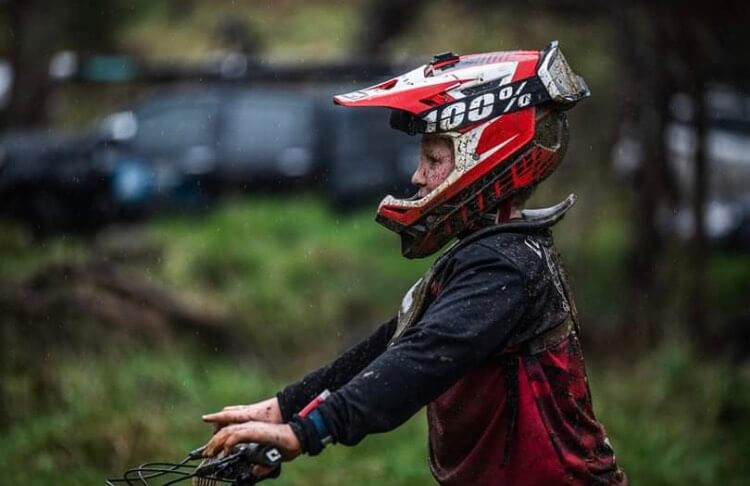
After I wrecked my sister’s bike, we got a cheap full suspension bike from a friend. It was a Liv Hail, a girl’s bike, and I started racing that at the Nelson winter series in Marlborough and getting into club races, which were pretty cool. Everyone was really helpful and it was cool to see people like Shannon Hewetson and Kieran Bennett out there racing. They were the people I looked up to at those races.
Did anyone give you a hard time about being on a girl’s bike?
Yeah, quite a bit to be honest but I didn’t really mind. I think the bike suited me quite well because I wasn’t super tall and it was a shorter bike. I didn’t really care, I was just happy riding.
You sound like you were a pretty competitive person at an early age. What were those early club races like for you?
Well, my first race was an enduro, but instead of racing the big clock on just the downhills, I was the first one to the finish because I thought the whole thing was a race!
But as I got into it more, I’d go travelling and racing with my mates. Then we started going to the National Champs rounds and it snowballed pretty quickly from there.
Did the results start coming early? And when did you think that you could be pretty good at this?
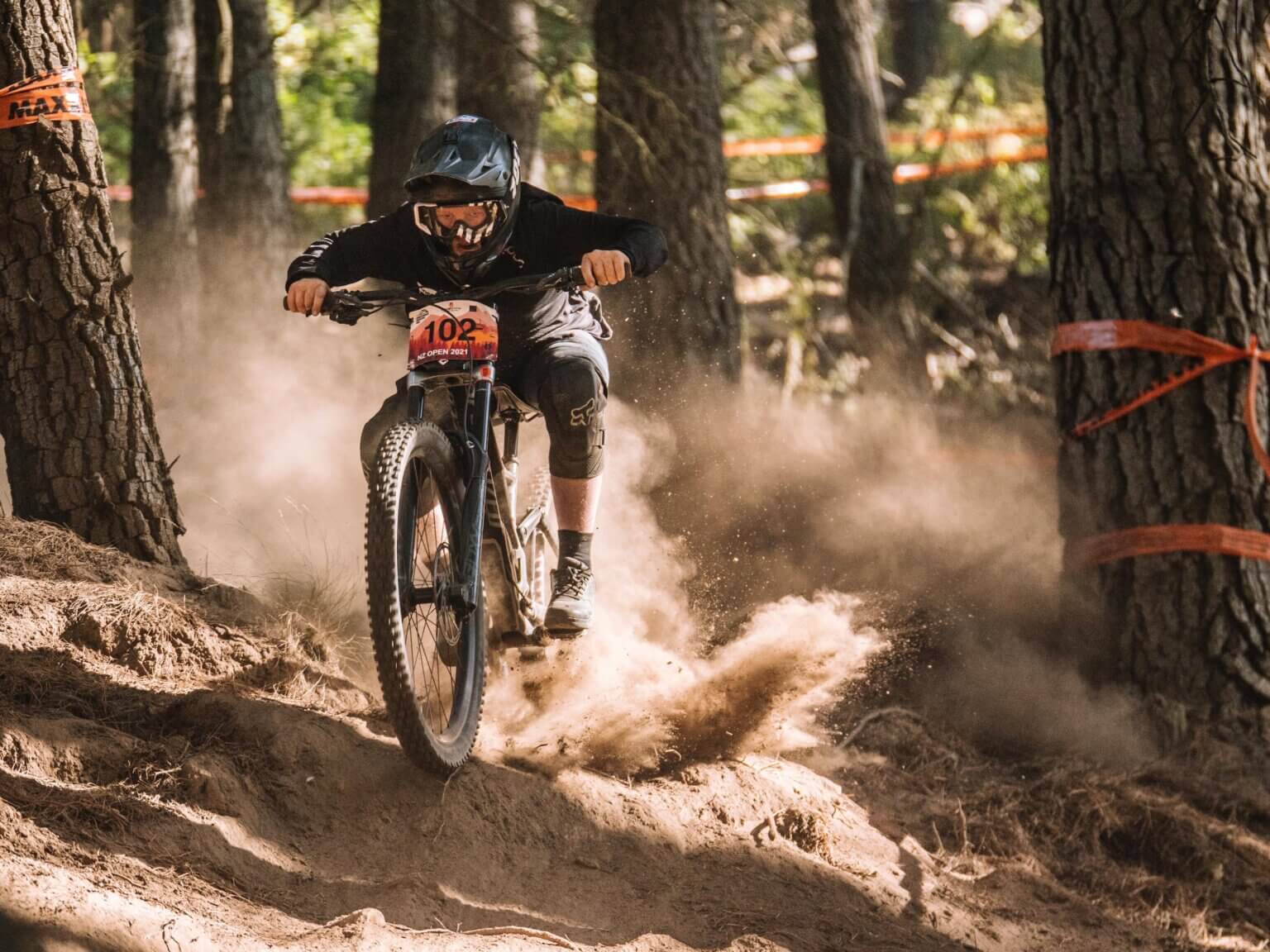
To start with, I wasn’t that good, but then I started to get a couple of podiums and doing alright in the Nelson winter series races, so I tried some Nationals rounds and the Christchurch Summer Series and I started doing better, getting some good podiums, so I kept at it.
I understand Justin Leov was a big part of your early development—how did he help you?
When we lived in Blenheim, Justin had some land just out of Blenheim where he’d started building tracks. So we went up there and helped him out and I’d just go riding with him, trying to follow him and learn, which was pretty cool.
I was never as fast as him back then, but it was cool seeing what he did, learning the lines he was riding, and trying to ride the harder tracks that he’d built.
So at what stage did you think you could try and race professionally?
I don’t know … I guess I never really looked at it that way. I always kind of wanted to be there, but I always just did it because I enjoyed it.
I mean, I always wanted to do well—as a racer, that’s all you want to do. But I think I try to bring it back to why I started riding in the first place, and that’s having fun. Because when I’m having fun, that’s when I ride the best.

“I try to bring it back to why I started riding in the first place, and that’s having fun. Because when I’m having fun, that’s when I ride the best.”
Does that mindset help you deal with the pressure of racing?
I think it just blocks all that out so all you’re worried about is doing your own thing and having the best time you can.
What was your first year as a junior racing UCI World Cup like? Was it a big step up from the New Zealand racing scene?
I went over to Europe before my first year at the World Cup after getting some good results back home, but unfortunately in my first race, in Innsbruck, I broke my wrist doing a dual slalom race at Crankwox.
When we moved to Kaikōura, we got to know these people who were keen to build a bike park, which ended up being Middlehill. That was when I was 13-14 years old. I’d spend heaps of time up there working and building with them. We went up with them to Crankworx Rotorua, where I got to race some kids from other countries.
The results were coming and I was doing quite well so we decided to go over to Europe to try some IXS races before my first year in the World Cup. But unfortunately that didn’t go to plan, but I managed to get a spot on Unior-Sinter Factory Racing—it wasn’t a factory team, but it was a good step for me, a good year of learning for me.
How was that racing different from the New Zealand racing scene?
The scene over there is just so much bigger. The amount of people, the fans, the size of the trucks, the teams—just the scale of everything is so much bigger. In New Zealand, we barely even have an E-Z UP tent for like a couple of us. We don’t warm up at the top of the runs. It’s crazy how much more full on it is over there.
How do you think New Zealand keeps producing such fast young racers that can beat riders from bigger countries with more money?
I think it’s mainly just because we’re all really close and we ride together so much. There’s also quite a lot of racing in New Zealand. In Europe it’s awesome—they have lots of good races, but the skill level in our National Series is quite high and the top riders are quite fast, so it’s good to learn from them.
Do you think our tracks have much to do with it?
I wouldn’t say our tracks are to the level of a World Cup track. There’s a lot of work to be done in that respect in New Zealand, to get some more good tracks. It’s more the way we ride together and push each other. And a lot of riders grow up riding BMX and motocross, which helps a lot.


What was the hardest thing about your first year as a junior?
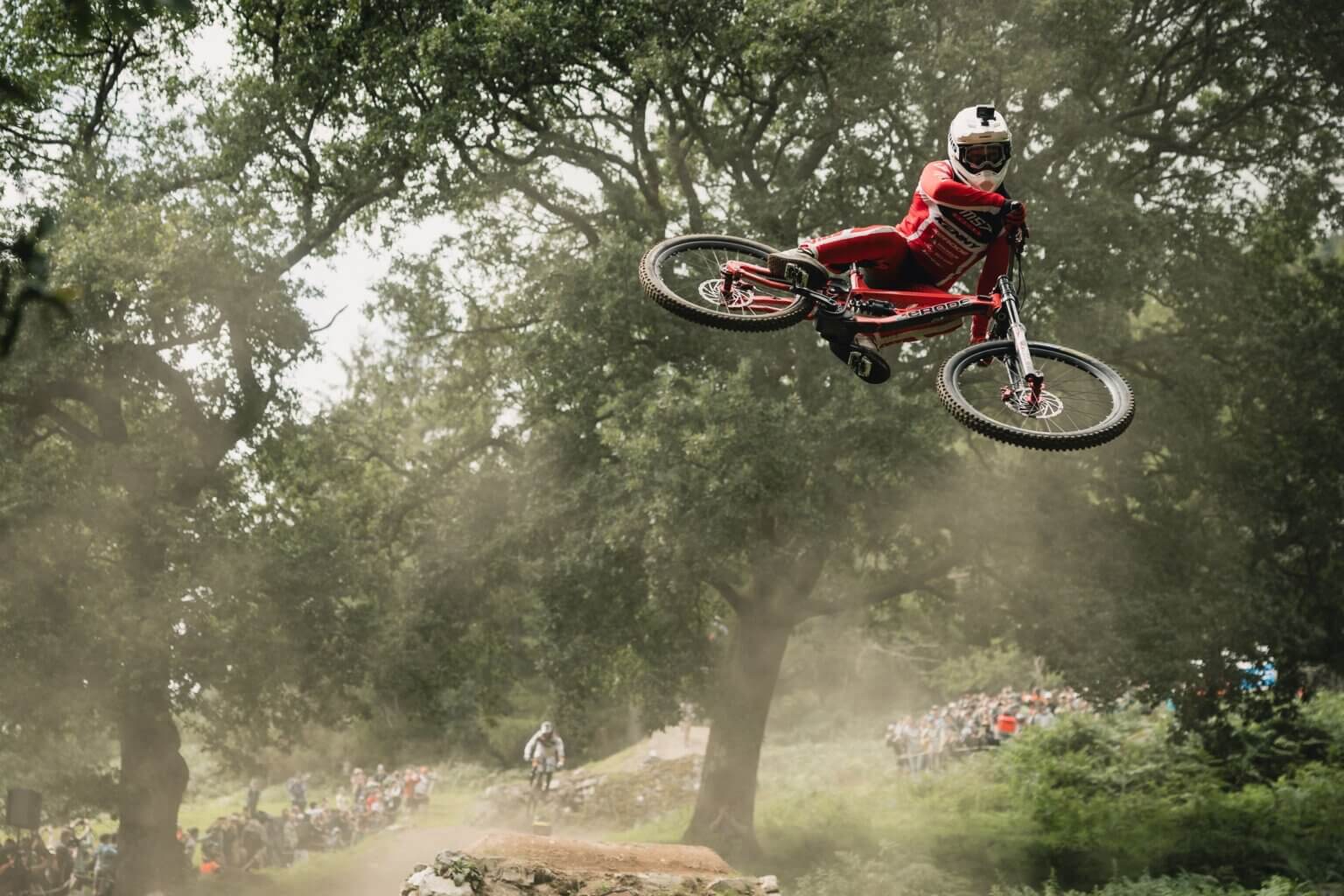
I think I always wanted to do way better. Coming from New Zealand, I felt like I had some good results, but in Europe I was only scraping into the top 10. I felt like I wasn’t there. It was a lot harder. It was a big step, but it was good. I had some good results and few crashes, but it was all a good learning experience.
What changed for you that improved your results?
I was left without a ride as all those smaller teams had to leave after the UCI rule changes and a lot of the development side of the World Cup racing was gone because of that, so I was struggling to find a ride. But during that time, I kind of figured out what I was missing and that was training. So I decided to get a coach for my pedalling and a coach for the gym stuff, and that’s been a big help. I think getting a good structure for my training made a big difference.
And I also wanted it a lot more. I was working and saving money to go racing this year. I think I just wanted it a lot more than the year before.
How do you find riding the new tracks? Does it take you long to figure them out?
I feel like I can get up to speed pretty quickly, but it takes me a little while to get to race pace. I think I can get the lines pretty good. I ride quite a bit with Tyler Waite, so we kind of see what works and what doesn’t by following each other. It’s good to have people to do that with.
Which rounds of the World Cup are you looking forward to?
We’re going to South Korea next year. I’ve never been there, so it’s always cool going to new places. Whistler is another new one—I’ve never been there so I’m looking forward to that. Otherwise I really enjoyed the new track at La Thuile—that was a good one. And obviously Leogang is one of my favorites.
You seem to really enjoy riding the steeper, harder tracks. Are they your favourite to race?
Yeah I like to think so. That’s where I have the most fun. It’s similar to what I ride back home at Middle Hill—steep tracks and big jumps.


You mentioned you’d been working and saving to race World Cups this year. How did the situation with MS Racing come about?
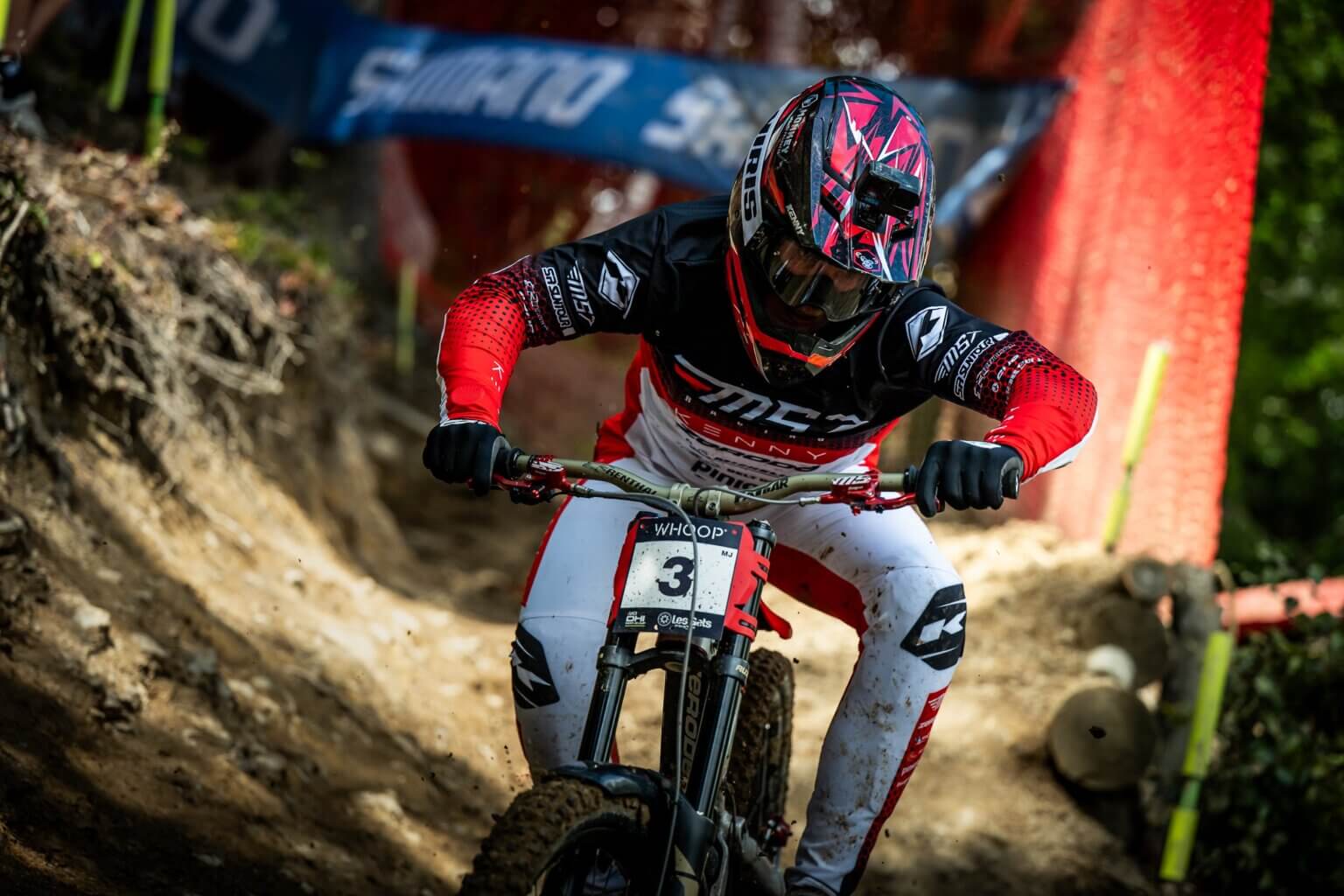
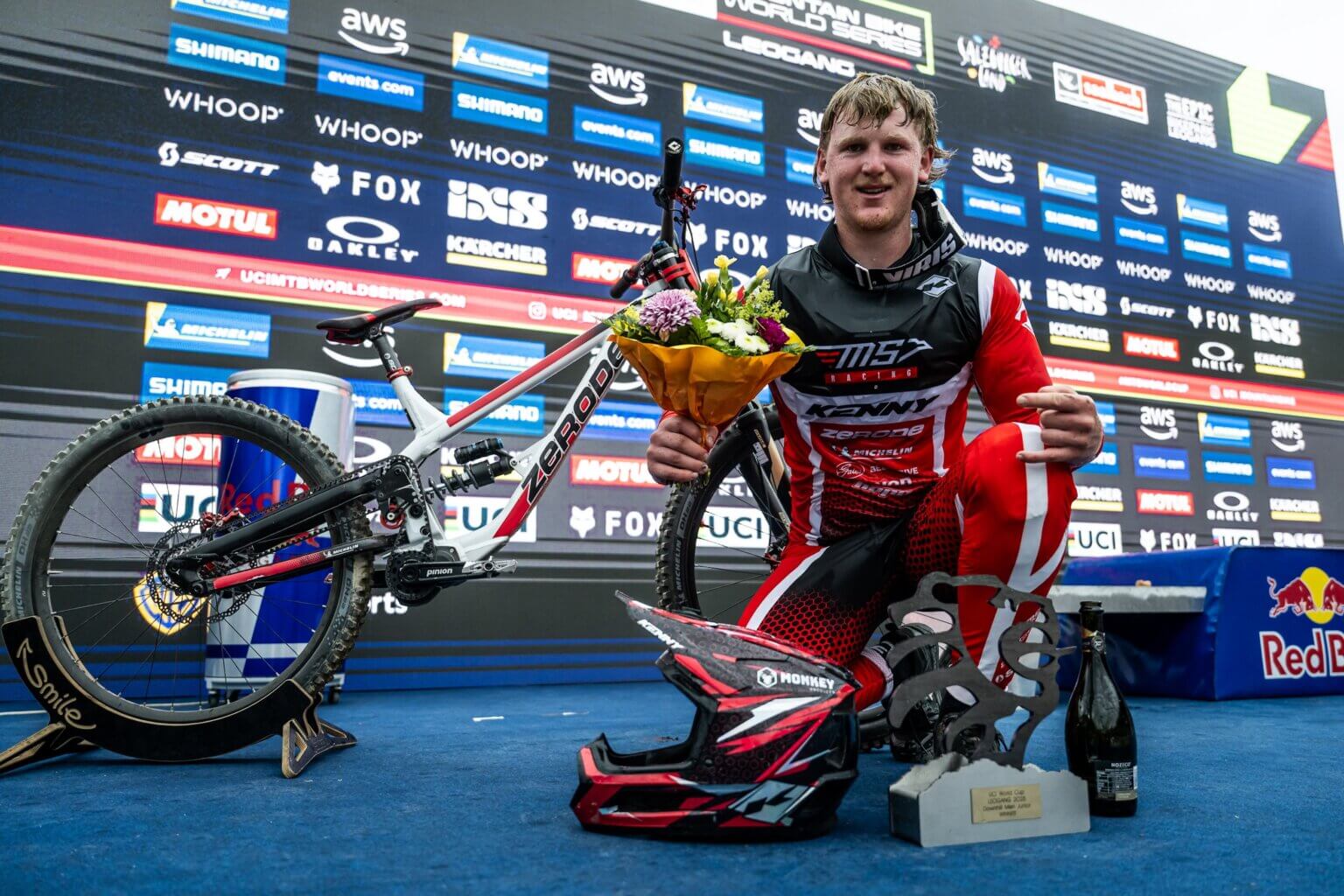
That was through Ali Quin at Zerode. I was planning to race as a privateer and ride a Zerode, so I was working to fund that, but MS Racing said they’d give me some support, and if a rider got injured, they could help me more. But after the first race in Poland where I got third, they gave me a bit more support. And then in the second race, I was on track for a podium, but got a flat tyre. And then the next race was Leogang, which I won, so after that they picked up the support for me quite a lot after that, which was good.
Did having that extra support make a difference for you?
I think I felt a bit more pressure to begin with. In my first year, I felt like I’d done what I could to get there so I’d just enjoy the experience. But racing for a team at first felt like there was more pressure on results. It wasn’t horrible, though. I’m not one to feel it too bad.
You came out strong and you were pretty consistent through the whole season.
Yeah, I got third at the first race in Poland, got a flat tyre at Loudenvielle on a good run, and then I won at Leogang. But right after Leogang, I got quite sick and lost something like 8kg in three days. I didn’t know what I had, but it was pretty horrible.
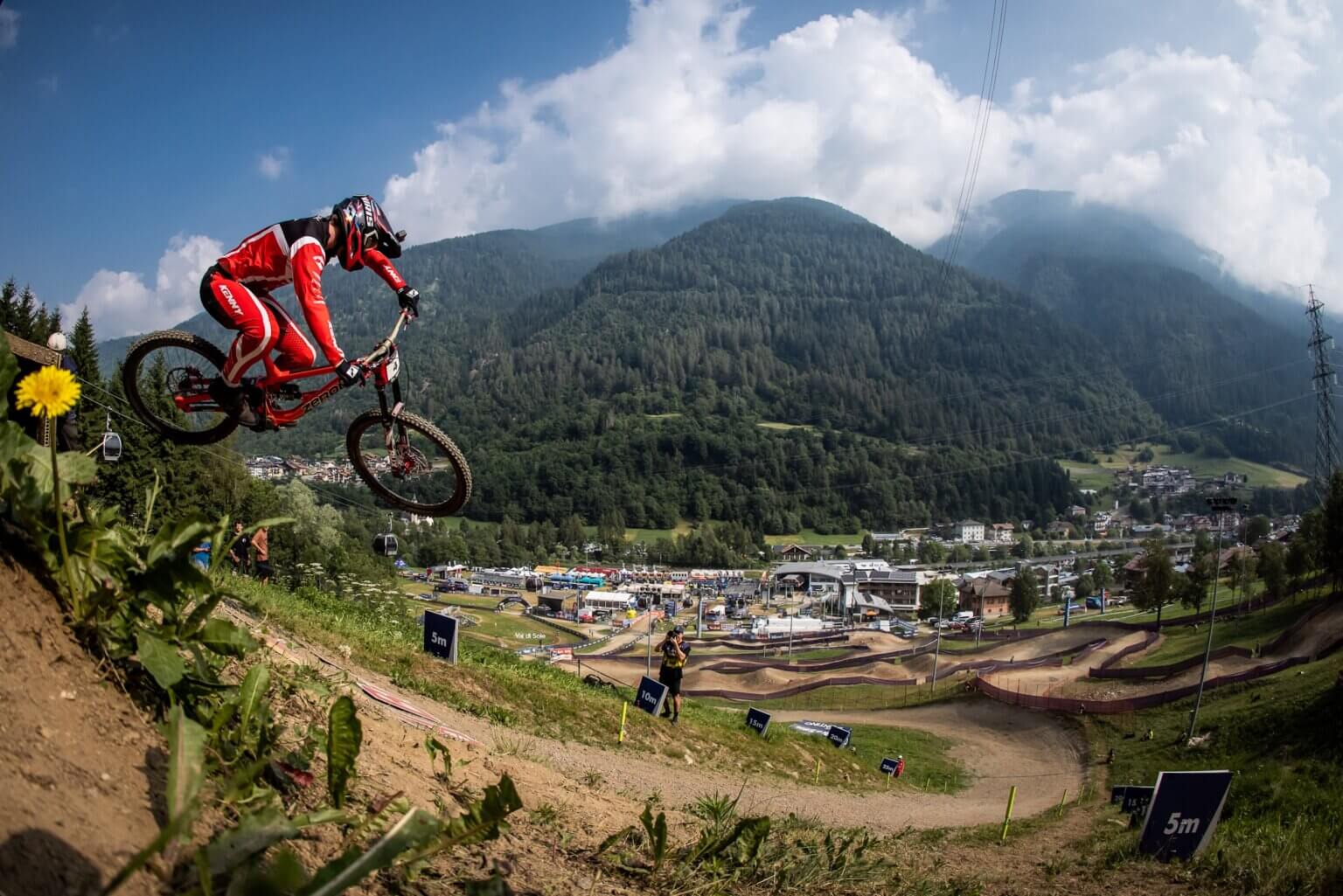
Then I went to Val di Sole, which is one of the hardest tracks, and I had no strength after being sick, but I got fifth there. That was a good result considering I was really unwell just before that round, so I was pretty happy with that.
Then I had a couple of crashes at the next few races. At Pal Arinsal I had a crash on first practice but managed fourth, just 0.2 seconds off the podium.

How do you deal with having to race when you’re feeling unwell or injured?
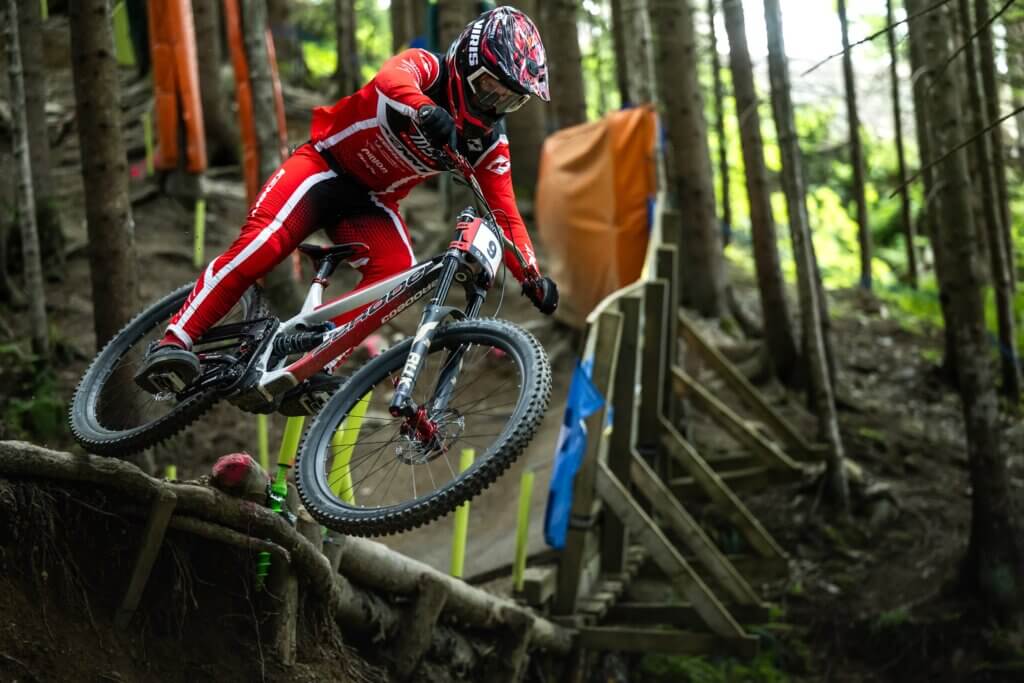
I think Kiwis, we all just battle through no matter what. You’re on the other side of the world, so it’s not like you can just go home—you’re there so you might as well just do it and give it your best.
How do you cope with riding with injuries, because most people are carrying an injury of some sort by the end of the season?
I was just trying to get through it, to be honest. The adrenaline, once that kicks in, it’s alright, but it can be pretty sore sometimes.
We had a pretty good physio and stuff for a couple of the rounds, so I just listened to them and tried to get right as much as I could. You can ride with quite a few injuries—if you can hold on, you might as well ride.
The junior field was pretty stacked and sometimes you guys were putting down faster times than the elites. What was it like racing against such a strong group of riders?
It was good because we were all pushing each other more and more, and that’s why our times were so good. We’ve always compared our times to the elite riders, even racing back home in New Zealand we used to do that.
Did you feel more pressure after your win at Leogang?
I did, but not a crazy amount. The team was really good to me. I just did the best I could and I was there. No matter what, I would’ve been there racing, so I just enjoyed it.
Do you get nervous before a race?
I do a little bit, but not heaps compared to other people. I think if you didn’t feel any nerves, you’d be upside down in the first corner.
“I think if you didn’t feel any nerves, you’d be upside down in the first corner.”
Do the nerves help you to ride more controlled, more conservatively?
Yeah. I know at some races, like Hardline, I was just really excited and really wanted to do well, so I was probably pushing too hard. I had a couple of races like that, but it was just because I was enjoying it.
You had a bit of a reputation of being a bit wild on the bike. Is that how you see your riding?
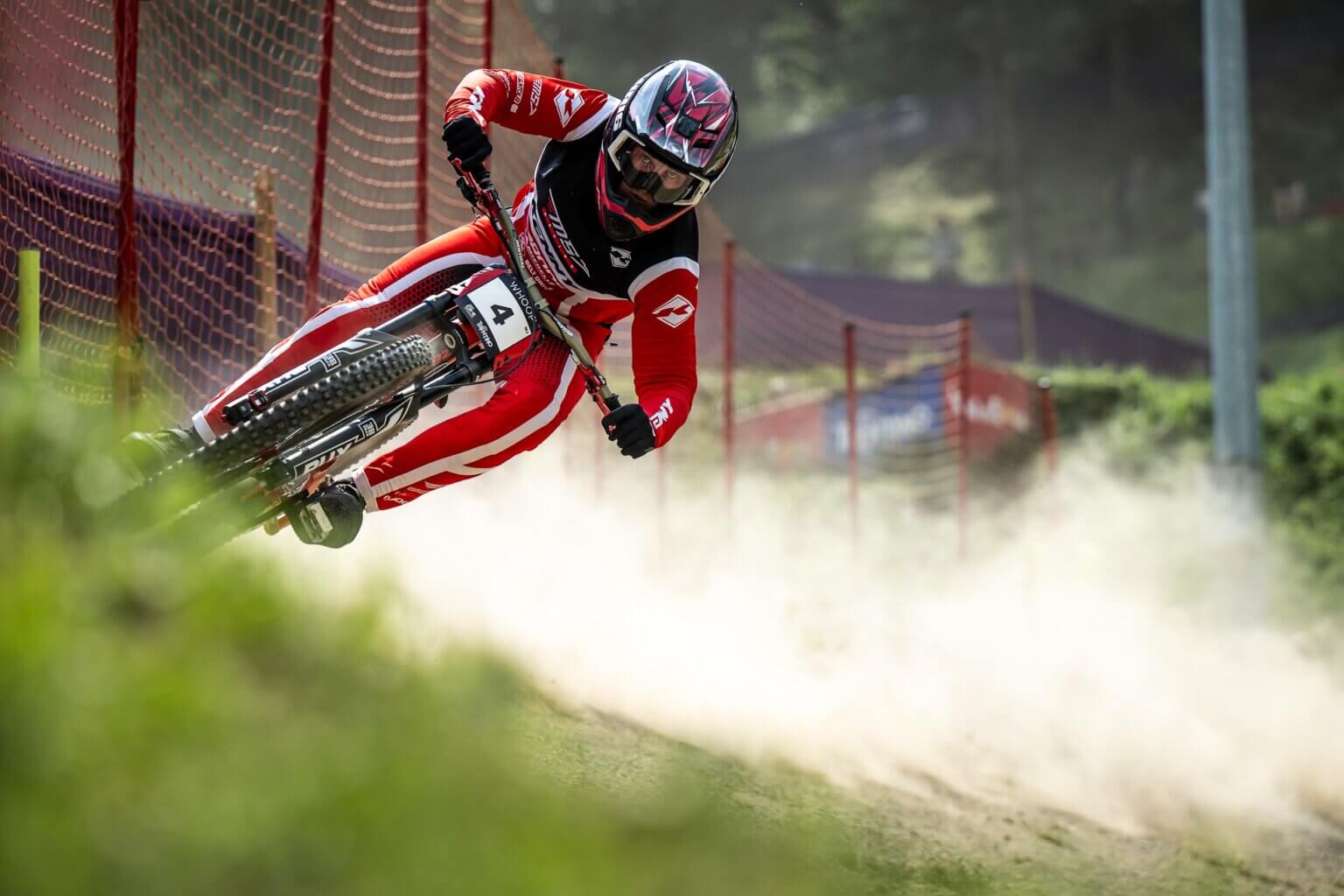
Not anymore. I used to. I noticed that last year I was pretty aggressive and loose, but now I’ve gotten a lot smoother.
Was that something you made a conscious effort to change?
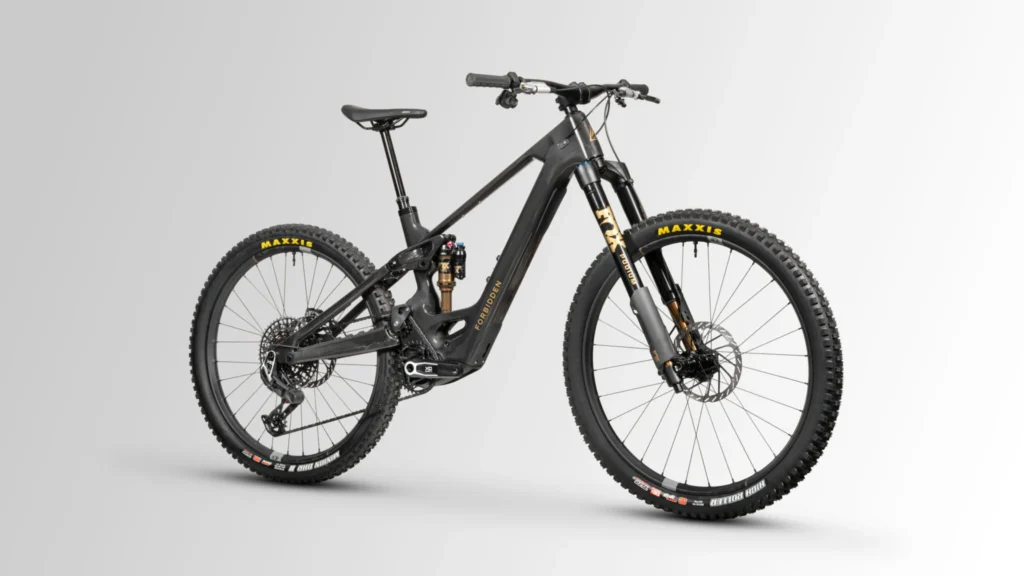
Yeah, I did in the season break. It was something I worked on a lot, and I think the bike helped a lot too. The Zerode is really planted, so I think I changed my riding style to suit the bike. I just kind of let myself go a bit more and didn’t push as hard and kind of let the bike do a lot more. They’re really good bikes. It’s what I would have chosen to ride if I was racing as a privateer so I was pretty happy to be honest.


Next year you’re moving up to the elite category. How do you feel about that?
Yeah, I’m looking forward to it. It’ll be difficult, and there’s a lot of work to be done. The offseason will be hard with training and getting prepared for it, but I’m looking forward to it.
And what’s that preparation look like for you? What will you be focusing on?
Just having a good routine mainly. I’m having a wee break now and then I’ll just get back into it. I’m trying to enjoy it as much as I can but then also taking it quite seriously, trying to get as prepared as I can. I’ll do a few New Zealand races too, which will be good.
Of that elite field, who do you look at for how you want to race?
I’ve always looked towards Loic Bruni—he’s one of the best, someone that everyone idolises, and he’s a really good representative of the sport, I think. He takes his training really seriously, rides really well, his riding style is really good.
There are a few juniors you raced against this season who’ll be coming through too.
Yeah I think if I’m standing with those boys or I’m beating them, then no doubt I’ll be doing quite well in the elite field. So if I can still beat them, I think I’ll be in a good place.
Follow Oli Clark on Instagram here.
Thank you to Cam Cole from Virus eyewear for putting us in touch with Oli. Check out Virus New Zealand here.
Thank you to MS Racing and Zerode Bikes for supplying images.