

How Peak Safety and Rotorua Mountain Bike Club’s youth first aid course is creating confident capable riders and creating a safer environment for all.
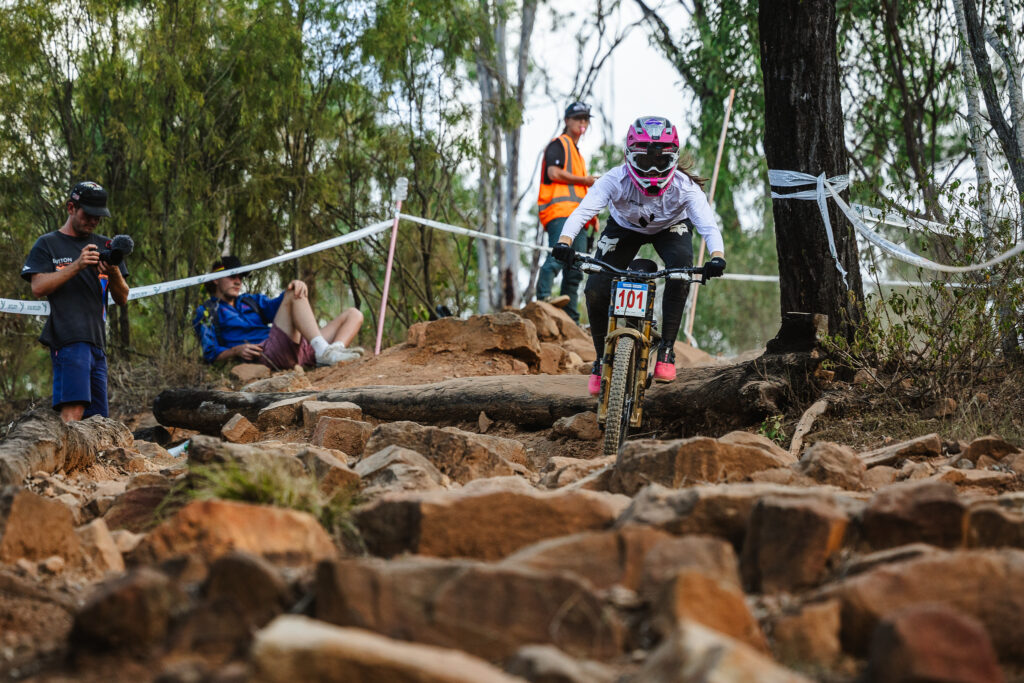
Kids these days: the riding is next level. One minute they’re watching a video of a rider doing something wild on a local feature, the next they’re trying it themselves. There’s no fear, but there are consequences.
And while mountain biking is inherently dangerous, you can’t rely on helicopter intervention, either of the parental or rescue varieties. Besides, one of the great lessons of mountain biking is self-reliance. But how do you safely send your pre-teen and their not-yet-fully-formed prefrontal cortex off into the woods with their mates for a day of reckless behaviour?
That was the question that led Henry Worsp, managing director at Peak Safety, to help create a Youth First Aid course tailored for mountain bikers—a grassroots programme now run in partnership with the Rotorua Mountain Bike Club.
What started as a way to prepare Henry’s own kids for the realities of riding unsupervised in Whakarewarewa Forest has grown into a vital part of school holiday life for rangatahi in Rotorua and right across New Zealand, from Woodhill Forest in Auckland through Jaffa Kids, to Central Otago with Up-cycles youth bike ambassadors, and is now contributing to a safer environment for all riders.
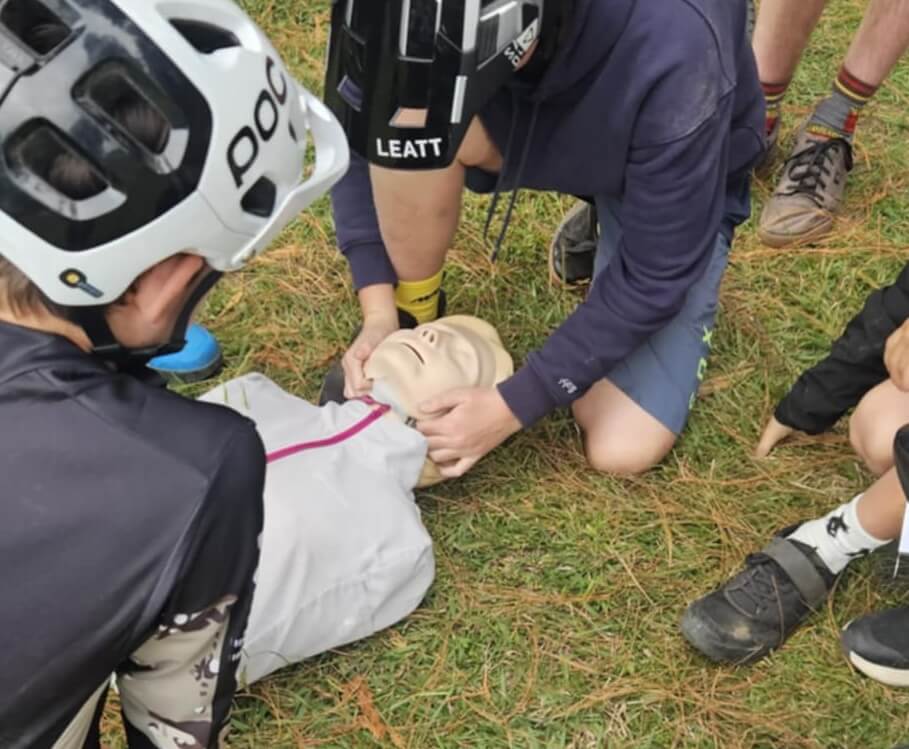
This isn’t your average first aid course. It’s two days of hands-on learning, practical skills, and real-life trail scenarios taught by medics who know the terrain and the injuries that come with it.
We sat down with Henry to talk about how the programme is building the next generation of confident and capable mountain bikers.

Hi Henry. Can you please introduce yourself.
My name is Henry Worsp and I’m managing director at Peak Safety. In that role, I’m responsible for business oversight and strategy, as well as supporting our crew to deliver quality first aid, working at height training, and outdoor medical services throughout New Zealand.
What inspired the creation of a first aid course for young mountain bikers?
When my boys were about 9 or 10 years old they just wanted to go off and ride with their mates in the forest. We just thought it would be good to give them some first-aid training so if something happened they’d be able to make some decisions and know what to do on the scene. Initially we invited a few mates and other young riders but soon the Club got wind of it and it’s grown to become a regular activity for the school holidays.
Why is it so important for young riders to learn first aid in the context of mountain biking?
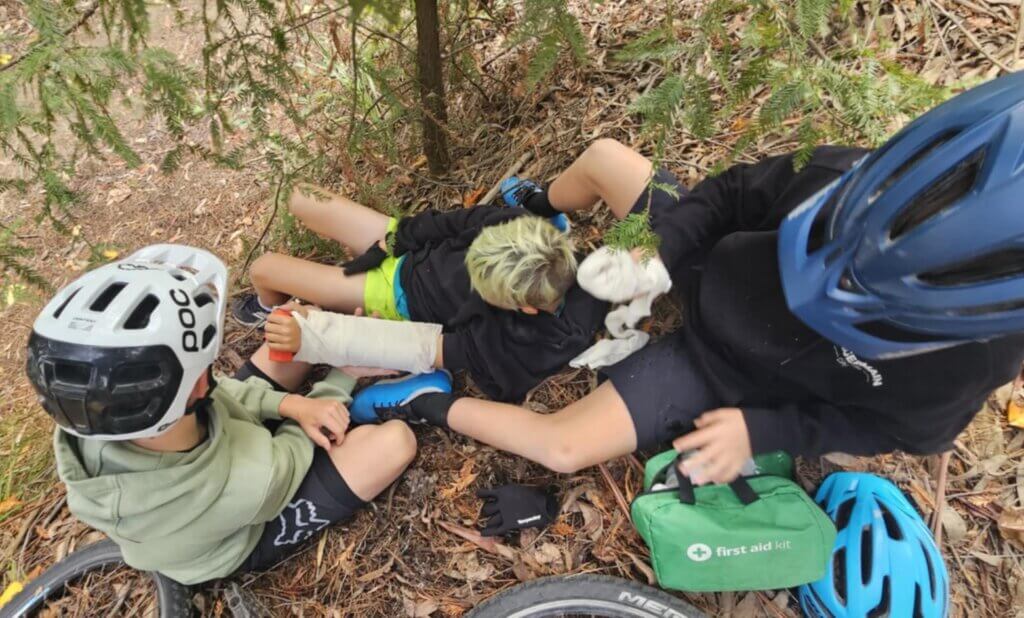
A general first aid course will typically be designed around calling for help and waiting but, while that’s appropriate for some settings, when you’re out in the forest you need to make a few decisions, like what to do if someone’s unconscious, whether you should move a person or keep them still, and how to manage safety aspects specific to mountain biking—so keeping everyone else safe and keeping the patient safe. You also need the ability to make some little interventions to get someone out of the forest, like splinting a broken bone.
Can you walk us through what a typical day looks like during the course? What hands-on skills do participants come away with?
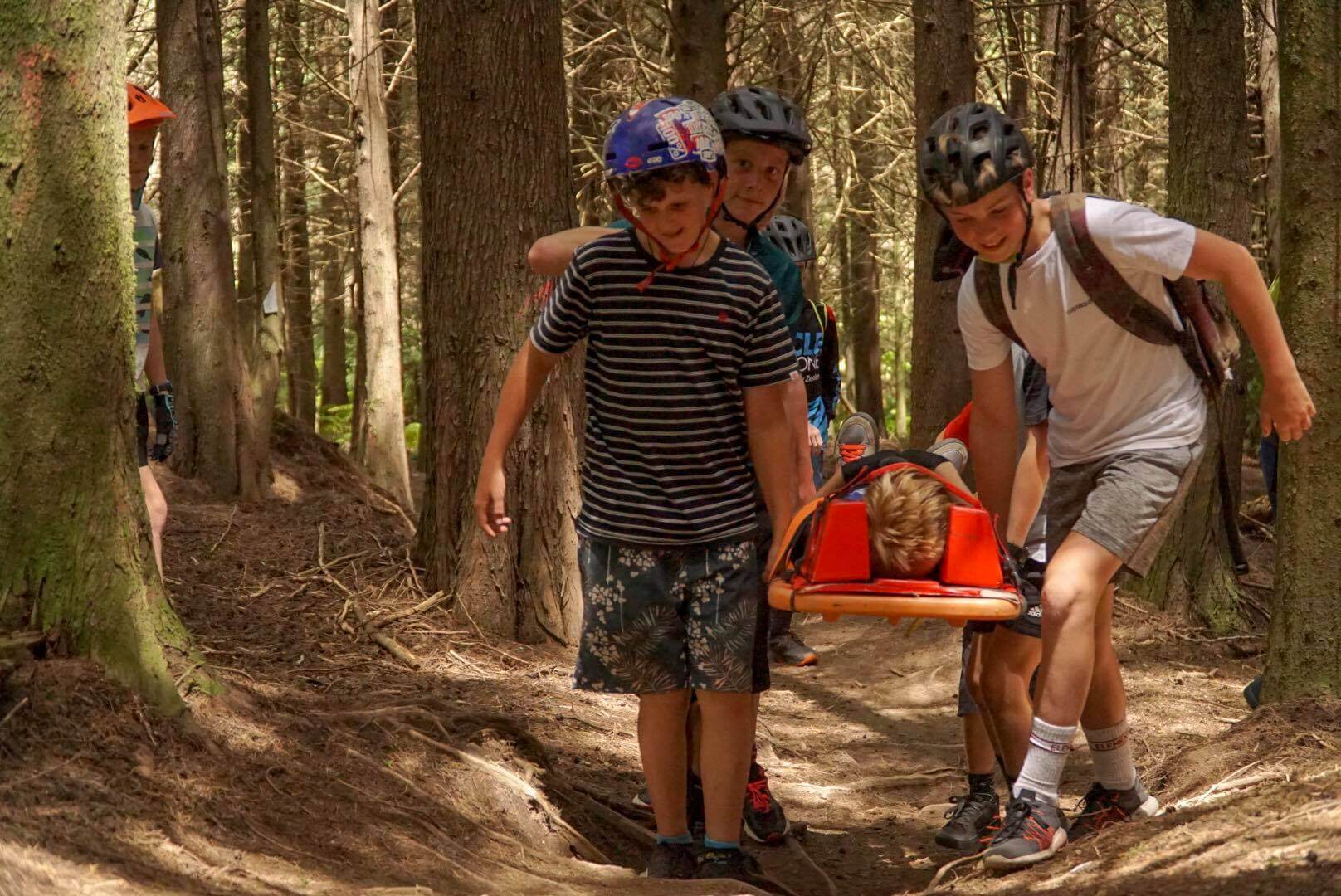
It’s a one day course spread over two days. Over those two days, people learn the aspects of successful site management, including leadership, delegation and communication, and obviously that entails safety as well.
They’d be shown how to do really robust patient assessments by following an assessment process to figure out the important things: So is this person conscious? Are they responding? Do they need an ambulance? Are they breathing? Is their airway open? What’s their circulation like?
We also take them through a trauma type assessment showing them a methodical way to assess a patient for different injuries and how to make decisions based on those. Included in that is an assessment of the person’s spine and whether they meet the criteria to be kept still where they are as a spinal patient or whether they can be safely moved. Obviously we have a very cautious approach to that.
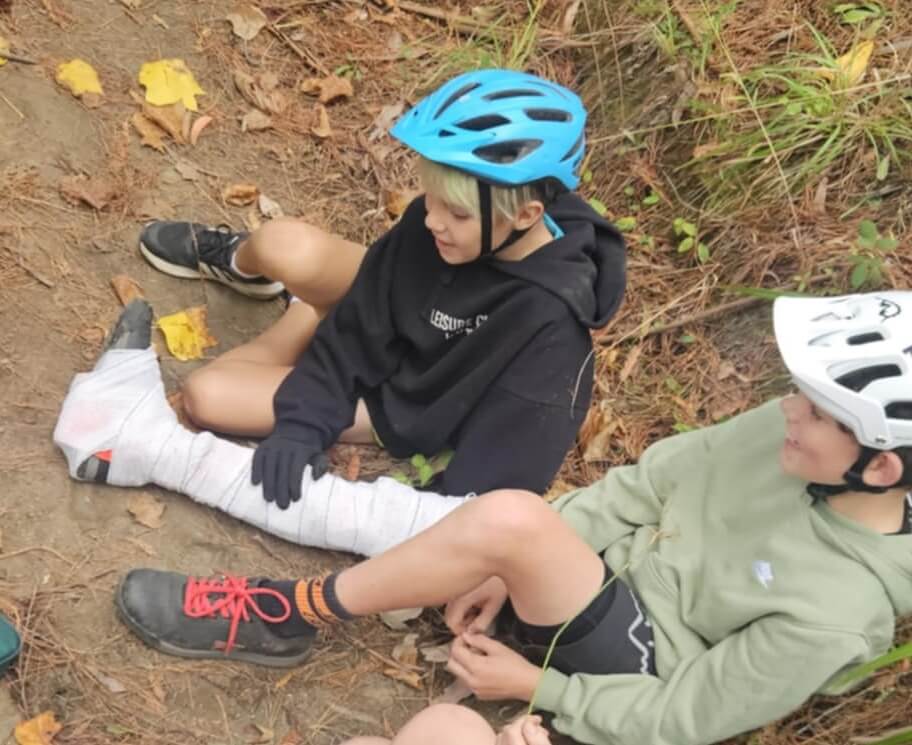
The kids would also be taught how to immobilise some injuries and what they could use to improvise a splint for a fracture.
There’s a pretty strong emphasis on assessing concussion, and not only assessment, but also what needs to happen to that person for their long term health and trying to change some attitudes towards that.
We also teach participants about what to do if someone is bleeding profusely, if someone’s impaled by part of their bike or a stick or something like that, and how to keep people warm. As well as a whole lot of stuff around potential medical conditions.
They’ll also get taught how to do CPR and use a defibrillator—there are defibrillators in the forest here. So if they come across someone who wasn’t breathing they’d know how to resuscitate them.
What kind of real-life scenarios do you use in the training?
All the pictures we use for teaching are from patients we’ve attended at different events in the forest, so we use those as case studies for the kids, obviously with the permission of the patients. We also get on the bikes and ride around the trails and set up scenarios on the trails that the kids will come across and have to deal with as if they were riding and came across an accident.
How does this course empower young riders both on and off the bike?
We’ve had some awesome feedback from our rangatahi who’ve had to respond to accidents after doing the course. They’ve let us know that all their training has come back to them: how to keep everyone safe, how to do the assessments, how to call for help, and what to do in the meantime.
Their feedback is that they feel more confident because they know what to do in an emergency. We often hear that the adults at the scene are a bit panicked and lost and it’s often the youth that take the leadership role to make sure the stuff that needs to happen happens.
So really this course empowers rangatahi to use the skills they’ve learned and gives them the confidence that they can manage emergencies in the forest
"We often hear that the adults at the scene are a bit panicked and lost and it’s often the youth that take the leadership role to make sure the stuff that needs to happen happens."
Are there any common misconceptions about first aid in outdoor settings that you try to address in the course?
A common one we get on all first aid courses, including youth ones, is that someone who’s standing and walking around doesn’t have a spinal injury—people can definitely get up and move around with spinal injuries. One of the things we teach people is that no matter what position you find a patient in, you need to keep them still while you do assessment to rule out a spinal injury.
We get lots of patients that think they’re okay but after you assess them you find out that they’re actually not okay. We keep it simple with a rules-based system where if the patient passes all the checks, then they’re safe to move around. If they fail one of those checks, then we need to keep them still and treat them as a spinal patient. It just takes the subjectivity out of it.
How does this course tie into the bigger mission or philosophy of Peak Safety?
We’re passionate about training and upskilling people. We’re all outdoors folk, so we know that eventually outdoors people are going to get injured and it feels really nice to be part of a training movement that helps people feel more confident about managing emergencies and to get patients to where they need to go in the most efficient manner with the best care along the way.
That’s our kaupapa at Peak Safety and the Rotorua Mountain Bike Club—whether people are locals or visitors to the forest, we want everyone to feel looked after. So having a First Response Unit to help people at no charge, and having our locals trained and ready to respond, is all part of looking after each other, our manaakitanga.
To find out more, head to Rotorua Mountain Bike Club and Peak Safety.