

JW Athletic Performance’s Jordan Welsh on building bulletproof riders
When it comes to pushing limits on two wheels we often focus on the bike. But what about the pilot? As mountain biking becomes faster, rowdier, and more physically demanding, the need for riders to look beyond the trail and into the gym has never been clearer.
Enter Jordan Welsh—a strength and conditioning coach with a passion for mountain biking and a sharp eye for performance. Originally from Scotland and now based in Mount Maunganui, Jordan has built a name for himself in elite sport through his work at the Adams Centre for High Performance, while simultaneously carving out a niche in mountain biking under the banner of JW Athletic Performance.
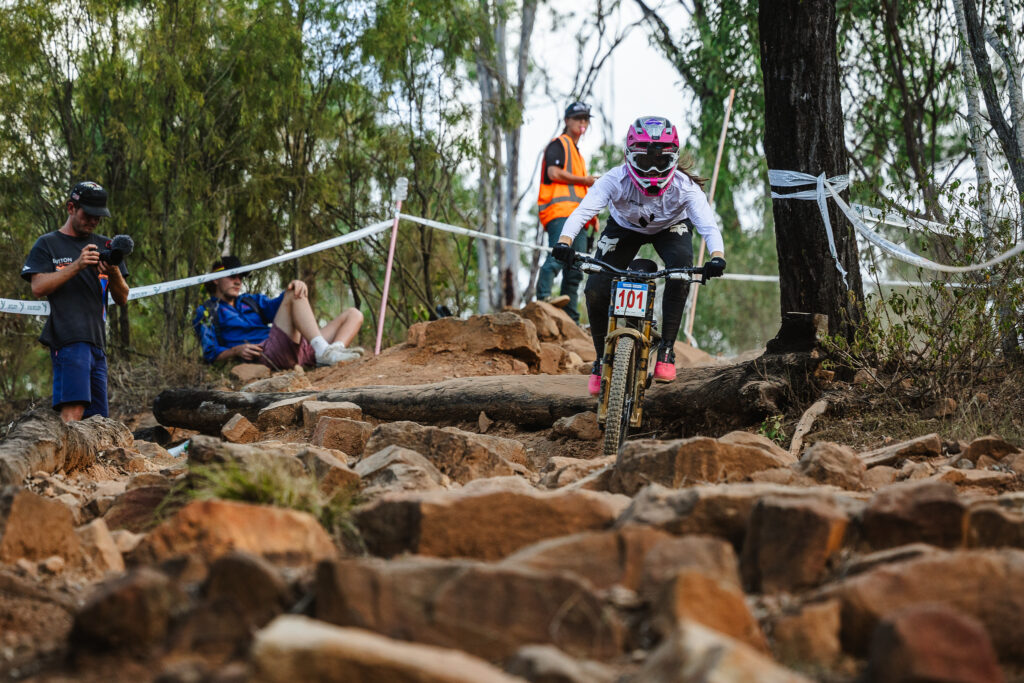
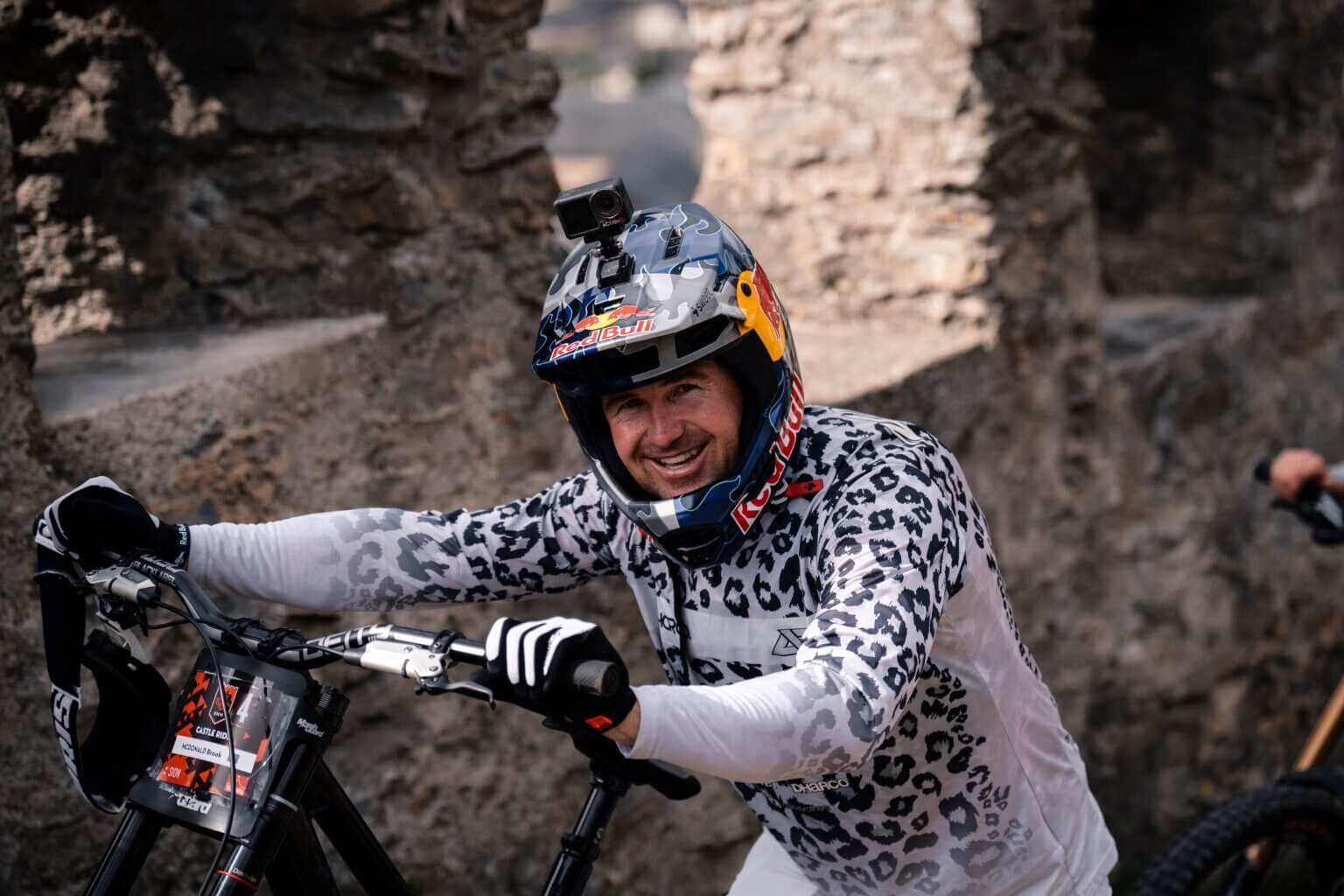
Whether he’s working with downhill pros like Brook Macdonald and Ellie Hulsebosch, or supporting the next generation via the New Zealand MTB Academy, Jordan brings a practical, athlete-first approach to strength training that’s rooted in performance enhancement and injury prevention.
We sat down with Jordan to find out what makes a stronger rider, how to reduce the dreaded arm pump, and what every mountain biker should be doing right now.
First of all, could you please just tell us a bit about yourself and what you do?
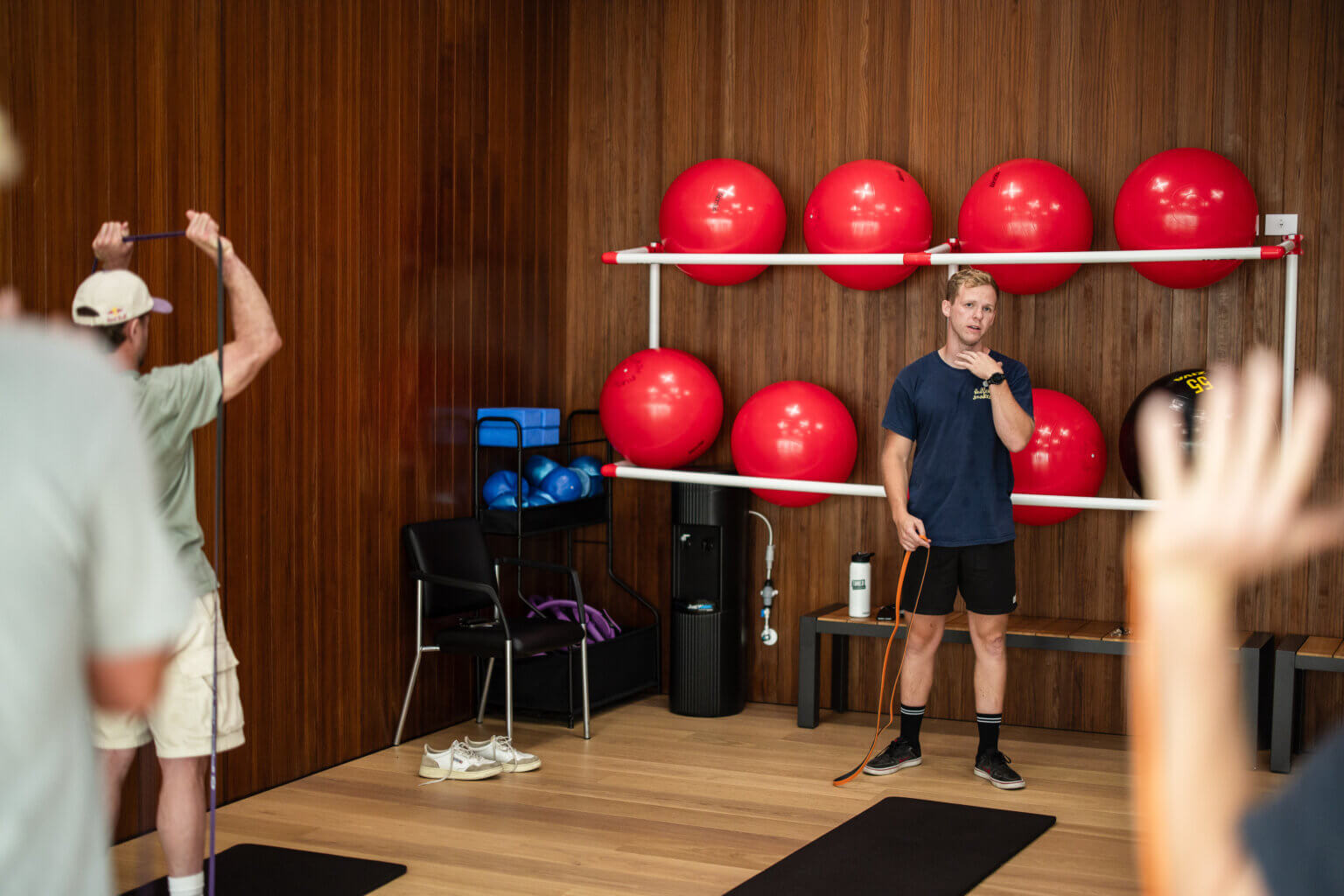
My name is Jordan Welsh. I’m originally from Scotland but I’ve lived in New Zealand now for three and a half years. My full-time job is a strength and conditioning coach, which I’ve been doing for nine years now. My main role is at the Adams Centre for High Performance, based in Mount Maunganui, where I work with a range of different athletes across different sports. I also work privately with a lot of mountain bikers around the country.
How did you get into strength and conditioning coaching for mountain bikers?
I’m a mountain biker myself and I got into that during Covid while trying to earn some extra income while everyone was at home. I was lucky to know a couple of riders that were interested in getting involved and I just pushed the social media side.
And then with my main role, I was really lucky to start working with Ellie Hulsebosch. From that I carved a little niche for myself as a mountain bike rider working with other riders.
Who are some of the athletes you’ve worked with?
I’m pretty lucky that I get to work with Ellie and her younger brother Cole. I also work with Indy Deavoll in the South Island. And in the past year I’ve been working with Brook Macdonald as well, which is really cool.
I’m also part of the NZ Mountain Bike Academy, providing some strength and conditioning support. So within that, I can provide riders that are part of the Academy with that resource coaching, as and when they need it.
Why is strength and conditioning training particularly important for mountain bikers?
It’s important for a couple of reasons. A big one is injury prevention because some of the crashes riders have are pretty substantial. We want to make sure you’re strong enough and have great range of motion so you minimise injuries as much as possible in a crash.
And then there’s also how physically demanding some of the tracks and courses are now. There are a lot of holes and ruts that riders have to stay on top of and being strong and powerful is key to staying centered on the bike and riding as fast as possible.
Are there specific types of strength training that mountain bikers should focus on?
It really depends on the individual at that time. When we’re looking at it now in a World Cup season, there’s not a lot of time between each race. So we’re just looking to maintain the strength those riders have. And for others, it might be a case of increasing their muscle mass, so we’ll do some hypertrophy-type training.
"We want to make sure you're strong enough and have great range of motion so you minimise injuries as much as possible in a crash."
How does the training differ between downhill racing, cross country and enduro?
The differences between a downhill racer and an XC athlete are pretty big. It’s really interesting if you look at the body shapes from a downhill perspective, you’ve got lots of different body shapes, even if you look at the riders at the World Cup scene. So they’re going to traditionally do a bit more strength-focused work with shorter reps and some volume work.
But with our cross country riders, we have to be super mindful that these guys are out riding constantly and their volume is really high. Plus we don’t want to stack on too much muscle mass for them just because of their body shape—we want them to be nice and light on the bike so they can be the most effective.
Is there a part of the body that ordinary mountain bikers should train more?
One area I think is not trained enough is the foot, ankle and calf. Obviously, most people have their foot clipped into pedals and that makes that ankle a high-risk area, just because of the position your ankle is in. And on a mountain bike, you absorb lots of force, so coming off a drop can cause quite a significant injury because your ankle is just basically floating.
How should riders think about their strength training in the off season versus the mid season?
Ultimately riding the bike is the most important thing during the racing season, so ensuring that we can maintain all that work that was done in the off season and getting that extra 0.5-1 per cent without giving them too much work is really key.
And then in the off season, we’ll always look at the previous season and ask “what do we need to improve? What was good about last season? But what do we know? What wasn’t so good?”
We’ll try to add a lot of volume. It might be a case of doing that hypertrophy work—lots of sets and lots of reps—just because it takes a lot out of the rider and it’s the best time for that. It’s pretty taxing on the body, so if we do it at the right times in off season, we know they can feel fatigued and it won’t impact their riding too much.
So how do you balance integrating strength work and recovery time as well as time on the bike?
That’s where the off season plays a big part. We do testing in the off-season so that as we get closer to the in-season, we can see what our minimum thresholds are for, say, a trap bar deadlift. From that we can figure out that we need to do, for example, three sets of three repetitions at this weight to maintain strength. And we know that you’ve got one of the residuals behind that, so your ability to do that and not be fatigued is key.
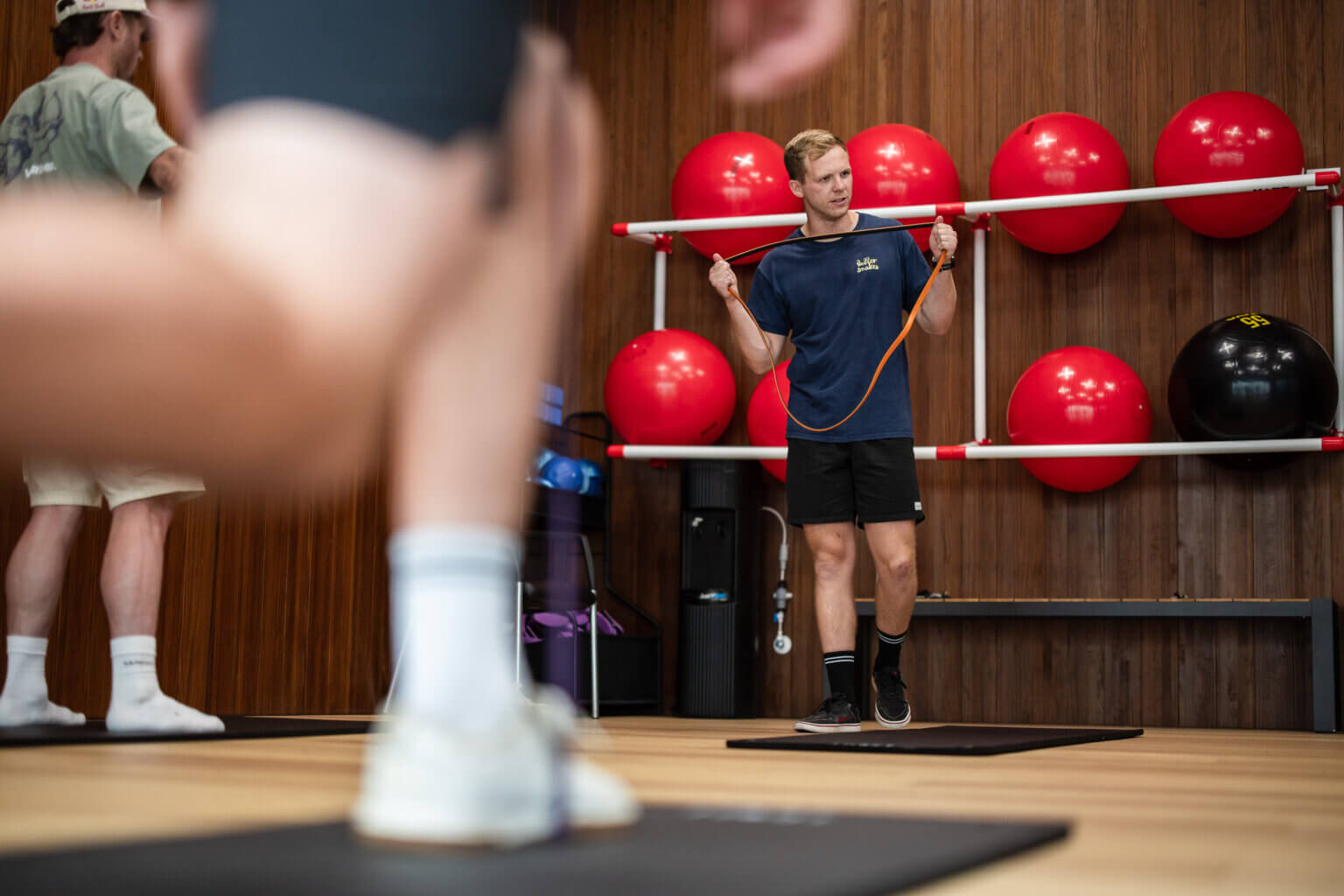
When we’re in the season, it means we can have a short session of about 40 minutes, and we’re maintaining what we’ve got.
And then for recovery, we’ll look at doing longer rides, trying to build up that base, that “zone two” work, if you want to call it that. But when we get into the season and need to maximise recovery, we really shorten down the sessions but we’ve got enough of that base that we’ve built. So that might be any kind of short sprints that last 10 to 15 minutes. The athlete is not spending hours on the bike, they can go away and they can maximise their recovery, whether that’s doing different protocols or just actually relaxing watching TV.
"In terms of foundational movements and exercises, you can never go wrong with a squat."
What sort of movements and exercises should every mountain biker be doing right now?
In terms of foundational movements and exercises, you can never go wrong with a squat. It’s a great bilateral, so both legs working at the same time, and lower body movement.
A hinging exercise, something like a Romanian deadlift, is really, really key. Being able to hinge from your hips and build up your posterior chain, so your hamstrings and your glutes. When we start to look at positions on the bike, you can see the position around a rider’s hips and it becomes such a key exercise for them. It gives us that ability to overload them as well in the gym, increasing the weight again with that good technique. And then when they get back on the bike, holding a strong position while riding technical trails becomes really easy.
And then from an upper body perspective, we’ll always go for a push and pull. Some go to foundational movements are a pull up or a chin up—difficult, but once you get to that point, it shows really good strength. And then from a pushing aspect, we typically look at something like a military press or something like a press up or a bench press.
How would you help a rider who’s struggling with grip strength and hand or arm pump?
Really key for this is time under tension. For this, we’d do lots of farmer’s walks or farmer’s carries—kettlebells in either hand and standing in the same spot or walking with a strong position. It’s about building that time under tension.
Another one is the plate pinch. So holding weight plates pinched with your fingers and seeing what period of time you can go for. And then we just start to overload that element, whether that’s time or increasing the weight.
What is your favorite exercise for riders?
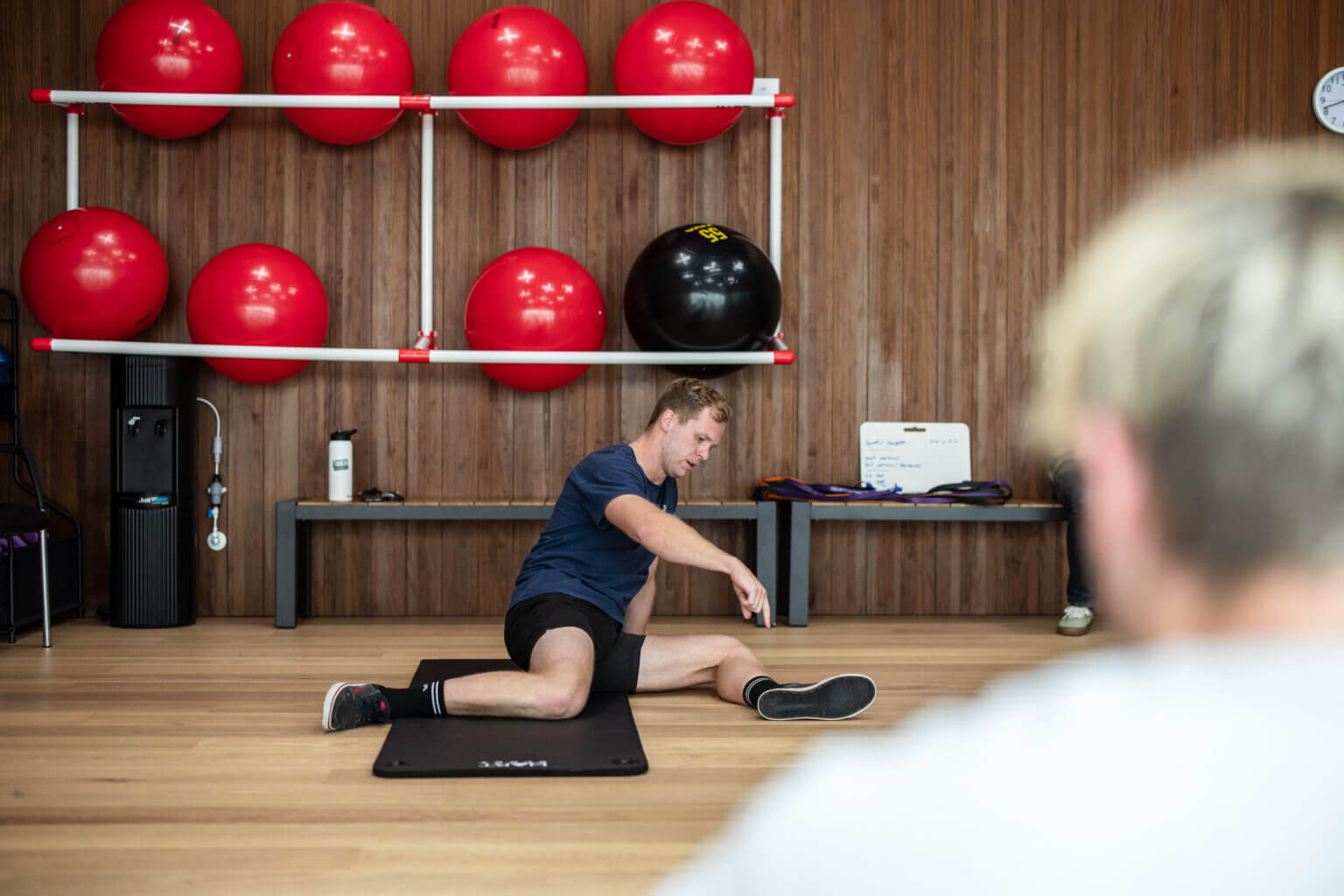
I’m going to go for a split squat—it’s like a lunge position, but you stay static and you basically just go up and down. It’s just a great exercise for building single-leg strength, it keeps your thoracic spine nice and tall, and gives you a solid base to work on.
What is one thing you’d encourage every rider to start doing today?
Build the habit of training. Whether that’s just 20 minutes a day, it doesn’t matter, just start building up that habit. Don’t worry about doing a big long, hard session every four weeks, just add 20 minutes of strength work each day and then build up every time.
Strength and conditioning
Here are Jordan’s recommendations for strength and condition exercises you can start today with minimal equipment. Form a habit and soon you’ll be riding stronger and recovering faster.
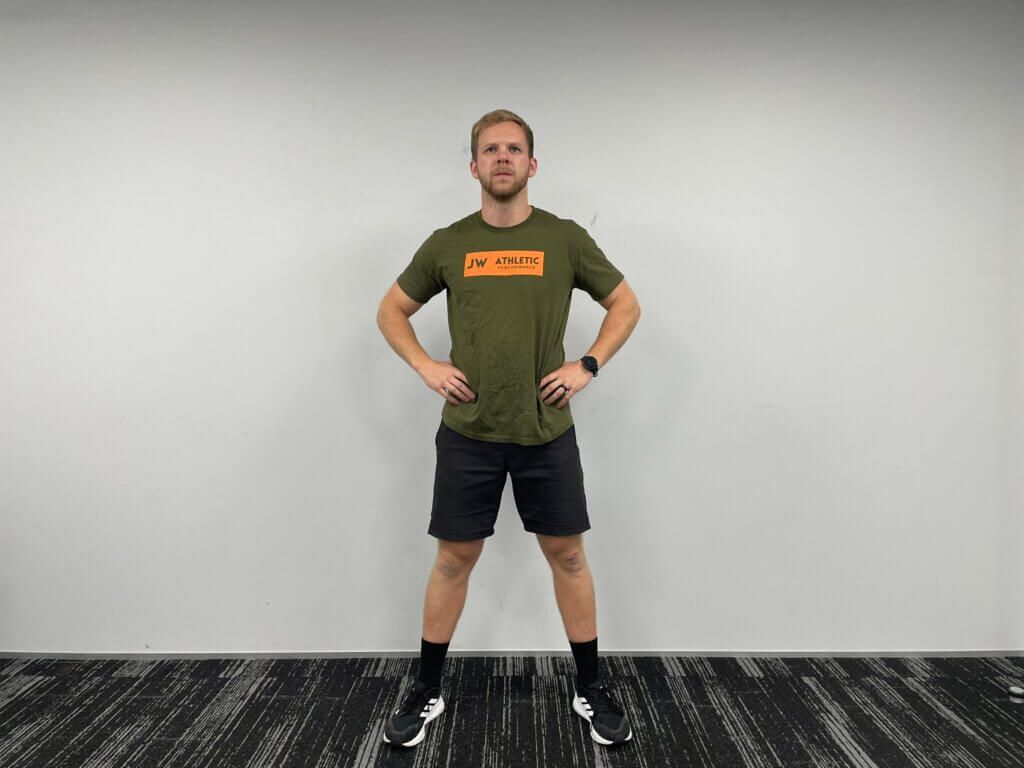


Squat
- Feet shoulder width apart
- Tall thoracic Position
- Centre of mass move towards heel of foot at bottom
- 3-4 sets of 10-15 reps

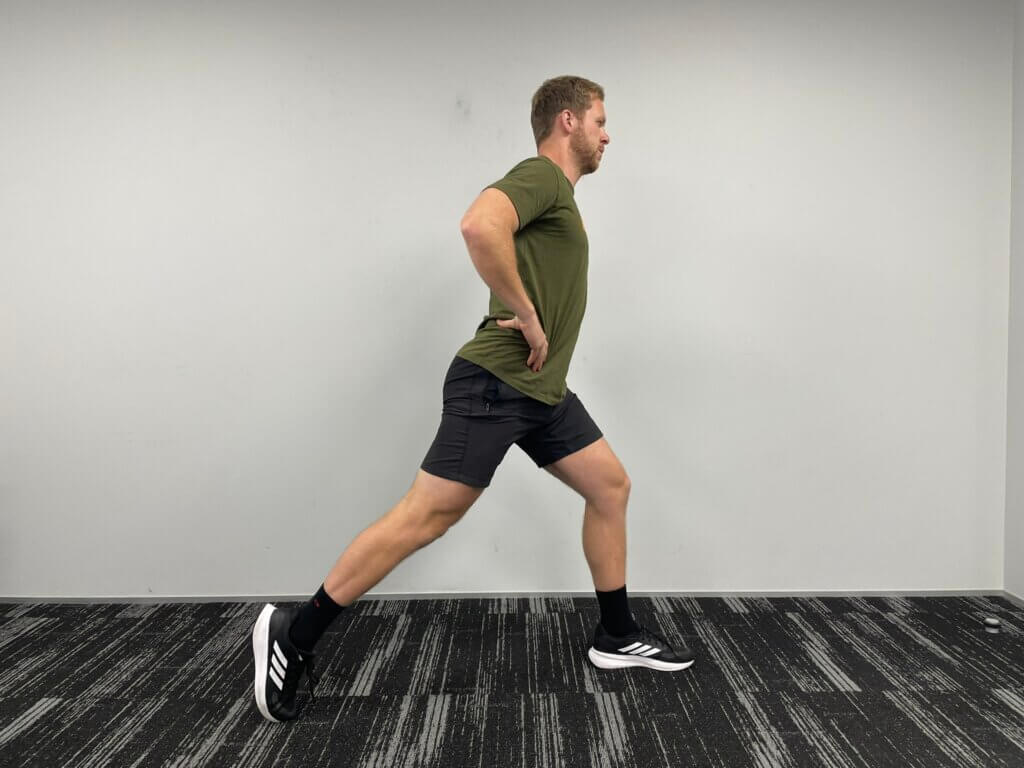
Split Squat
- Start from 90/90 position on floor
- Push hard into front foot heel
- Keep hips level (imagine a spirit-level bubble)
- 3-4 sets of 8-12 reps each side

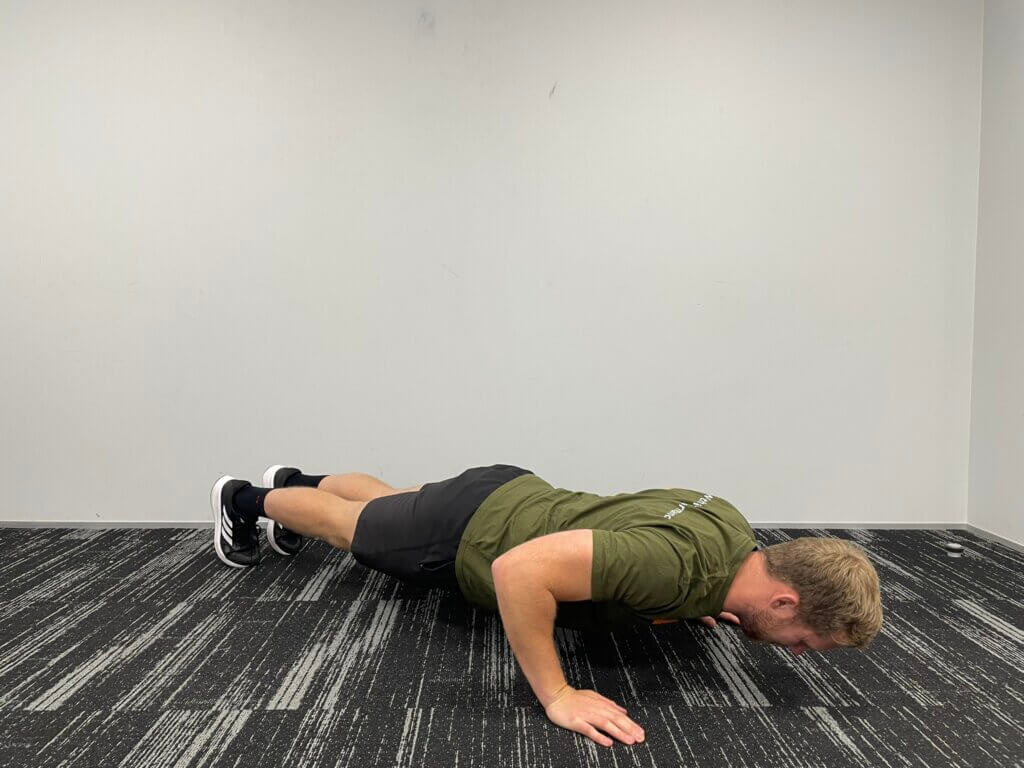
Push Up
- Hands directly under chest
- Tense core muscles
- Lower down to “fist” distance from floor
- 3-4 sets of 8-20 reps
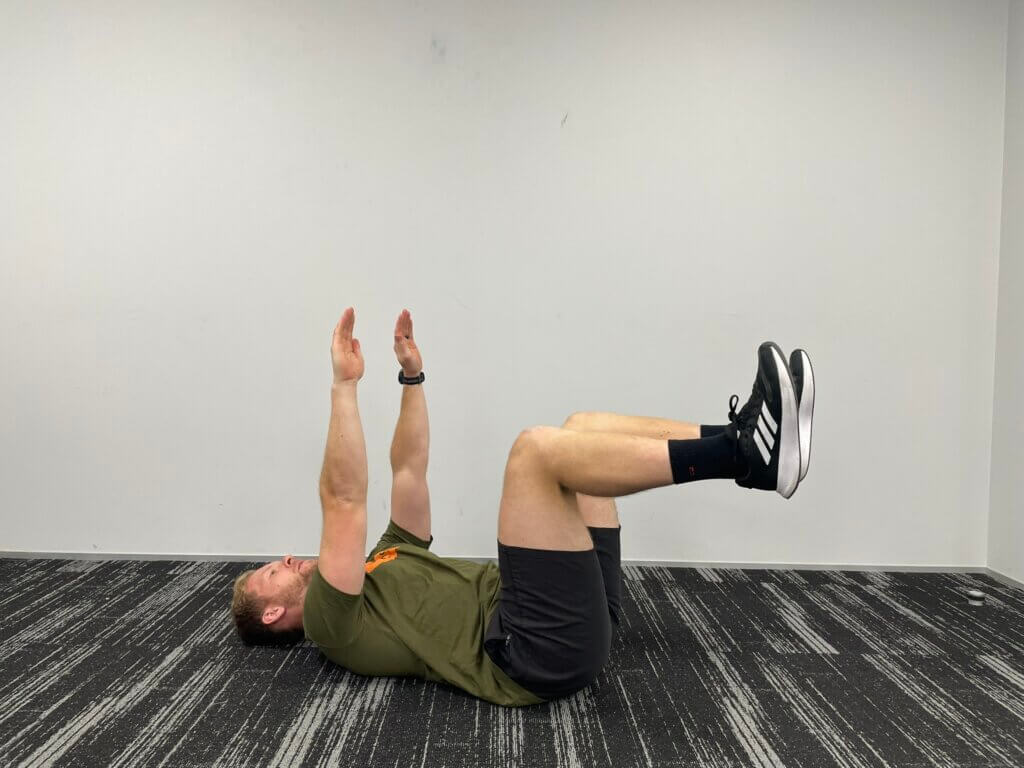
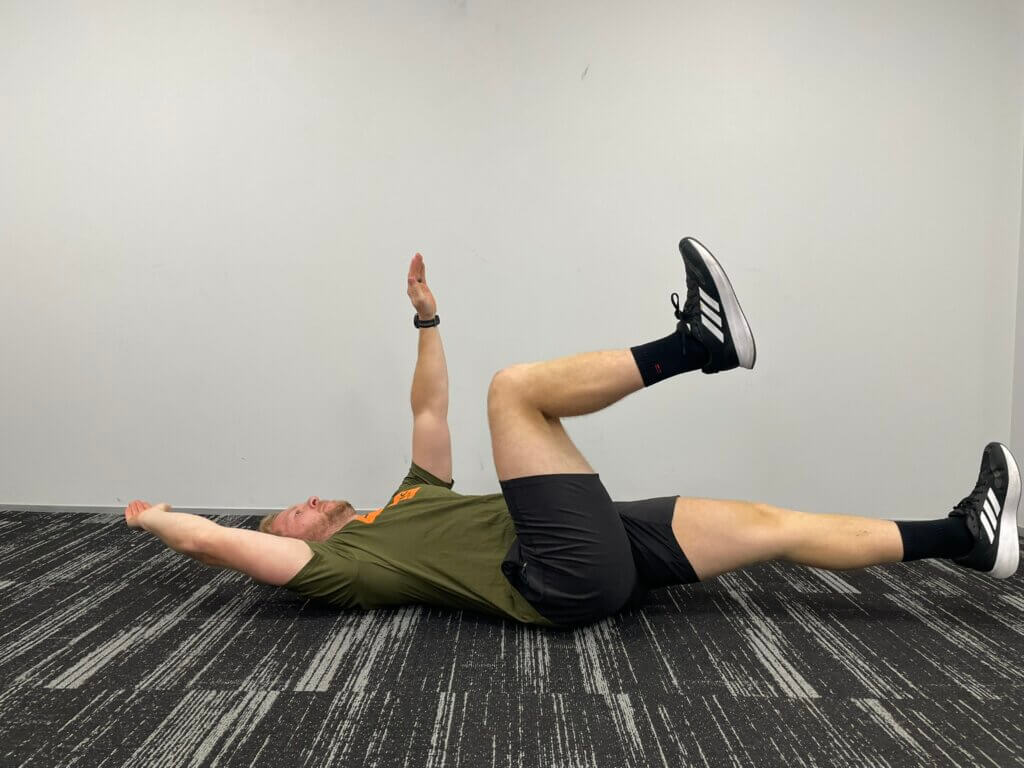
Deadbug
- Keep lower back stuck to floor throughout (imagine squeezing juice from an Orange)
- Move opposite arm and leg (again keep lower back to the floor)
- Hold each position for 1 second (inhale when moving leg and arm, exhale and start position)
- 3-4 sets of 8-12 reps each side
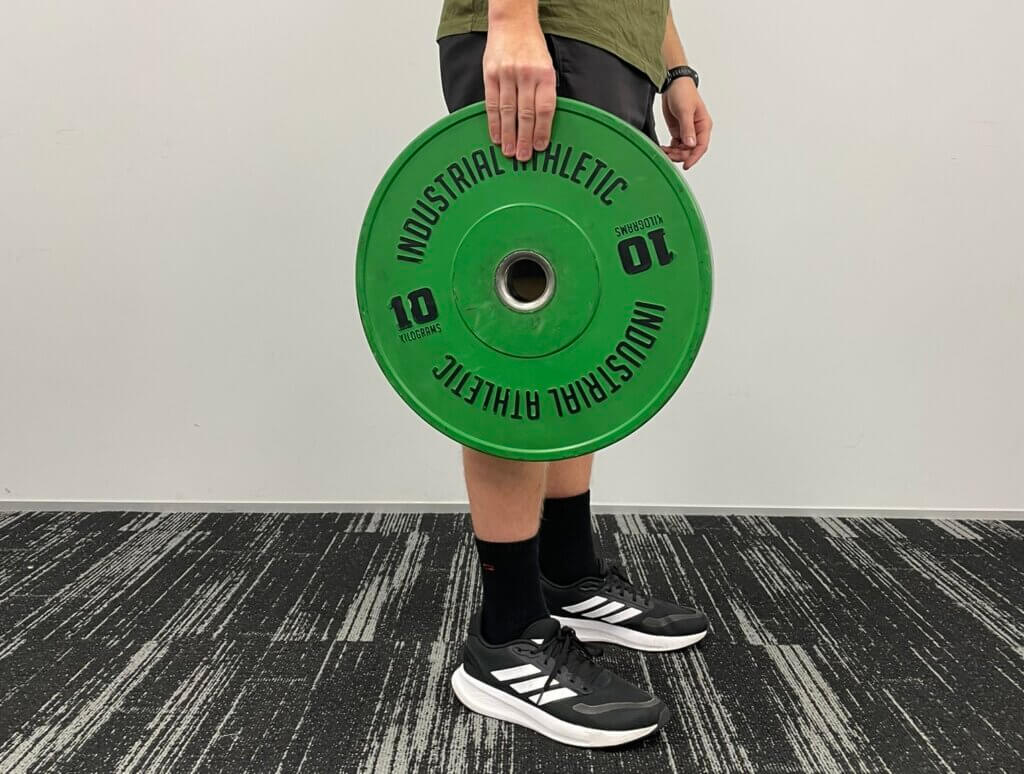
Plate Pinch
- Using a weight plate or an object at home
- Pinch this weight with your hands/fingers
- Shoulders back and stand tall
- 3-5 sets of 10 seconds > (build up over time)

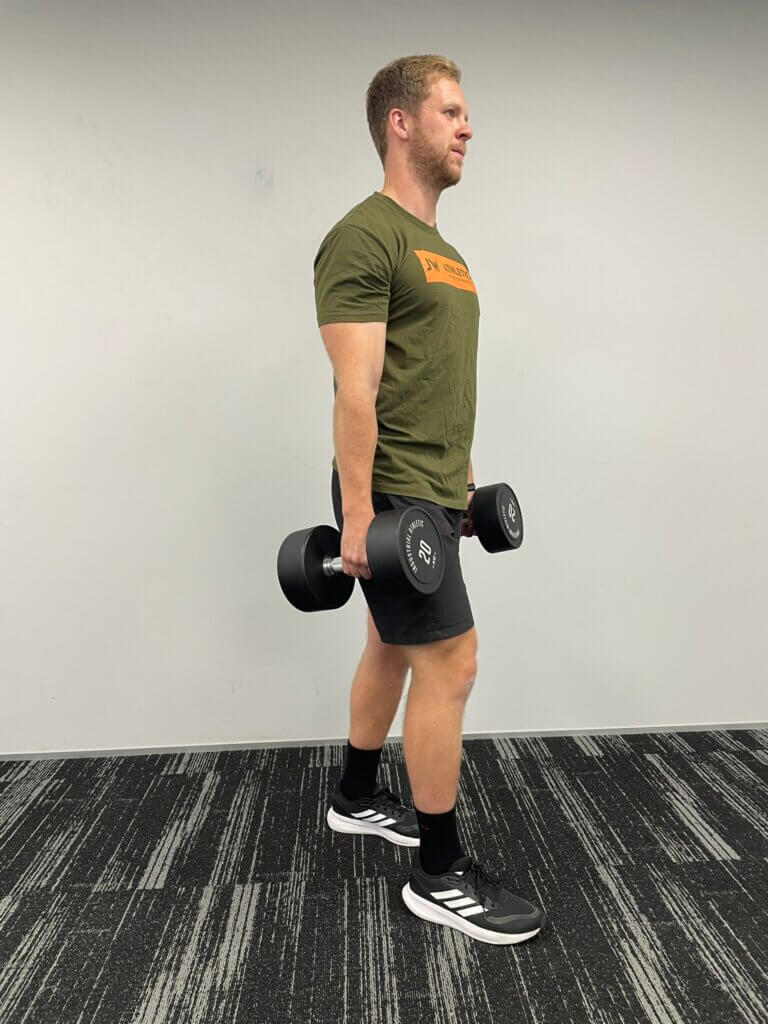
Farmer’s Walk
- Holding on to two weights
- Shoulders back, tall chest
- Walk/move for allocated distance/time
- 3-5 sets of 20-40 seconds/10-30m there and back
To learn more about JW Performance, check out Jordan’s Instagram account: @jwathleticperformance