
Understanding Avinox
A practical guide to assist modes, tuning, and real-world setup
Avinox stands apart from most e-bike systems for a simple reason. It doesn’t try to decide how your bike should feel. Instead, it gives you the tools to decide that yourself.
Where many drive units lock behaviour into fixed modes, Avinox treats modes as frameworks. Eco, Trail, Turbo, and Auto are not personalities baked in by the factory. They are starting points. What actually defines the ride is how you tune what sits inside them.
This article exists to make that tuning make sense.
The goal isn’t to turn every rider into a suspension engineer or powertrain nerd. It’s to give you enough understanding that when you open the Avinox app, the sliders and settings feel logical. Adjustments become intentional. Battery expectations become realistic. And the bike starts to respond the way you expect it to, ride after ride.
Think of this as a reference. Something to come back to when you want to refine how assistance feels, rather than just turning it up or down.
The Avinox approach to assistance
Most e-bike systems are built around fixed assumptions. Eco is gentle. Trail is lively. Turbo is aggressive. Those assumptions may work for a broad audience, but they don’t account for differences in terrain, riding style, or even local trail conditions.
Avinox takes a different view. Assistance is not just about quantity. It’s about timing, shape, and persistence. How quickly power arrives matters as much as how much of it you get. How long assistance lingers matters as much as peak torque.
This is why Avinox feels less like a preset system and more like a tuning platform. You are not choosing between behaviours. You are shaping them.
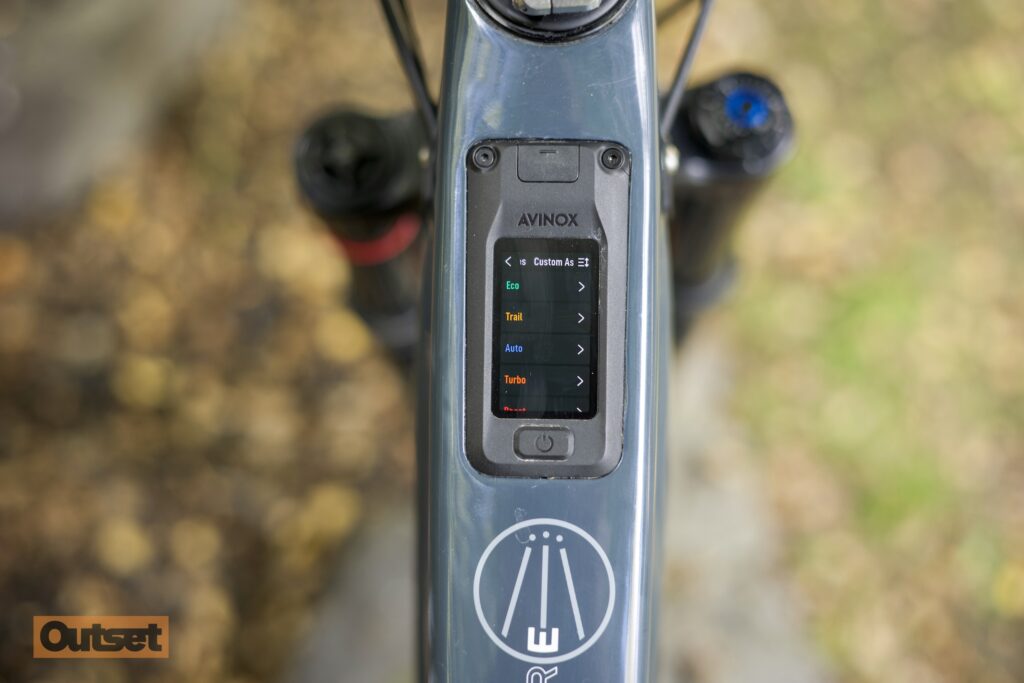
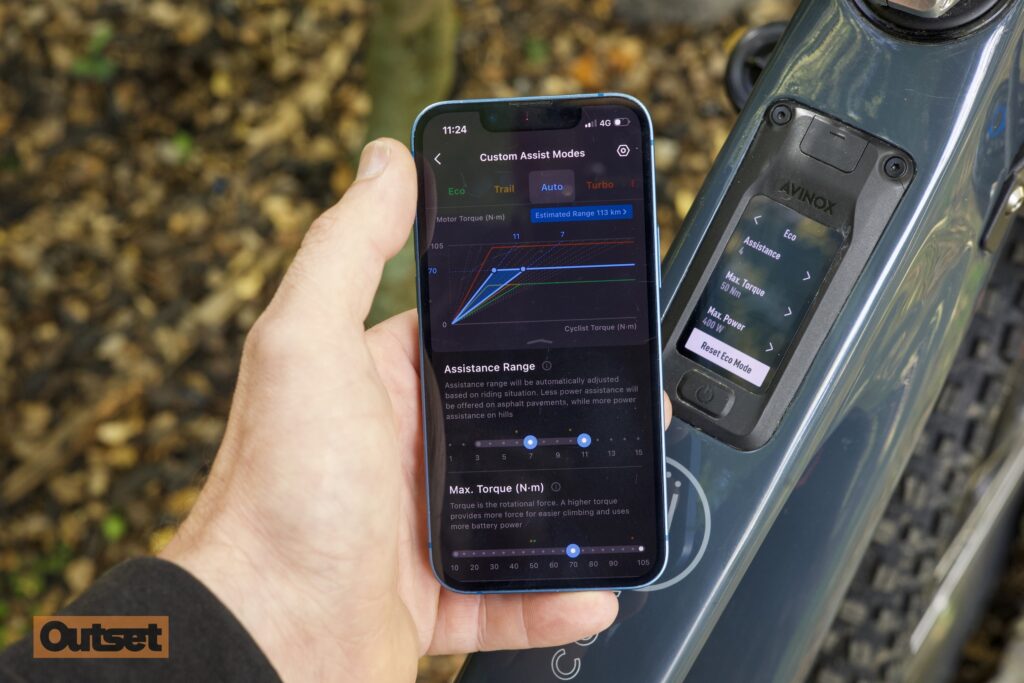
Auto mode: Adaptive support without constant input
Auto is designed for riders who want to focus on the trail rather than mode management. Instead of delivering a fixed level of assistance, the system responds to resistance at the drivetrain.
As gradient increases or rolling resistance rises, support ramps up. When terrain eases, assistance fades back. The system is not predicting what comes next. It is responding to what is happening now.
On rolling terrain, Auto often feels surprisingly restrained. It provides just enough help to maintain momentum without pushing you into a higher pace than intended. On sustained climbs, it can behave much like a well-tuned Trail or Turbo mode because resistance remains high for longer periods.
Battery consumption in Auto reflects this behaviour. On mixed terrain it can be efficient. On consistently steep ground it will draw more power because the system is continually answering high demand.
Auto works well for riders exploring unfamiliar routes, linking varied terrain, or simply wanting fewer decisions mid-ride.
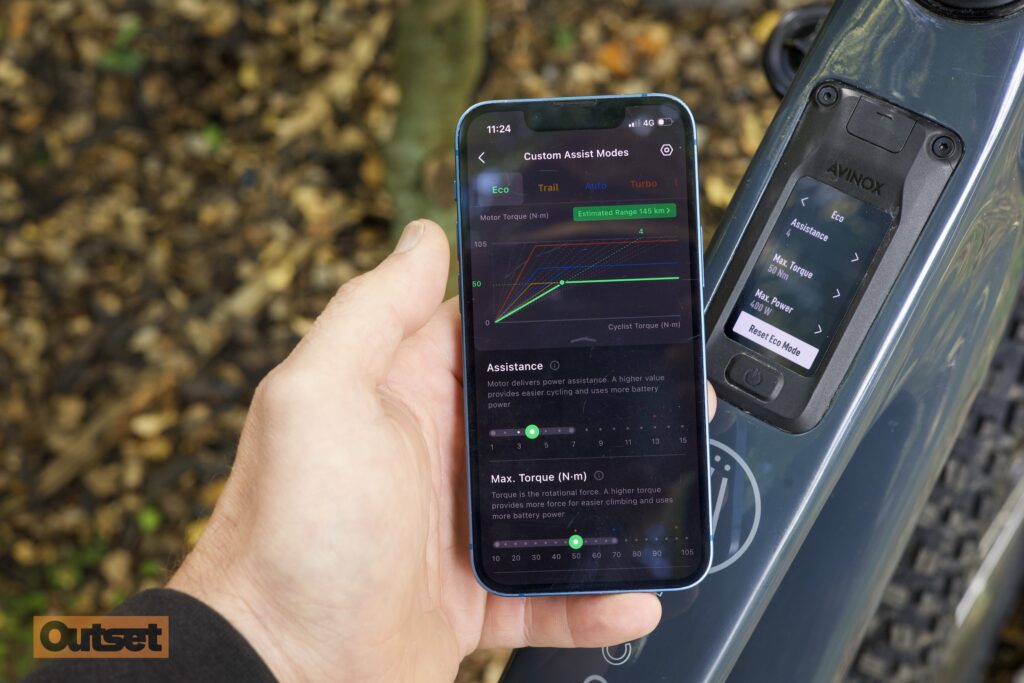
Eco mode: Efficiency with intent
Eco is often misunderstood as a fallback mode, something to tolerate rather than enjoy. In the Avinox system, Eco can be far more capable than that.
At its core, Eco limits overall assistance and peak torque, encouraging the rider to contribute more. When tuned thoughtfully, it becomes a highly usable mode for long rides, linking sections, and steady climbs where traction and pacing matter more than outright power.
Eco rewards good cadence and gear choice. It doesn’t hide inefficiency, but it doesn’t punish you for it either. The motor simply supports rather than leads.
From a battery perspective, Eco is the most economical mode. Lower assist targets, softer engagement, and reduced torque ceilings all combine to minimise energy draw. For riders who value range, Eco is where the foundation is set.
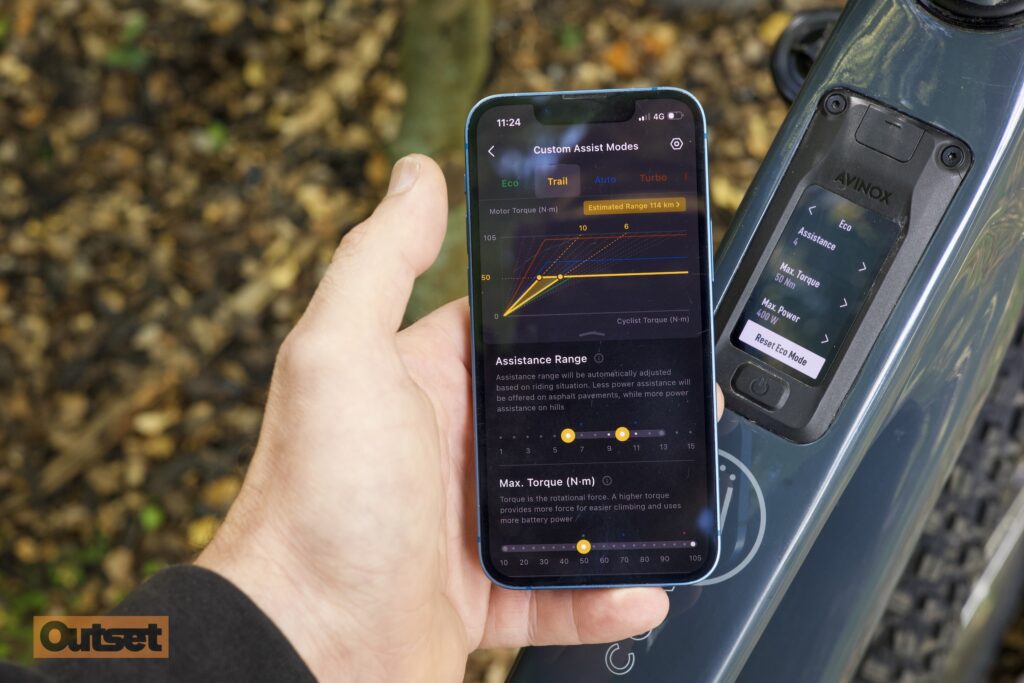
Trail mode: The centre of gravity
For most riders, Trail is the mode that defines the Avinox experience. It sits between restraint and support, offering enough power to maintain momentum without disconnecting you from the terrain.
Trail works best when it is treated as your default. The mode you ride most often. The one that feels natural across the widest range of trails.
Battery use in Trail reflects how it is ridden. Smooth cadence and measured inputs keep consumption reasonable. Aggressive accelerations and frequent surges will shorten range, even if assist levels remain moderate.
If Trail feels unpredictable or tiring, it is usually a sign that tuning inside the mode needs attention rather than switching modes altogether.
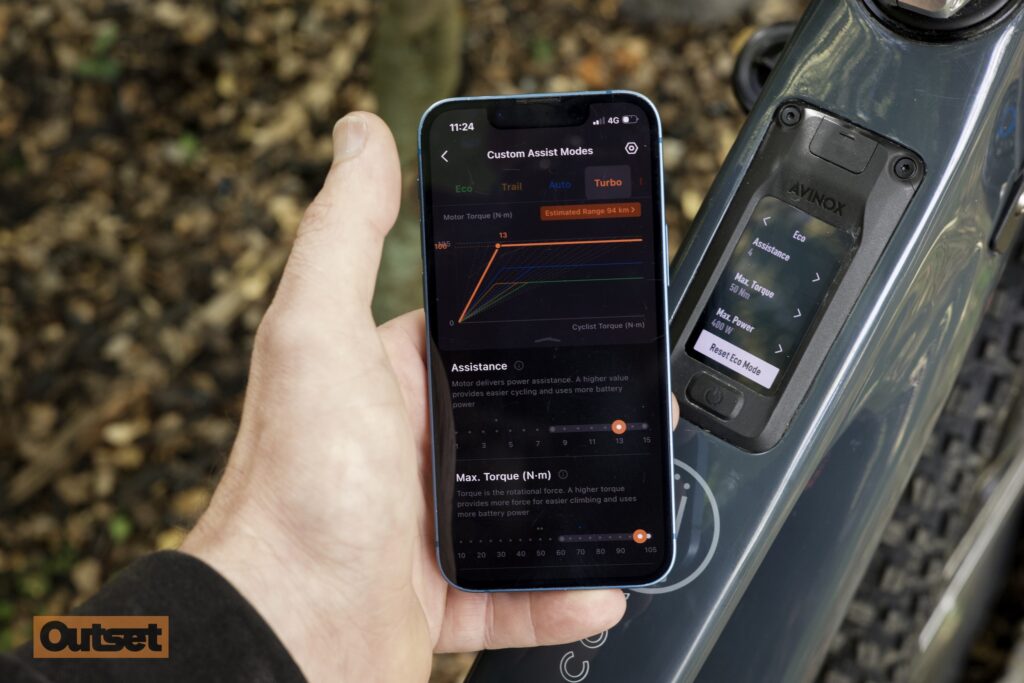
Turbo mode: Maximum assistance, shaped by tuning
Turbo exists to deliver maximum support when conditions demand it. Steep gradients, fatigue late in the ride, or time pressure all justify its use.
What makes Turbo different in the Avinox ecosystem is that its character is not fixed. You can soften how quickly power arrives. You can limit torque to improve traction. You can shorten how long assistance persists when pedal pressure drops.
Battery consumption is highest in Turbo, particularly at low cadence and high load. This is unavoidable. High torque under heavy resistance demands current, and current draws energy.
Used intentionally, Turbo is a powerful tool. Used indiscriminately, it is simply inefficient.
Boost mode: Power on demand
Boost sits outside the standard mode structure. It is activated manually and delivers maximum output for a short duration while you continue pedaling.
This mode is designed for specific moments rather than sustained use. Clearing a ledge. Punching out of a tight corner. Regaining momentum after a mistake.
Because Boost delivers very high output over a short window, its effect on battery life depends on frequency. Occasional use has little impact. Repeated use over a climb will be noticeable.
Boost works best when the underlying modes are calm and predictable. It provides contrast rather than compensation.
Walk assist: A practical necessity
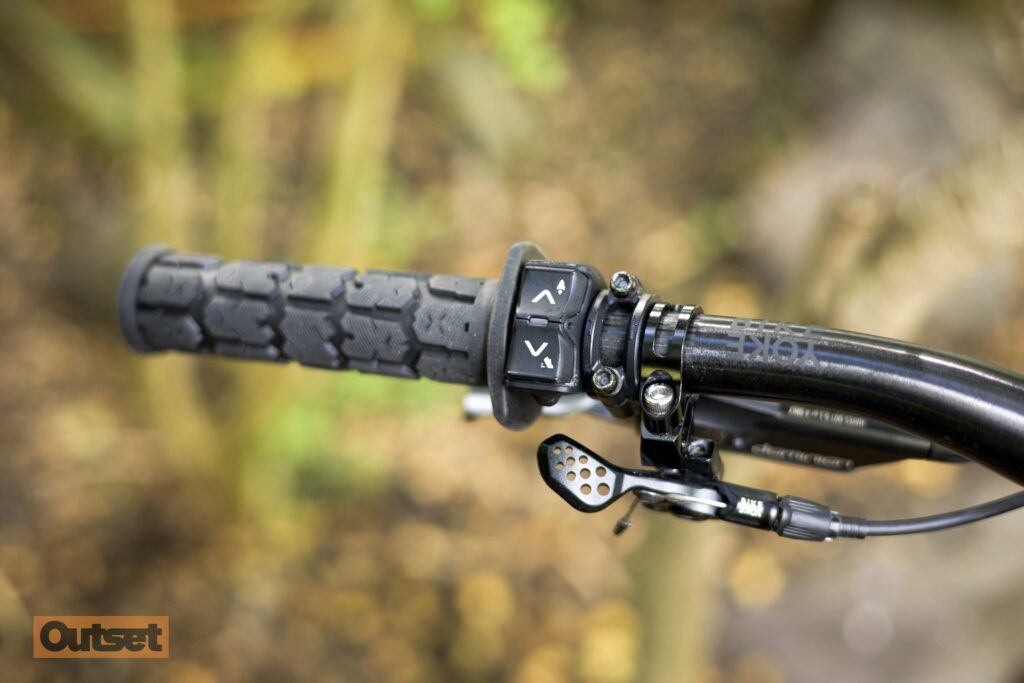
Walk assist serves a single purpose: moving the bike uphill when riding is not practical or safe. It is not tunable and does not influence riding behaviour.
Its value lies in convenience and control, not performance.
The tuning parameters that shape behaviour
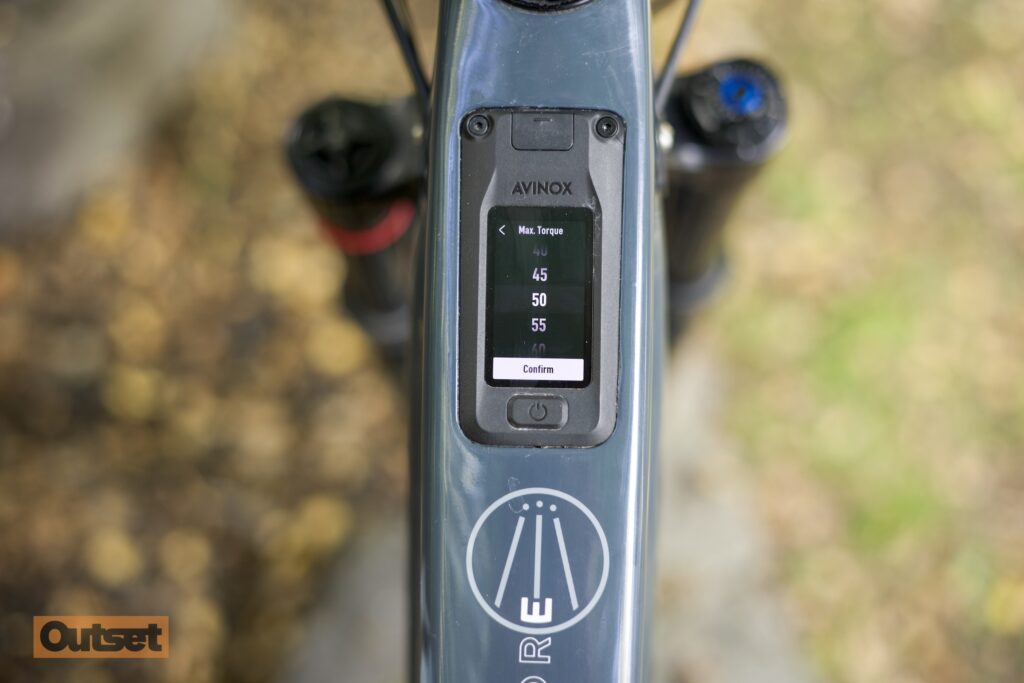
Each primary assist mode can be tuned using the same four parameters. Understanding how these interact is the key to making Avinox work for you rather than against you.
Assist level: Overall contribution
Assist level defines how much support the motor provides relative to rider input. Higher values reduce physical effort and increase acceleration. Lower values preserve a more traditional riding feel.
This setting has the largest influence on battery consumption. Increasing assist level increases average power draw across the ride, not just during hard efforts.
Most riders space assist levels progressively across modes so that switching modes creates a meaningful change in behaviour rather than a subtle one.
Max torque: Force at the crank
Torque determines how hard the motor can push, particularly at low cadence. Higher torque allows you to maintain momentum on steep grades without shifting early. Lower torque smooths delivery and improves traction on loose or wet surfaces.
From an energy standpoint, torque is expensive. High torque at low cadence draws significant current. Reducing torque can often extend range more effectively than reducing assist level alone.
If a bike feels difficult to control on technical climbs, torque is often the first setting worth revisiting.
Start assist: Ramp-up behaviour
Start assist controls how quickly power arrives when you begin pedaling or reapply pressure after coasting.
Higher values create immediate response and strong initial acceleration. Lower values build power more gradually, improving traction and reducing wheel lift.
Sharp power spikes are inefficient from a battery perspective. Even if average speed remains unchanged, smoother ramps generally consume less energy over time.
Start assist plays a large role in how composed the bike feels in technical terrain.
Continued assist: Persistence of support
Continued assist determines how long the motor continues to provide support after pedal pressure eases.
Higher settings smooth out rough climbs where pedal input varies due to impacts or body movement. Lower settings create a more immediate on-off feel, closer to a non-assisted bike.
Higher continued assist increases total energy use because assistance remains active more often, even during brief pauses in input.
This setting is most noticeable on technical climbs and rough terrain.
How tuning influences battery life in practice
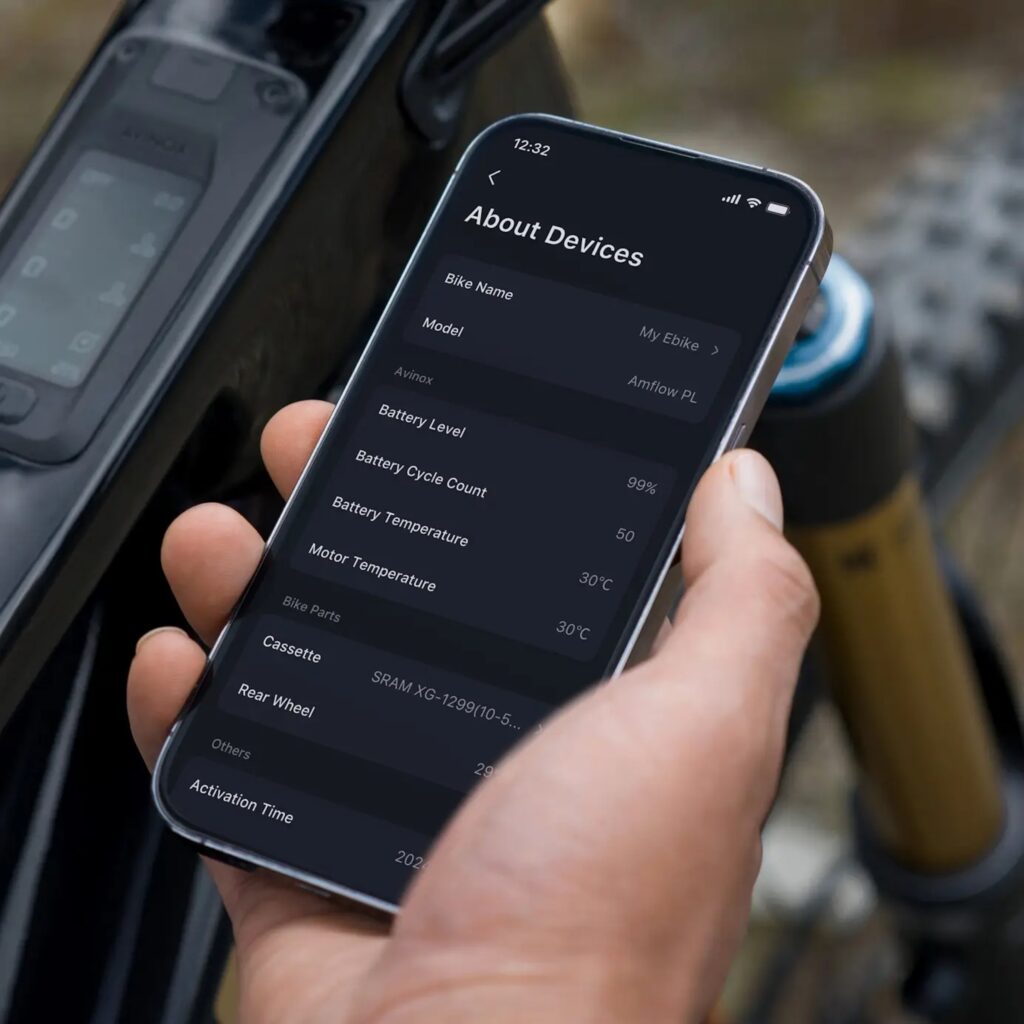
Battery consumption is driven by demand rather than mode labels. Certain behaviours consistently increase energy use:
- High torque at low cadence
- Aggressive ramp-up
- Prolonged continued assist
- Frequent accelerations
A rider spinning smoothly in Turbo can sometimes outlast a rider surging constantly in Trail. The system responds to how it is used, not how it is named.
Avinox gives you the ability to manage these variables rather than being locked into them.
Approaches to setup
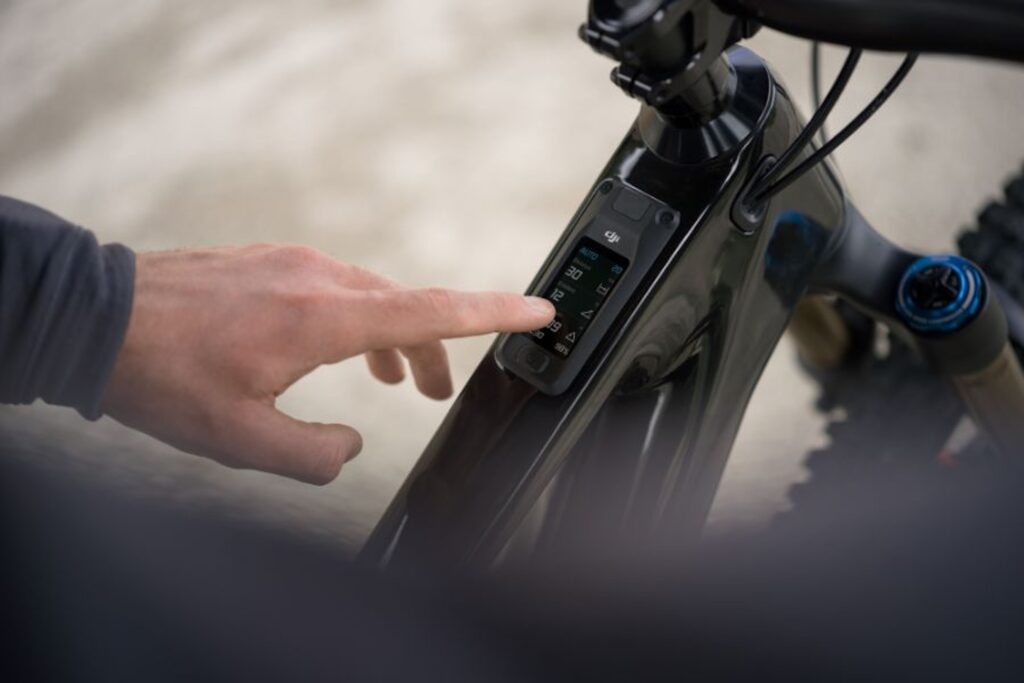
There is no single correct configuration, but two common philosophies tend to work well.
Some riders space modes by terrain. Eco for roads and flats. Trail for most dirt. Turbo reserved for sustained climbs. Each mode has a clear purpose.
Others space modes by feel. Ramp behaviour and torque are kept similar across modes, with assist levels changing the ceiling rather than the character. This creates consistency at the pedals regardless of mode.
Both approaches are valid. The best choice depends on how you prefer to think while riding.
A balanced starting point
As a general baseline:
- Eco prioritises efficiency and smooth engagement
- Trail balances support and control
- Turbo offers high assistance with moderated delivery
From there, changes should be incremental. One adjustment at a time. Ride the same trail. Pay attention to how the bike responds rather than how fast it feels.
Why Avinox rewards thoughtful tuning
Avinox does not impose a personality on your bike. It allows one to emerge through use and adjustment.
That requires a little more engagement from the rider, but the payoff is significant. When tuned well, the system becomes unobtrusive. Assistance feels predictable. Battery life aligns with expectations. The bike fades into the background.
At that point, modes stop feeling like settings and start feeling like tools.
And that is when the system is doing its job.
If you want help refining your setup, that conversation starts with how you ride, not with numbers on a screen. Bring your questions. Bring your experience. We’ll tune the rest around it.