
We talk to Mark Stewart about how the Alternative Vollie Collective is quietly shaping Christchurch mountain biking, one trail at a time
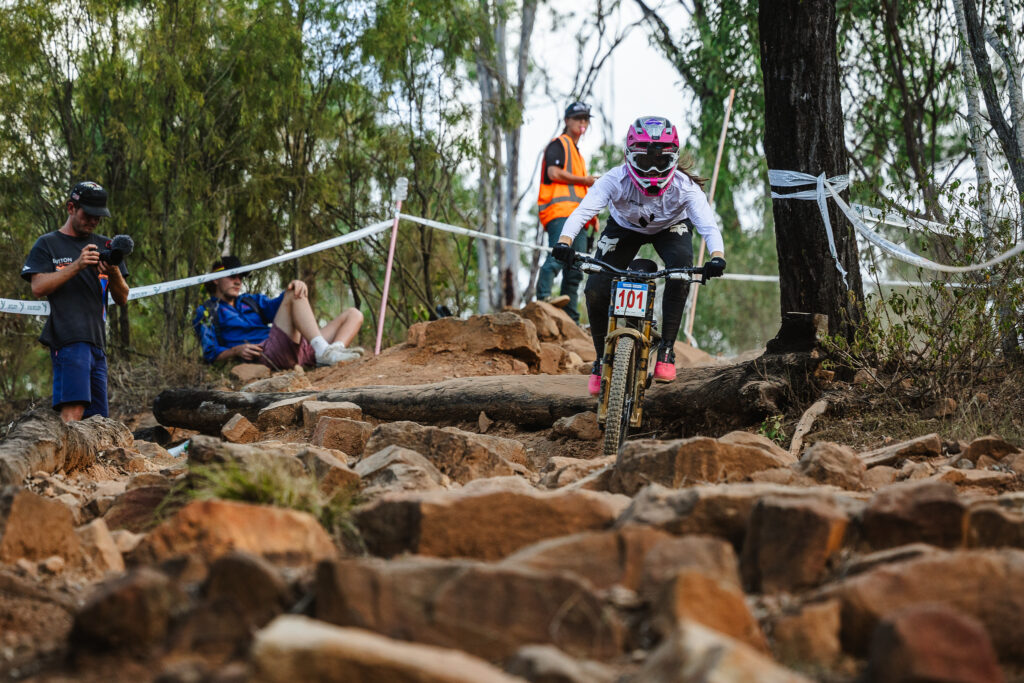
Have you ever ridden a trail and wished the braking bumps would vanish, the rain ruts were removed, the perma-puddle drained, the berm extended all the way around, or the jump shaped better? On any given Tuesday, under the cloak of darkness, you’ll find a cadre of DIY diggers who’ve taken matters into their own hands.
Back in the wet winter of 2022, Mark Stewart and a handful of merry mates quietly laid the groundwork for what would become the Alternative Vollie Collective. Born out of busy weekends and a desire to improve their favourite trails, the AVC started as a casual dig crew with a simple mantra: fix what’s broken, ride what you build, and do it all without fanfare.
Since then, it’s grown into a core crew with a fluctuating cast who spend their Tuesday evenings toiling to breathe new life into the well-ridden trails of Ōtautahi. The name is a cheeky nod to the Alternative Commentary Collective, but the mission is serious—growing, improving, and maintaining their local trail network.
In this interview, we sit down with Mark to chat about the roots of AVC, collaborating with the Christchurch Adventure Park, and why a bunch of “semi-official pirates” might just be the best thing to happen to mountain biking in Ōtautahi.
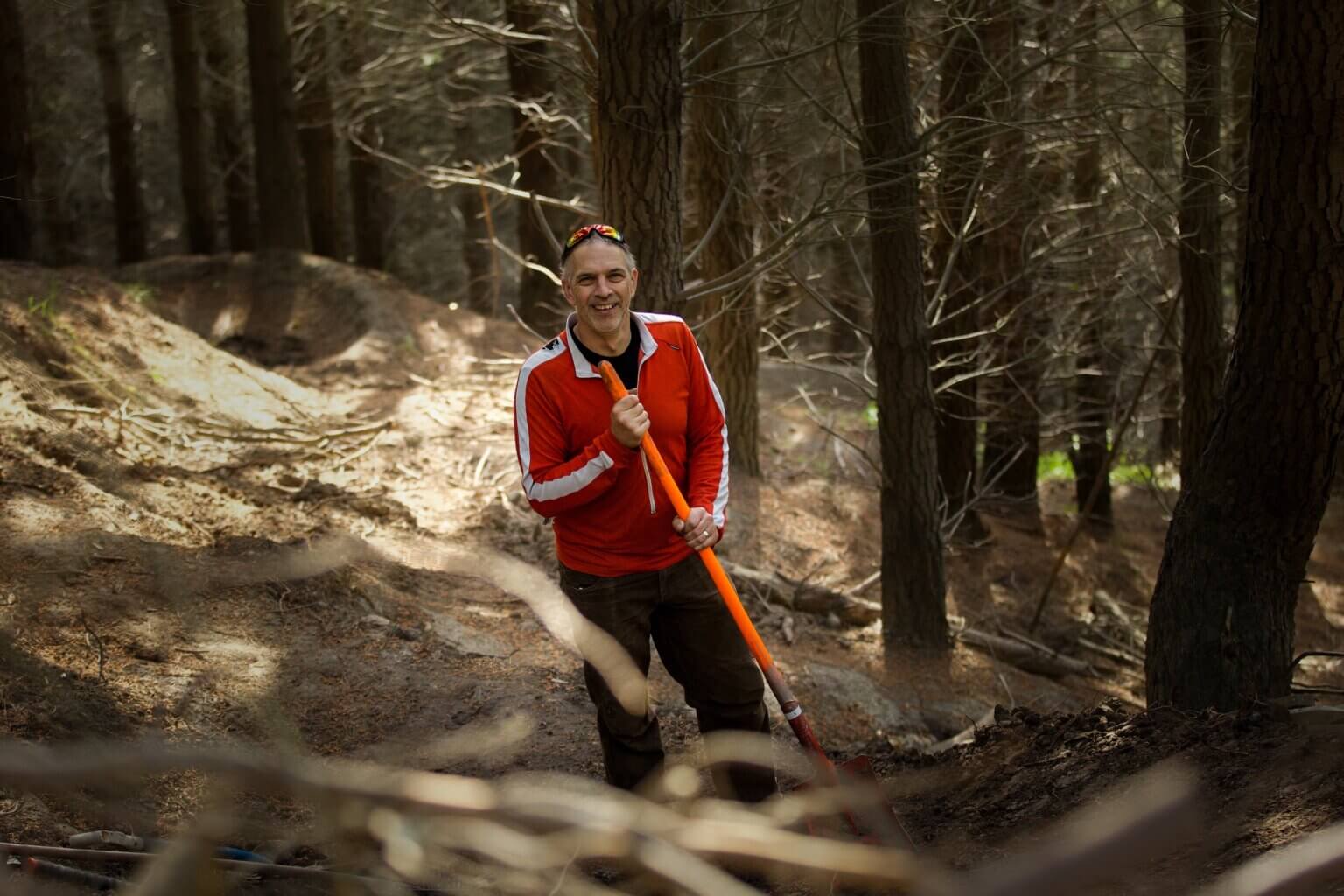
Hi Mark. First of all, tell us what the Alternative Vollie Collective is all about and how it started.
So Aaron Hogg used to run volunteer dig sessions up at Christchurch Adventure Park (CAP). They were always on Sundays and I couldn’t make it because we had young kids and they had sports and all that sort of stuff on. A couple of other guys I know, Jeremy Burke and Hamish Pretty, were also keen to do some midweek trail maintenance.
This was in 2022 and we had quite a wet winter, so CAP was closed quite a bit. We just thought “We can’t ride, so let’s just do a bit of work on one of the trails we ride quite often.” So the three of us spent a couple hours fixing up a trail called 3rd Base. I took a couple photos of what we’d done and sent them over to Aaron Hogg with a message saying, “Oh, you know, we’ve gone and fixed this up.” And he’s just like, “Oh, yeah, that’s kind of cool.”
The next weekend was wet again, so we went up and worked on another trail. I messaged Aaron again with the photos and was like, “Oh, that’s really cool that you’re getting in there and doing it. Do you guys just want to carry on doing what you’re doing?”
CAP didn’t really know anything about us at that time, so we just carried on. We weren’t building new trails or any sketchy features, or anything like that. We’d just basically go in and remove some breaking bumps, fix up some berms—just general maintenance stuff.
We carried on like that until 2023 when CAP started to wonder who was doing all this work. They thought it was cool, but just wanted to know what we were going to work on.
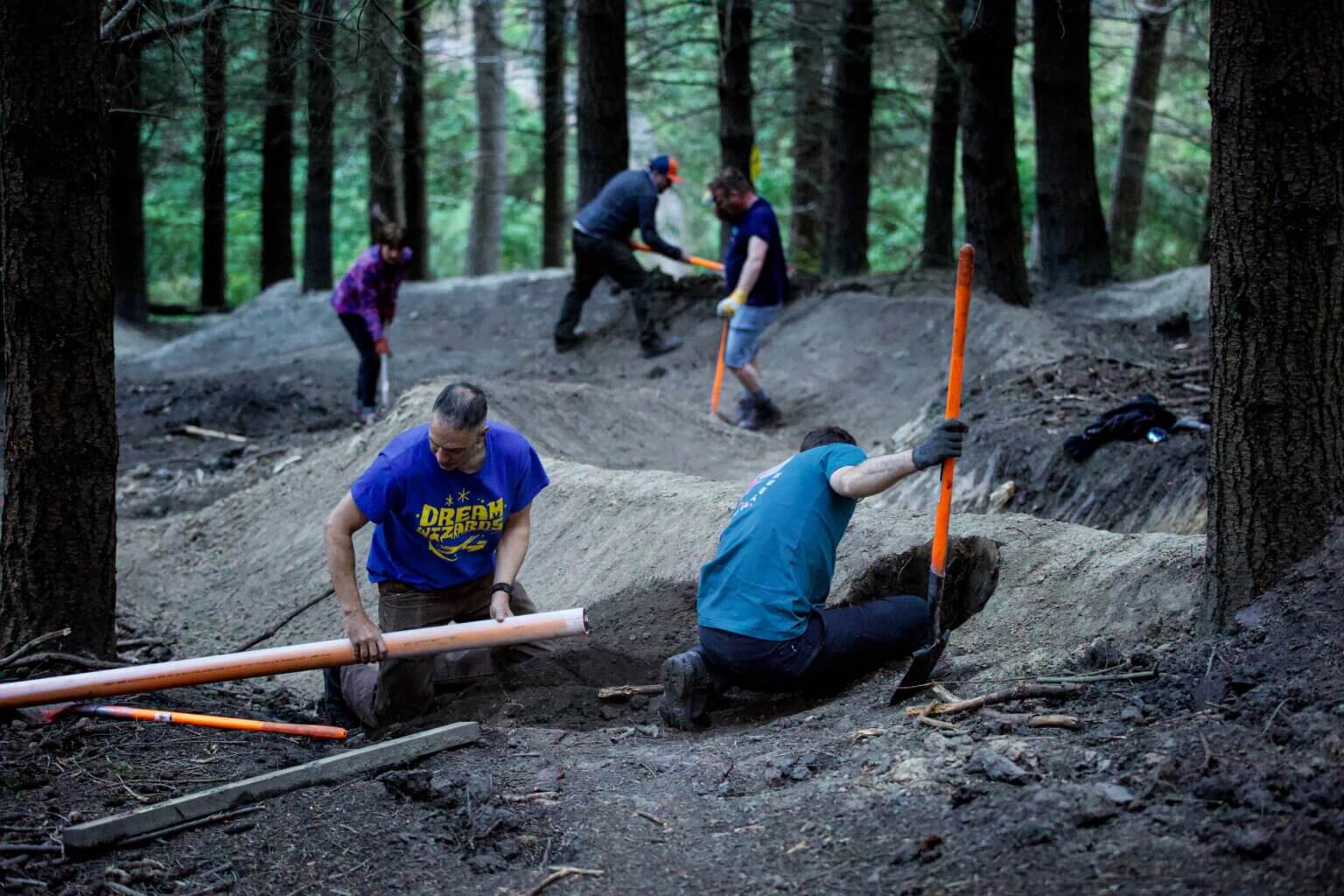
We kind of became a bit more official after that. We started the Instagram account to let people know what we’re up to and in the course of a year we went from three people to about 15 or 20 people. We now have about 130 people in our chat group, and people drift in and out of digging depending on the time of the year and what other things they have on. But we generally get anywhere from five to 20 on a dig night.
So when you first started, were you just trying to fill a gap or some sort of a need?
Yeah, definitely. Because, even now, CAP doesn’t have a lot of trail crew for a place with incredibly crap dirt that’s open all year-round. They do a good job with what they have, but there’s no way they can keep up with the amount of maintenance that’s needed. That’s kind of why we exist. We just find sections of trail that need work and we do it.
Not every trail building crew gets the numbers out that you do. What is it about what you’re doing that gets people out to dig?
I think having our digs on Tuesday night works because people can head out after dinner for a couple of hours. It just works better with their lifestyle and it means that people don’t have to use up their weekends.
Also having someone to contact helped out massively at getting lots of people involved.
Tell me about the volunteer-built trails at CAP. I understand a lot of the early trails were built by volunteers.
Aaron Hogg built quite a lot of the original trails at what was known as McVicar, which is the company that owns the land and forestry. Aaron’s been involved in digging trails up in that particular area since well before the fire. So when CAP originally opened, it opened with five or six trails that he’d built and they were just incorporated into the park. CAP just made changes to bring them up to the standard of a bike park because they were all just pirate tracks, really.
"They notice that the trails get a bit beaten up and berms are blowing out and think 'It'd be good to fix that.' Now they have a way to get involved."
Do you think people feel like they have more ownership of the CAP trails because they began as community-built tracks?
Yeah, I’d say probably. I think when people know that volunteers put effort into building and maintaining the tracks, they’re more likely to come along.
But in saying that, a lot of the trails we’ve been working on lately have been built by CAP.
People are riding up there all the time. It’s easy to go out and smash laps on the chairlift any day of the week. And they notice that the trails get a bit beaten up and berms are blowing out and think “It’d be good to fix that.” Now they have a way to get involved.
There are still groms that go out there and do stuff illegally. You’re never going to stop that sort of stuff. CAP are really trying to encourage people who want to build to contact AVC—they’re quite happy for us to deal with anyone who’s interested in doing trail work.
And for those people who show up into a dig day, what do they get out of the experience?
They get to improve the trails. If there’s an issue with a trail, they get to fix it up. And they get to have some input into what is done to fix it.
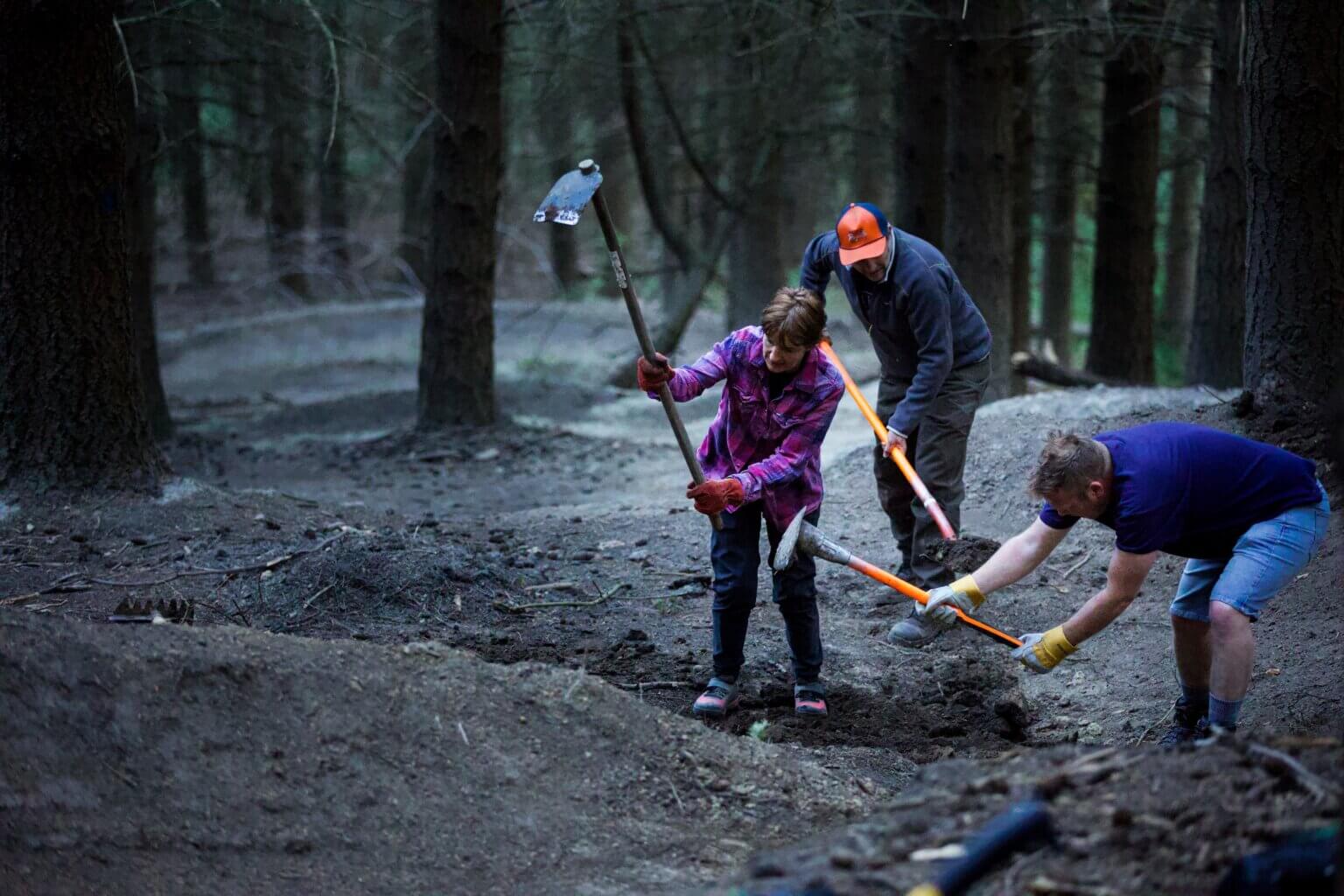
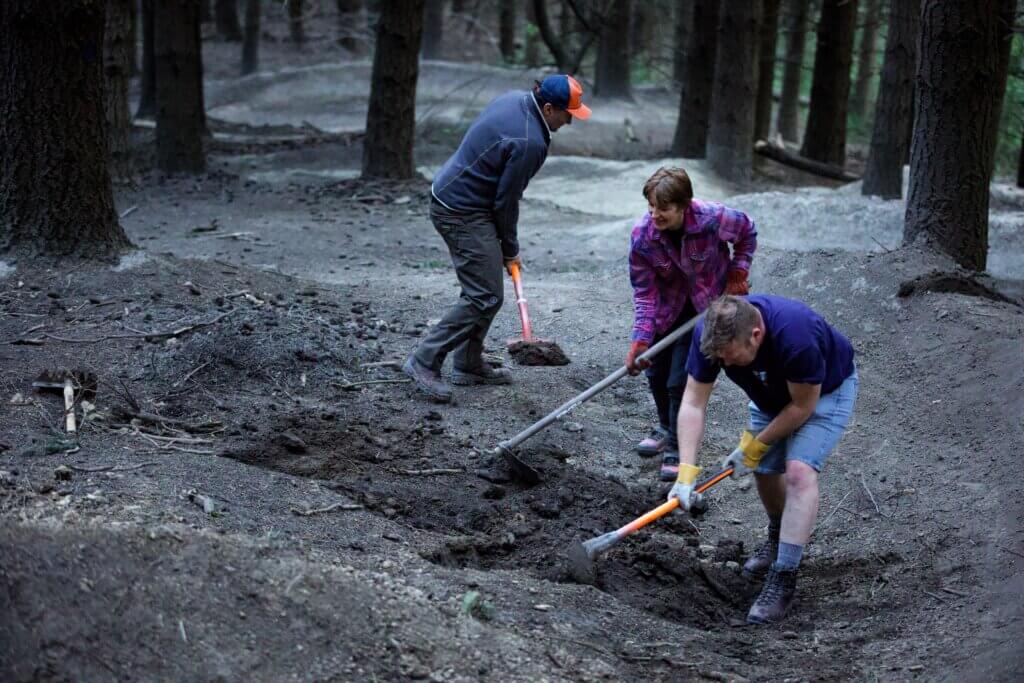
The Tuesday night digs give people an opportunity to get out one night a week. You don’t have to tell me if you’re coming or not, you just turn up. I’ll put something on our chat saying, “This is where we’re digging. This is where we’re meeting.” And you can just come along. It doesn’t worry me if there’s five of us, or 20 of us. We just do what we can do with the people that turn up.

What are some new build projects you’ve been working on recently?
Last year, we built Omnishambles. CAP wanted a new Grade 3/Grade 4, technical blue trail. So we said, “Yeah, we’ll give it a whirl.” That trail took us about six months to build.
Then we thought we could do a Grade 5 trail, so we built a new trail called Burnout. And then next to Omnishambles there’s another new one we’re working on called Silky Ridge. It’s still being developed but we pretty much have a full ride line all the way down the hill. It might take a year or two to get that completely finished, but we’ll knock out rideable sections as we go.
And you do some work over on the Vic Park side too?
Yeah, but those are generally the Gravity Canterbury dig days, which run most Saturdays over winter.
But I’m happy to go wherever anyone wants us. If someone wants me to get a group together and help somewhere, I’m sure I could pull together 10 or 15 people—we’ve gone up Cragieburn with Richie Goldsbury a few times, and we went up to Middle Hill a couple years back before the Mud Buster Enduro to give them a hand putting in a new line in for the race.
How do you go about designing a new trail?
You’re mainly just going in there and planning out a line based on the flow of the terrain and just working your way down.
It depends a lot on the trees and undergrowth. Burnout was easy because the trees are gone in that area and there wasn’t a lot of undergrowth. For Omnishambles, the trees were quite young and hadn’t been pruned. I walked up and down there probably 20 or 25 times trying to find a decent line, de-liming trees to see what was there. It was kind of tricky to plan a line when you can’t see two meters in front of you.
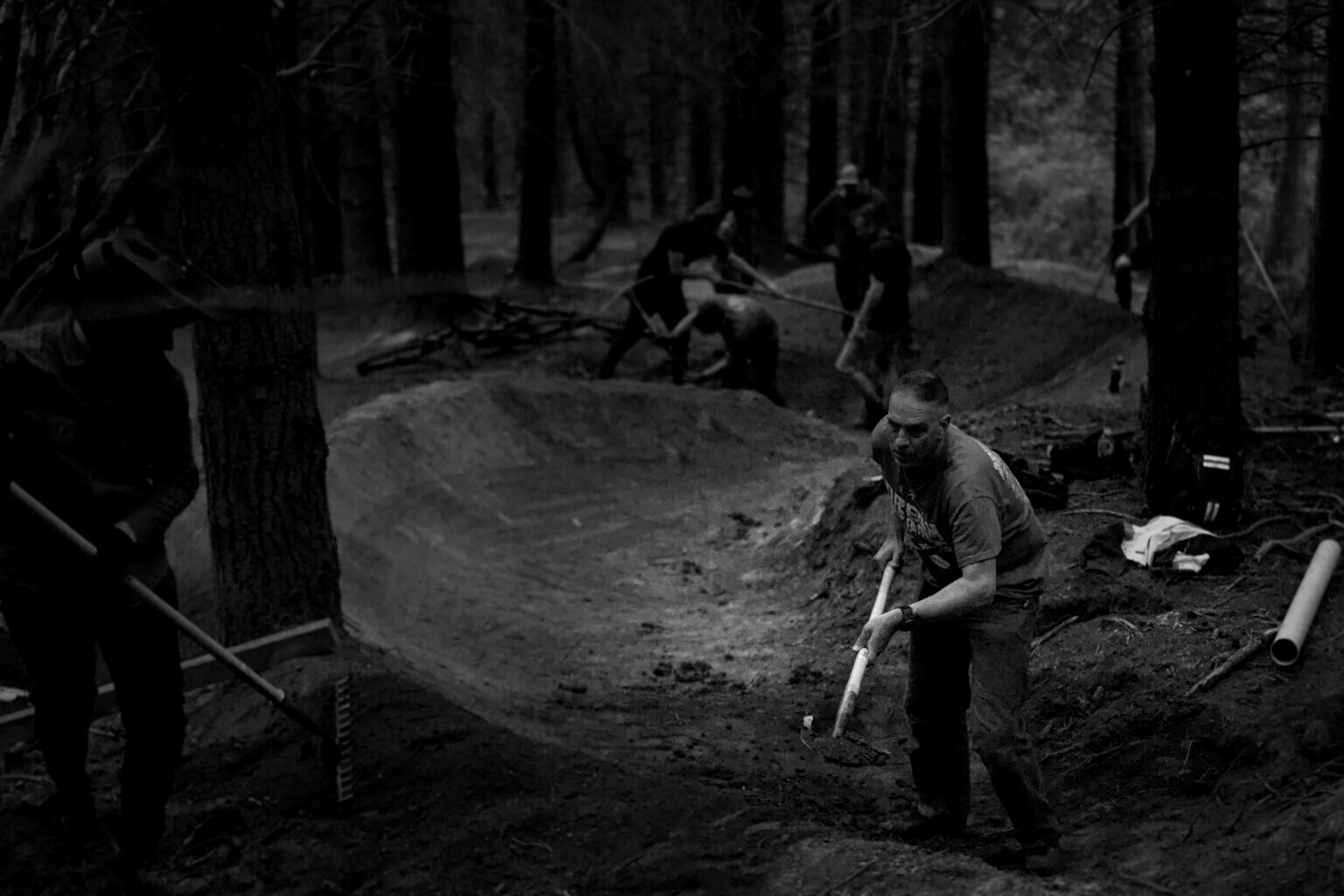
All our trails are hand-built. We’ll use battery-powered hand tools, but it’s all pretty much picks and shovels.
Does CAP always come to you about building a new trail or do you go to CAP with an idea?
For Silky and Burnout, we just wanted to go in and do something there. So we’d tell them what the plans are. They want another Grade 3 line from the top of the hill. So they might ask us to do it and give us an area they want it in. But with any build, we’d always discuss it with CAP first, otherwise, you know, we’re just pirates then.
It seems like a good setup because you’re just on the right side of being pirates.
Yeah, semi-official pirates. Ha ha.


What would be your dream trail build up at CAP or anywhere really?
I would love to get a hold of a digger. Now the trees are gone at the top, I’d like some sort of dual-line trail that crosses over, you know—one jumps over the other or something like that. You know, a flowy sort of jump line that’s not too technical, just something at Grade 3 level. It wouldn’t be high speed. It would be just a sort of flowy, jumpy, and fun trail that you could race your mates down.
Also building some wooden features would be a really cool thing to do. And that’s something that we can probably do. There’s a couple of qualified builders in the AVC that can certainly help out with some design and construction.
So how can people get involved with the AVC?
Basically, keep an eye on our Instagram page. That’s how most people reach out. If you’re keen to come along, just drop me a message. We also have a volunteer Facebook chat—that’s where we announce when and where we’re digging.
If someone wants to show up to an AVC dig, what should they bring?
At the moment, a head torch is all you need really. If you’ve got a grubber, mattock or shovel, bring it along. Riding shoes are usually okay, but boots are good. A set of gloves will help you avoid blisters. Also bring snacks and some water, because moving rocks is hard work.
Are there other ways to support the AVC other than digging?
Ground Effect clothing is a big supporter and the GC Super D gave us some money to buy tools. We also get delicious liquid refreshments from b.effect Brewing.
Donations of tools and materials are always welcome. If you’ve got some old H4 fence posts lying around, some old timber that could be used, or some waratahs, all that stuff can be used for retaining or building features.
Seed sacks are a good one too, because you fill them with rocks and dirt and they’re quite good for retaining or building jumps.
If anyone’s got any sort of stuff they think might help us, they just need to send me a message on Instagram at alternative_vollie_collective.