

Riley McLay takes us inside the organised chaos of being a freelance World Cup DH media squid and tells us why he chucked in his tradie job to become a photographer
Tucked into the gravity-fed dreamscape of Queenstown, a crew of high-school kids chase each other down rooty trails and into late-night edits. Among them was Riley McLay, just another kid stoked on bikes and cameras.
Fast forward a decade and Riley’s gone from plastering walls and pouring concrete at 6am to living the hustle of a freelance mountain bike photographer. What started as a casual mission to get a mate in print has turned into a full-blown obsession with capturing the emotion, energy and grit of mountain biking—whether it’s the chaos of a World Cup final or the golden-hour perfection of a Queenstown sesh.
We caught up with Riley fresh off a North American World Cup trip where he shot trackside among the sport’s heaviest hitters. In this wide-ranging conversation, he breaks down how he got his first magazine cover, what it’s really like shooting on the World Cup circuit, and why, if you want to shoot mountain biking for a living, you’d better be prepared to grind.
Hi Riley. Can you please introduce yourself?
My name’s Riley McLay. I’m 27 years old and I’m from Queenstown, New Zealand. I’m a photographer that specialises in action sports photography and photo sports journalism with a bit of a side in commercial photography plus some writing for magazines and other publications.
I’ve been into photography since high school, but I’ve been taking it a bit more seriously in the past two to three years.
How did you get into photography?
I went to Wakatipu High School, where I had a couple friends who were really into it and we’d always go up and film each other riding. One of those friends, Scott Robb, who was involved with Hunt Cinema and now films for Remy Morton, really got me passionate about photography.
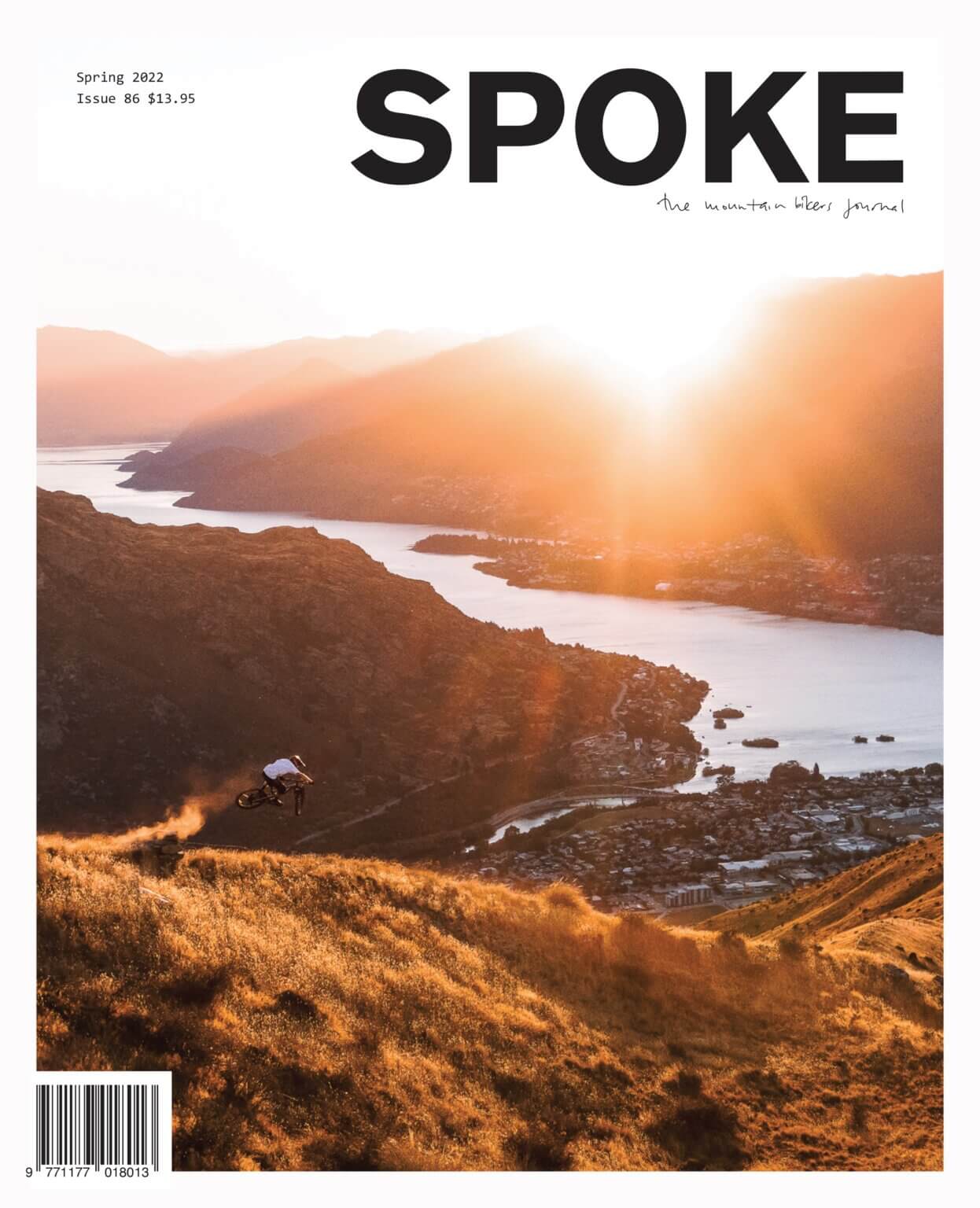
I’d been doing photography pretty casually during high school but I stopped for a while and then kind of came back to it about three or four years ago. When I got back into it, I had this idea of really getting a photo in a magazine of one of the boys. It ended up getting the front cover of Spoke magazine, which was pretty surprising.
After that I thought there might actually be something in photography for me. So I started doing projects with New Zealand Mountain Biker magazine and it kind of kept picking up.
Then I quit my job and then went to Europe for three months to travel around in a van and ride my bike. We rode every bike park you could think of over there and watched a couple World Cups. At those races, I got yarning to a couple of the media guys about the lifestyle and I was like, “I want to do that.”
When did you first think that photography could be something you could potentially make a bit of money or even a career out of?
Literally when I got that Spoke cover. To be honest, I was pretty shocked. I knew it was a good photo but I hadn’t really been keeping huge tabs on the magazine space at the time. At the time, I was just annoying the shit out of Neil Kerr from Spoke and Liam Friary from NZ Mountain Biker sending photos all the time and emailing like once or twice a month over the summer.
Initially, it wasn’t even about the money, to be honest, it was just fun. So after I got that cover I just thought “let’s try and do that again” and I got a photo of my mate James in Spoke’s gallery section in the next issue. After that NZ Mountain Biker asked me to do a tourism piece on Waimati. It was me and two of my best mates and we had the riding weekend paid for—accommodation, food, and they gave us a couple shuttles up the hill. All we had to do was put together this project and write this piece. I thought it was awesome. I got paid for the story and photos, so I was just like “Hell yeah let’s just keep trying to do this”.
At the time, I was a tradie. I’m an exterior plasterer by trade, and I also worked in roading doing concrete kerbing. I was getting pretty sick of it. The job was all 6am starts—I’d get up in the dark and get home in the dark, I had no time to ride, and I felt shagged all day.
I knew people in the media scene and through talking to people at the races I had a rough idea of what they got paid. It’s not amazing money, but the lifestyle looked fun so I really wanted to have a go at doing it for at least a season or two.
When did you decide to jump on the UCI World Cup circuit and how did you make that happen?
So my goal is to shoot for a team—that’s my goal for next season. It’s tough though, because there’s a lot of turmoil at the moment. Brands are going under and there’s not exactly a lot of money kicking around in the sport, well on the surface that is the perception.
But the main reason I went over was no one’s gonna give me a job shooting World Cups if I’ve never shot a World Cup before—If you want to do it, you have to go and get that experience.
The way the calendar worked this year, the races were broken up into blocks with big gaps, and I wasn’t in a financial position to be in Europe for that long. The last two rounds were in the United States and Canada and were close together so it made sense to go to those.
I had another photographer mate, Clancy Kelly, who’s in a similar position—working to get a job. We both knew there was going to be a bit of a shake up in terms of teams and media with the new Warner Brother/Discovery restructuring, so that seemed like a good opportunity to give it a crack. So the idea was that we’d head over there, shoot, be amongst the scene, and put together a pitch for teams for next year.
Was it hard to get media accreditation?
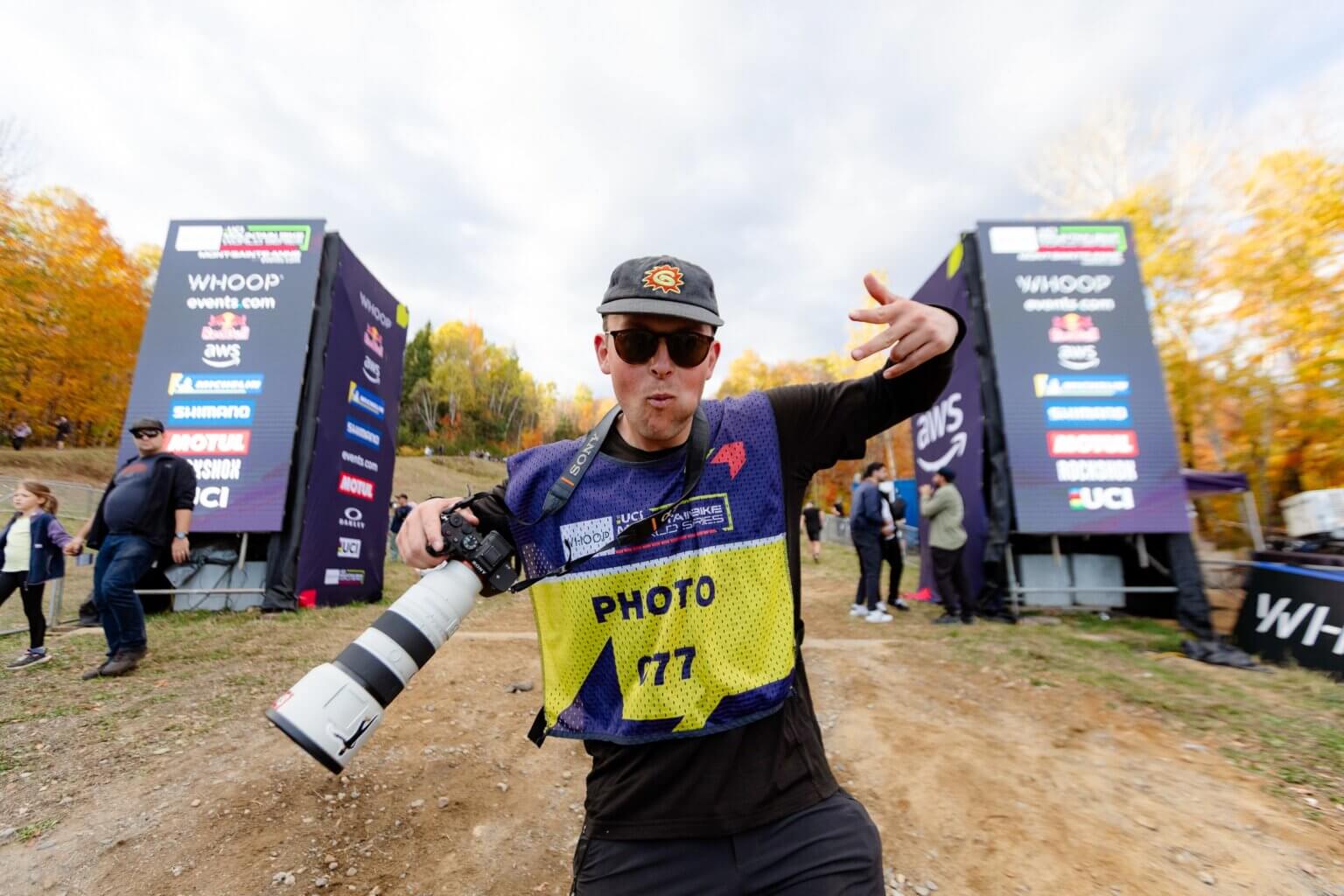
The UCI loves it if you’re associated with a media outlet, so I got NZ Mountain Biker to write me an email saying that I was on report for them for the three weeks and they gave me a bib.
I thought it was going to be a hassle because they talk about having an international press card and all this other carry on, but I just left all that stuff blank on the application and they got back to me saying it was sweet as.
What was it like being on course and shooting in that environment?
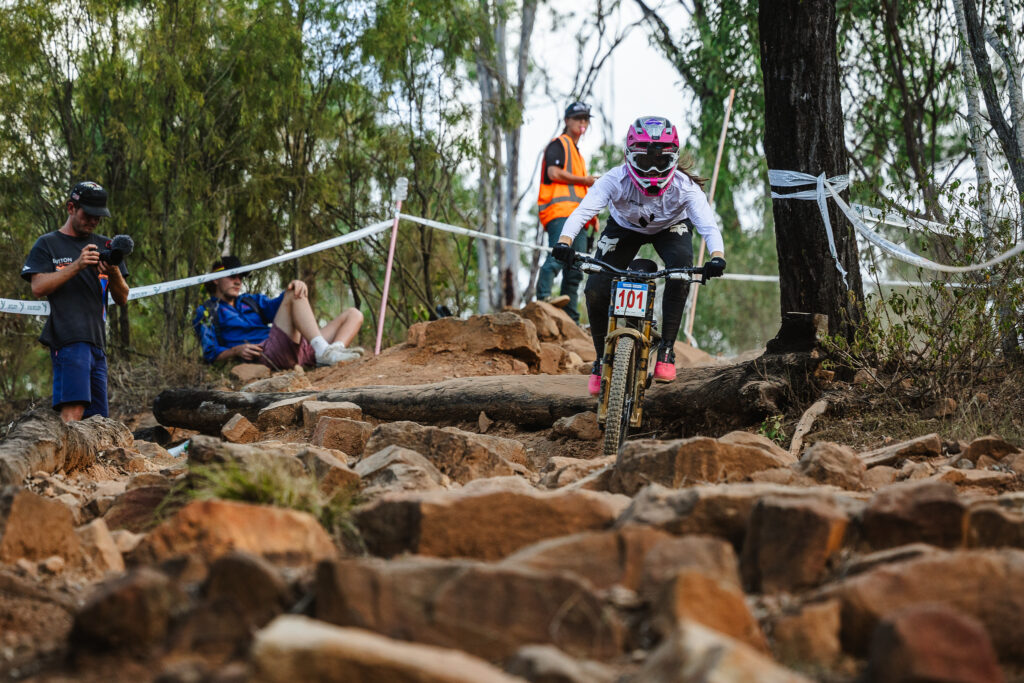
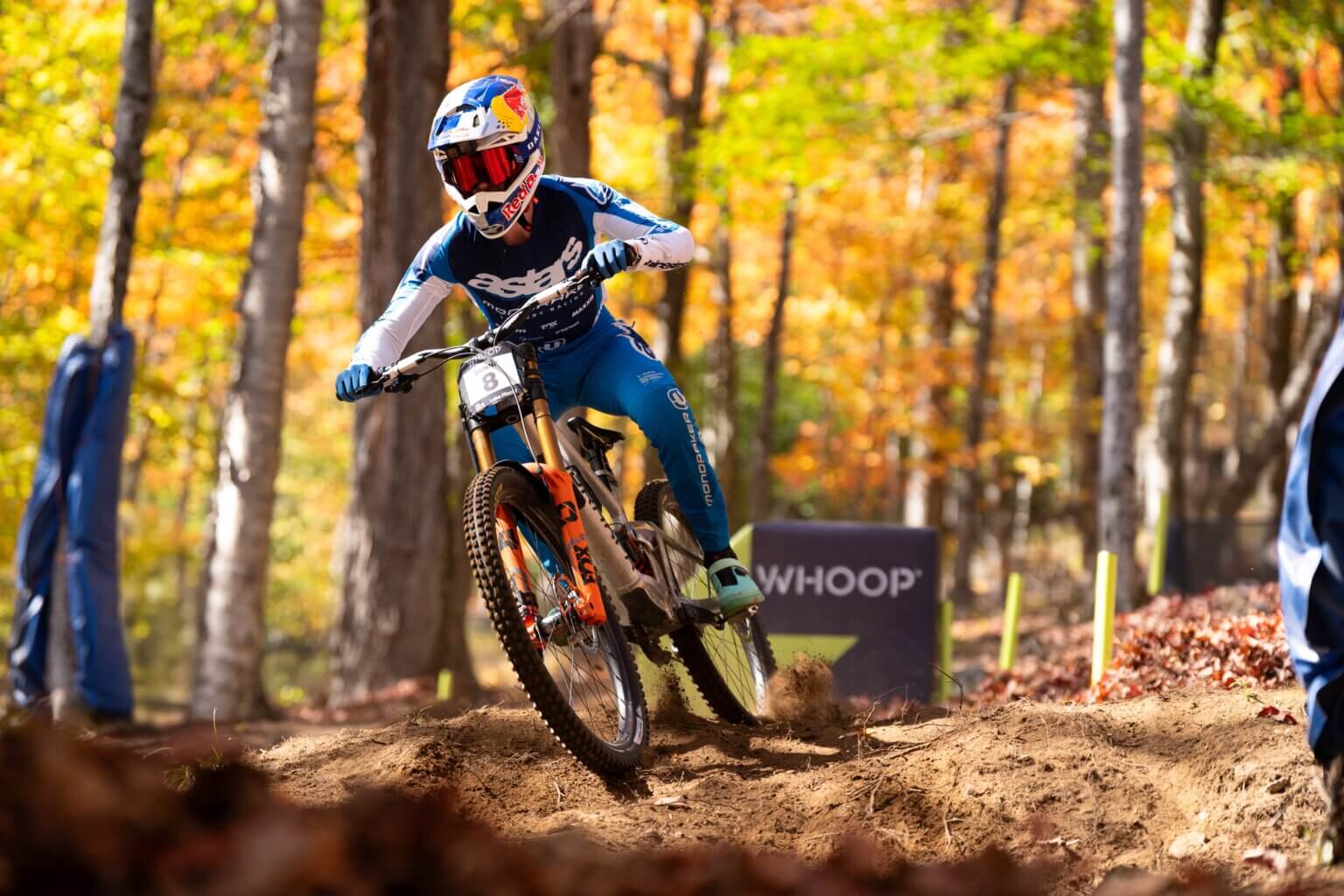
It’s pretty much just like a club race but way more serious. It’s alright when no one’s on track because everyone will stop and have a laugh, but when riders are on track, which is pretty much most of the day, it’s full-on. The guys that are shooting, like Sven Martin and Boris Beyer and the rest of the other squids, are so locked in the whole day.
"My mates always give me a hard time for not wanting to shoot weddings because they think it must be really high pressure, but shooting a mountain bike race is the highest pressure you get."
What was it like seeing guys like Sven and Boris work?
Those guys just know where to be. They have big shot lists and deliverables and all that kind of stuff and they’re so methodical about how they shoot the track. They’ve planned everything out—they’ve got particular shots they’ll take throughout the day at different spots on the hill. Most of the photographers are shooting for multiple clients and they really only have six or seven chances to get their shots during practice and only a couple of chances through qualifying and finals, so it’s a high-pressure environment.
My mates always give me a hard time for not wanting to shoot weddings because they think it must be really high pressure, but shooting a mountain bike race is the highest pressure you get.
These guys are so good at setting up shots. For example, Sven had four cameras set up for finals—two or three cameras down the track on tripods with triggers, and then he had one he was holding. They have to get the shot but then they also have to also get three or four other shots at the same time. The level of what those guys do is insane. It’s kind of cool being around those guys on track.
For the highest level of a sport, it’s still very chill though. Everyone’s very inclusive. It’s not like “Who the hell are these guys?” Everyone’s very nice: the video guys, broadcast guys, all the marshals—everyone’s really chill. But when it’s time to turn it on, everyone focuses.
Physically being on tracks, having a B-zone taped away from the crowd, is actually awesome. You’ve got full access to the track and you’re pretty much right on the side of the track. It means you can frame shots to either cut the crowd in or out and cut out other distractions.


Your goal is to get a gig with a team, but will you head there regardless for the next race season?
I was looking at flights to Korea last night, ha, ha. Yeah, that’s the goal. There’s a strong chance I’ll be in Korea and then at least the first block because the schedule is a lot nicer—there are five races in a row over about six weeks, then there’s a gap for summer break and then a couple more, then World Champs, then there are two in North America but they’re on opposite sides, Lake Placid and Whistler, which is annoying.
There are also all the events in New Zealand and Australia to sort out before that as well. So hopefully I can find some work kicking around to keep the momentum going.
What do you think makes a really great mountain bike photo?
Yeah, it’s kind of interesting. It definitely helps if you ride yourself. I think it makes a big difference in someone’s photography and how they look at a scene, because you can see yourself in the photo, which helps you know what you want the photo to look like.
I guess it comes down to what you’ve been exposed to. I grew up looking at photo epics on websites and magazine galleries and looking up to all those unreal photographers who were a part of the scene at that time. That was before social media, before reels.
With media moving towards things like short-form video, why did you decide to go all in on photography?
This might sound counterintuitive, but one of the reasons I thought it’d be a good idea to pursue photography was that I saw everything transitioning towards reels and video and I thought that if I pursue photos there’ll be less competition. I don’t see a lot of people at races taking photos other than the kind of OG guys that were around taking photos when I used to race.
Sometimes it’s hard to stand out being a photographer when you go on your phone and you’re just bombarded with rubbish, more or less, and anything creative, unless it blows your socks off, gets shelved by the algorithms.
It’s also hard these days because a lot of outlets won’t hire a photographer anymore or can’t afford to pay someone to shoot. And then it’s the 1 per cent of guys who are still shooting and they’re the ones taking all the photos. Those guys are amazing though, they’re on a whole different level. But it’s hard being an entry-level person and kind of having to suck eggs for a while, if you know what I mean? It can feel like you’re going nowhere. You’ve really got to earn your stripes.
Why do you think photography is an important part of mountain biking culture?
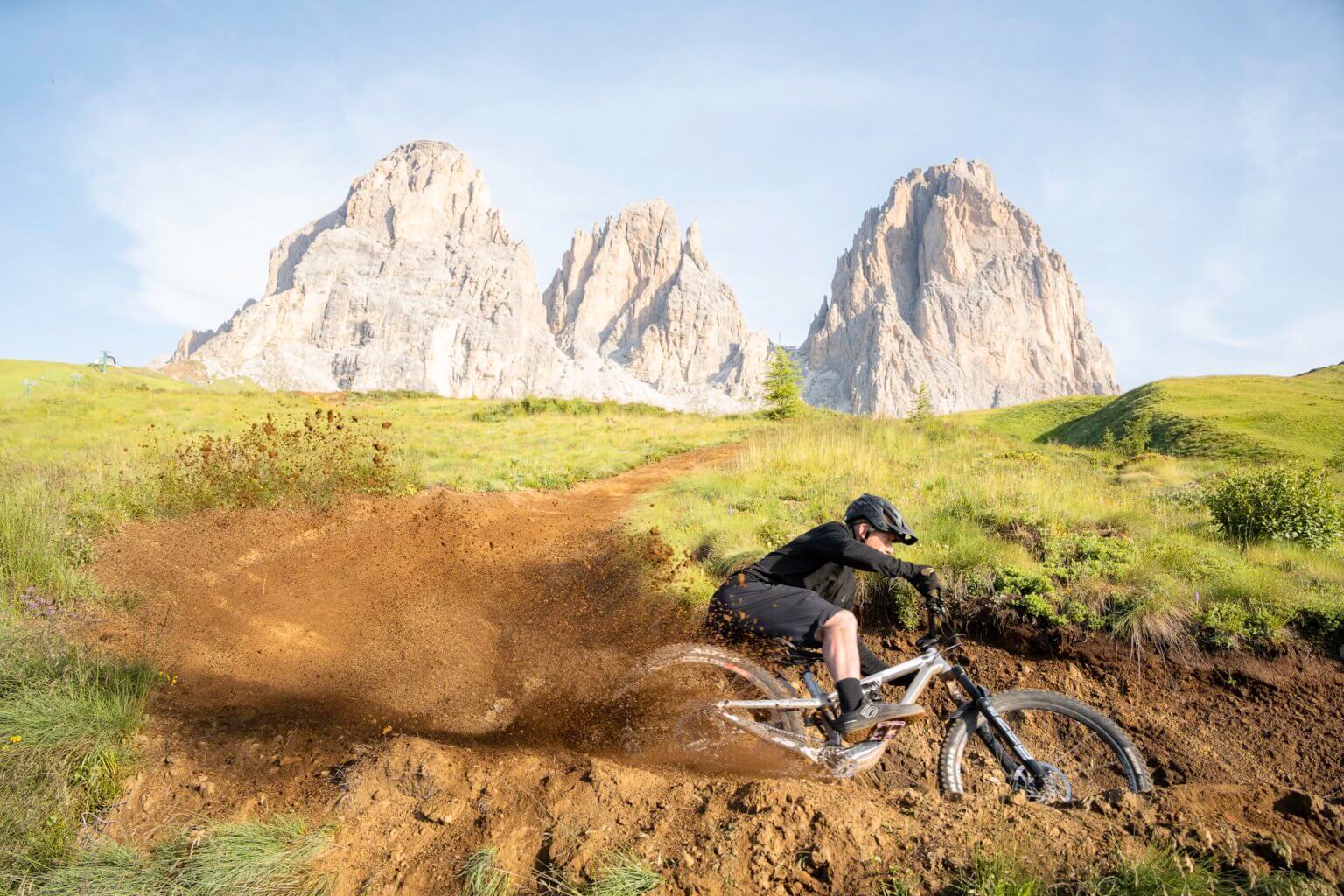
I guess you’re trying to convey the feeling of what it is like to be there and riding. For example, me and my mate Fynn have this photo from Val di Fassa of him just blowing up a corner with the Dolomites in the background—that photo takes me back to exactly what the feeling of riding that track was like that day. I think it’s that idea of conveying that feeling and making someone want to grab their bike and go for a ride.
So, who’s influenced your photography? Who inspires you?
I’d say the New Zealand scene definitely is my biggest influence: Cam Mackenzie, Henry Jaine , Callum Wood, I could go on forever. The level in New Zealand is so high. These guys do insane work: print projects, campaigns with brands, and just pure art.
Obviously, Sven Martin is a pretty big influence as well because of the way he can document the feeling of a race and he never misses a shot—the best shot of the race is always either from him or Boris.
There’s a huge list of people that I’m probably blanking pretty hard on—guys like Stirling Lawrence, Paris Gore, and Ross Bell.
I’ve not really tried to emulate anyone in particular, though, I’ve more like tried to take notes from each person and encapsulate that as best as I could … or at least I’m trying to.
I wouldn’t say I’ve cracked it or anything like that. I’m still very green to this whole industry and I’ve only been trying to pursue it seriously for the last two years. I’m still learning new things and I understand the media landscape is forever changing, but I’m having a go.
I think it’s all about just having a crack. Harry Talbot is someone a lot of people in New Zealand and Australia look at. He slept in his car and bummed it around Europe for a few seasons shooting the Tour de France on the hunt for a full time gig. Now he’s one of the best photographers on the scene. So that’s kind of the blueprint—you have to earn it and the best opportunities come to the people that are there. The people it works out for are the ones who are the most committed.
"You have to earn it and the best opportunities come to the people that are there."


In terms of your method, are you someone who really plans ahead of time or are you just thinking on your feet and chasing the moment?
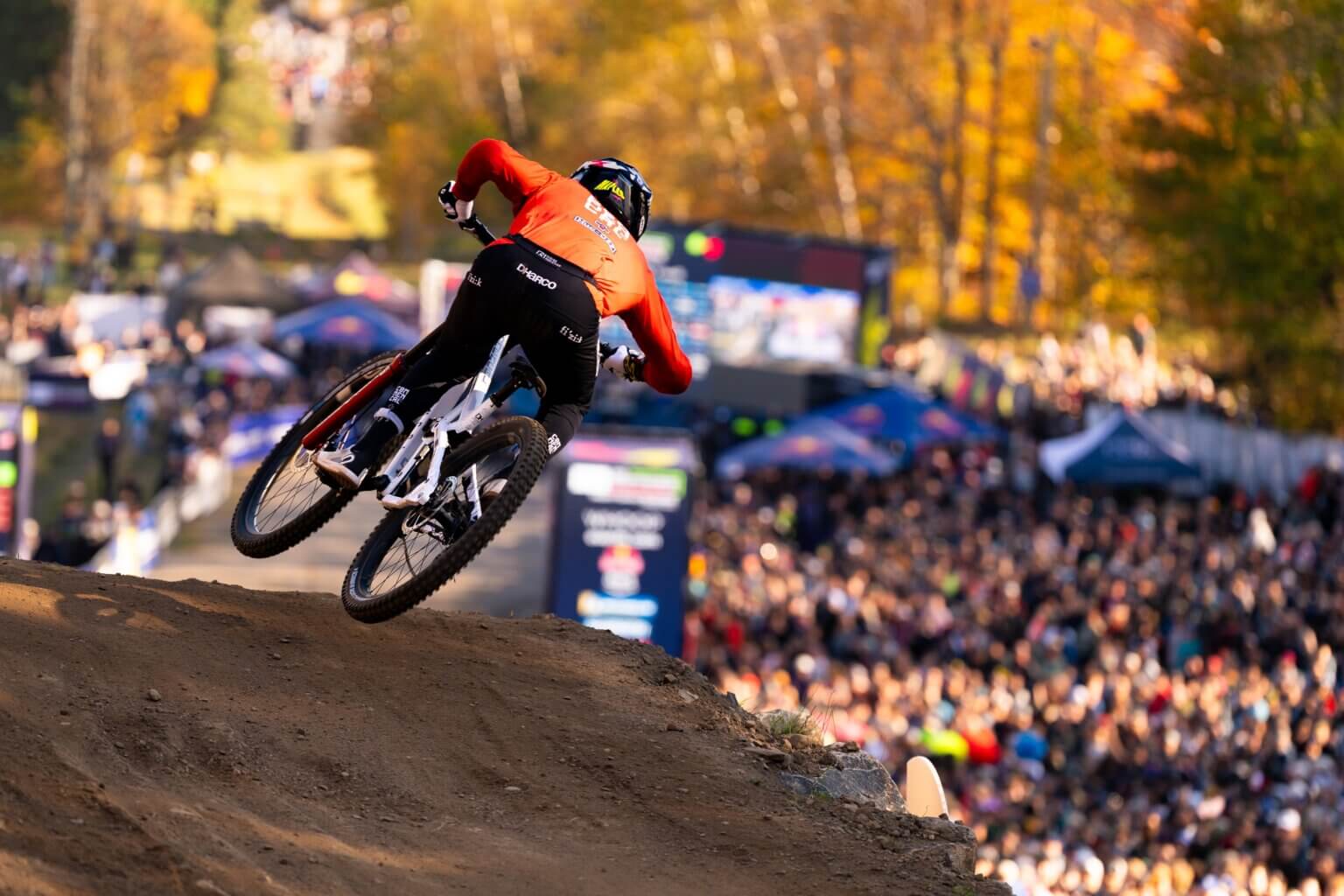
This is probably a bit of a controversial one, but I’m a firm believer about playing the cards in front of you. I could go and stand on every single corner during a track walk and plan out my shots, especially like Lake Placid for example, because no one had shot there, and there would be so many shots to pick from and no one knew what the best lines were.
You really have to wait to see what lines the riders choose to what is going to be the best to shoot—will the rider pre hop over this, compress over that, you might get a good press-up shot here, riders might be whipping there or not. You can stress yourself out trying to figure out too much ahead of time.
I find it better to rely on my past experiences. Especially when shooting racing because you have to make really quick decisions. If you’ve got a rider that you need a photo of and you know they’re coming down in 15 minutes because you saw them on the chairlift and you don’t like the spot, you’ve got to make that decision and move fast.
"You can't just tell Loic Bruni to go back up and try something again."
I know a lot of photographers bang on about being prepared and seeing the vision and all that, but you have to get the shots on the day and sometimes you have to sacrifice a little bit of creative expression. If I delivered a client one really banging photo, they’d probably be pissed off because what they need is 10 good race photos, some portraits and lifestyle shots that tie the day together, not one amazing photo.
Commercial work is the complete opposite. You have time to direct the rider to brake into a corner, or throw a little skid, or throw that whip harder. It makes everything so much easier. You can’t just tell Loic Bruni to go back up and try something again.
A lot of people say that if you can shoot mountain biking, you can shoot anything. Mountain biking is one of the hardest sports to take photos of because there are just so many factors involved—everything is moving fast and there’s usually really difficult lighting conditions.
With that in mind, do you have any advice for people who are getting into it or trying to up their game with taking action shots of mountain biking?
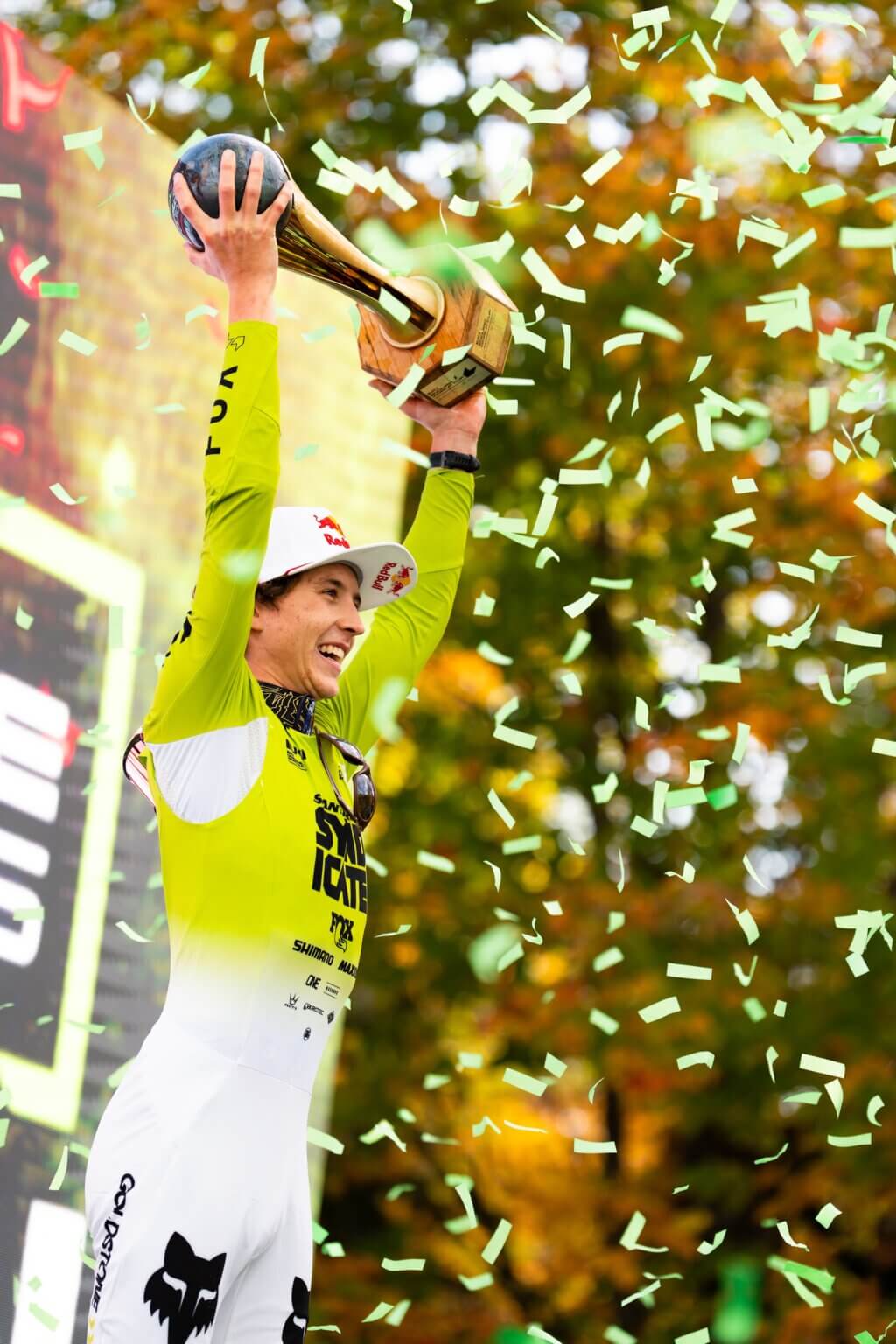
Yeah, just go shoot as much as you can. Use any opportunity: a club race, a national round in your area, any kind of competition. It could be cross country, gravel racing, road cycling or triathlon, just go shoot it.
I treat photography like I guess a basketball player would treat shooting free throws—I need to get as many reps in as I can. There are no composition tricks, no places to be, no positions or angles—you learn that all over time. And the only way to learn is to just go out and do it.
You are going suck for a while. Most of those World Cup days I shot, the first half of each day the photos all stunk, but I knew the photos at the end of the day were gonna be the ones I’d use because I’d been practicing and warming myself up all day.
It’s just repetition, making mistakes, understanding what works and what doesn’t, and doing it again. There’s a lot of people who shoot mountain biking that get discouraged because they’ve been doing it for six months and can’t find any work. A lot of people have a go and they see it not working and kind of just give up. But the best thing to do is to just keep trying.
So it’s just like anything, it just takes time.
Check out more of Riley McLay’s work at his website or on Instagram.