
The Forbidden Bikes misconception
Founder Owen Pemberton on why e-bikes need different geometry and how high-pivots are only part of the Forbidden magic
Words Justin Henehan | Images Andy Lloyd and supplied
It’s taken just six years for Forbidden Bikes to drop its heels and plough deep into the world of mountain biking. In that time, they’ve shaken up the industry, media, and keyboard warriors alike, challenging perceptions about what a mountain bike is and how it should handle. Other brands are slowly catching up, but Forbidden continues to be up at every split—an ethos founder Owen Pemberton had right from the start.
From working as an engineer at Rolls-Royce, to wrenching at a Whistler bike shop, to developing bikes at Norco, Owen was always pushing at the edges of company comfort zones. After seven years at Norco he decided to go out on his own, moving to Cumberland BC to create a bike company named after an iconic nearby riding spot—the Forbidden Plateau.
The idea was simple—to build a bike he wanted to ride. His industry experience had shown him that the mainstream approach to mountain bike geometry was flawed, chasing stability through elongating the front of the bike, rendering the rider a stretched-out passenger riding a tiger of tradition meets compromise.
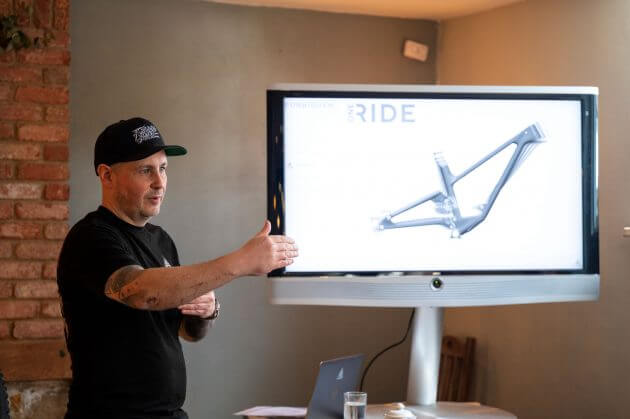
The Druid, Forbidden’s first bike, changed all that with its proportional rear centres. But it was the high-pivot suspension system on a 130mm-travel bike that got most of the attention—no one had built anything quite like it before. And it opened many people’s eyes to the benefit of rearward axle paths for any sort of mountain biking, as well as launching a wave of imitators.
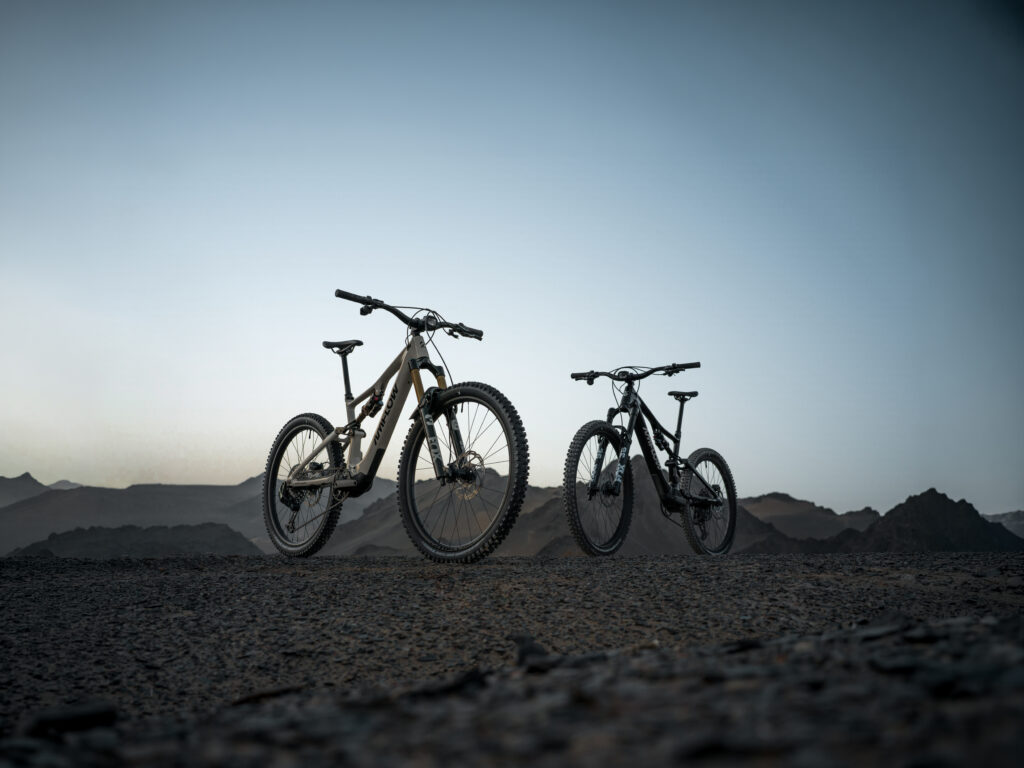
Now the Druid has spawned an electrified sibling—the Druid CorE and LitE. Forbidden’s first e-bikes have mostly garnered attention for their use of the Avinox motor system but, like the Druid trail bike, if you look past the pivots and pulley there’s something much more fundamental going on.
Outset sat down with Forbidden Bikes founder Owen Pemberton to talk about developing the Druid e-bike, why he chose the Avinox motor system, and why e-bikes need different geometry and kinematics to conventional bikes.
Forbidden is pretty well established in the mountain biking world now. How has the journey been for you?
Pretty crazy and often quite stressful. Covid just made everything like … the industry has been a right mess since.
About six months into Covid, things all of a sudden started going a bit strange. There were rumours about lots of brands ordering huge amounts of product. There was a boom there, but who was really going to realise it if everybody over-ordered? But it seemed like that’s what people were doing.
At the same time, we were this new brand that had only existed for the better part of a year. Because of that, we were probably the smallest brand in a lot of the factories so we found ourselves getting pushed back in the queue and we struggled to get a good supply of parts. The upside is we didn’t really get a chance to over order, because we just couldn’t get anything. Luckily, we have a very good relationship with our frame factory, so we could still get supply of carbon for frames.
During Covid, we ended up making the decision to move our assembly to Canada just so we could have more control over it, which also allowed us to still supply frame kits. And because we couldn’t get shocks from the big suppliers, we ended up working with some smaller partners like Push and EXT, which meant we could still get our frames out there and stay in business.
Around that time, we started working with the race team, with Mathieu Dupelle and Connor Fearon, to try and get the brand out there. It was taking a long time to develop products and we didn’t have a lot else to talk about but we knew we had to stay relevant as a brand. So we took a bit of a gamble but it kept our brand elevated and put us at these events alongside the big brands and in front of people’s eyes.
And then as we came towards the end of Covid the real oversupply problems started to hit and it became a very challenging market to try and sell into, especially at full margin.
It’s been a bit stressful but I’m feeling pretty confident about where we’re at and we’ve positioned ourselves in a good spot. I just got back from Crankworks and there’s a lot of buzz and people are coming to us wanting to work with us. Now I’m hoping that we can take advantage of where we’re at and keep it going.
Tell me about the influences and the cultural touchstones that went into Forbidden Bikes.
I always had an interest in the branding side of things and even when I was very young I had quite a creative streak—probably more creative than engineering—and that drew me to the artistic side of things.
I considered at one point going into product design over engineering, and also maybe graphic design. It’s nothing I ever trained in, but I always had this drive to be involved with that. But all my training is in engineering so no one was going to give me a job in the marketing department. So I thought, “What if I started something small that would let me scratch that itch?” That was really the start of Forbidden.
I was always into bikes but mountain bikes have always been my number one thing. But I also rode a bit of BMX and was quite into that scene for a number of years. I always liked the way BMX brands presented themselves and there were also some early mountain bike brands which I thought did a great job of that too. But those brands seem to have either just slipped away or they’ve become more sort of middle of the road and sort of vanilla.
I thought there’s definitely room in mountain biking to have another brand that’s a little more for core mountain bikers. For me, it was like, I just wanted to combine my passion for mountain biking, the artistic side of things, and music. I just wanted to bring these things together in a brand.
One of the things I really wanted to do at Norco was introduce scaled-rear-end sizing on bikes. At the time, I don’t think anybody else was doing it. We did do it at Norco but it was only 5mm per size. It was better than nothing, but it always bugged me that it wasn’t enough to keep the ratio of the front centre to rear centre the same across all sizes. That was a big driver for me with developing the Forbidden bikes. Everybody buying our bikes is going to get the same ride characteristics, regardless of size.
“I think it surprises people who think I just wanted to make a high-pivot trail bike. The reality is I started with the geometry and then worked through a suspension design.”
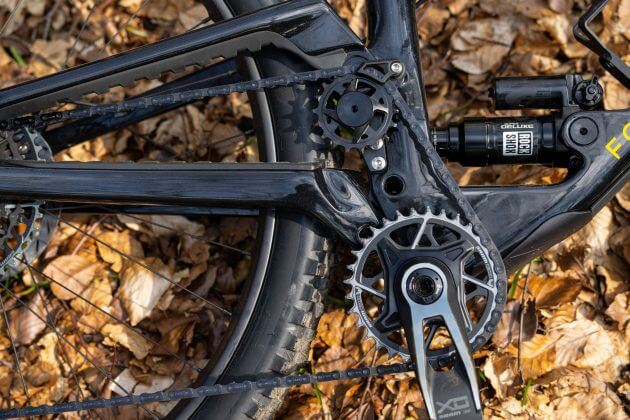
I think it surprises people who think I just wanted to make a high-pivot trail bike. The reality is, I started with the geometry and then worked through a suspension design. It was only through that process that the high pivot kept coming to the top—for the kind of bike that I want to ride it just made the most sense. So that’s how we ended up with the Druid, which was, I think, one of the first mid-travel trail bikes to have a high pivot.
We’re pretty lucky that it seemed like it was the right time for consumers to buy into the concept. We saw a good bit of buzz around that bike, which then led to other brands developing high-pivot bikes. Having all those bikes with idler pulleys appear actually helped legitimise what we were doing, and that instantly started to push it more.
Instead of being something that I thought was going to be very niche, it suddenly got a lot more traction with the wider consumer base. So that was definitely key to us sort of being able to sell the amount of bikes that we sold.
It’s funny, because everyone always says we are the “high-pivot” brand, but that’s not really what I wanted us to be. But we just owned it and put our stamp on it with the “High-Pivot Witchcraft” thing. That phrase actually came from a conversation I had with a guy. He was asking about suspension, so I started to explain it to him, and he’s like, “Just stop there, all of this stuff is like witchcraft to me, I don’t really understand.” That just always stuck in my head.
What was it that made you want to build an e-bike?
A few things that sort of aligned for us to do it. The market demand has been there for quite a while, especially when you look at Europe and how strong e-bikes are there. But it was also starting to move that way in other parts of the world too, particularly in North America, where we are, so we knew that it was something at some point we’d probably be looking to do.
But also a big founding principle of what we’re doing here is that I don’t want to design bikes that we don’t want to design. So our attitude was always to wait until it’s right for us and when we feel like the technology has matured enough. There’s got to be a spark there.
I’ve obviously ridden a lot of e-bikes over the years. Norco was developing its first e-bike around the time I was leaving, so for the few years prior to that I’d been test riding a bunch of bikes.
I didn’t really like e-bikes in the past. Yes, they got you to the top of the hill fast, but that’s not why I ride bikes. The reason we ride bikes is for how much fun they are on the descent. Those big, heavy, rattly e-bikes just didn’t really do it for me—they just felt like an old downhill bike that hadn’t been fixed in a number of years.
Over the years I’ve been trying to ride a lot of different e-bikes to get a sense of where things were going. I’d had some good experiences riding lightweight e-bikes. The Trek with the TQ motor opened my eyes—that was a really fun bike to ride because it felt like a normal mountain bike on the descents. So I thought we’d go down that route when we started looking into developing an eMTB. But at the same time I was hearing a lot of buzz that the next thing is going to be full-power bikes that are a bit lighter, and that they could potentially kill the lightweight e-bikes.
The pace of change with e-bikes is pretty fast. It was quite scary because if you hitch your wagon to the wrong horse you could be in a lot of trouble. So we took a step back to try to figure out what was going on.
At the same time I’d been suffering with back problems from breaking my back years ago. I ended up chatting to a friend in the industry who said that I really need to get an e-bike because it’ll get me out on the bike more and I’ll have less back issues. I wasn’t really thinking this is the point where Forbidden gets into e-bikes. I just thought it’s going to get me riding bikes more often and feeling good about riding.
So I started testing a bunch and I really liked the Orbea Wild, so I bought one of those. It was a big heavy bike that, by the time I added the parts and tyres I wanted to run, weighed north of 60lbs. But it got me out there riding a bunch more and it also got me learning a bit about how to design e-bikes.
“A lot of bikes were built around getting the geometry pretty much the same as non-e-bikes, but the more e-bikes I rode, the more I realised that that's not what you want to do.”
From there I started trying out other bikes and looking into them. It’s funny because a lot of bikes were built around getting the geometry pretty much the same as non-e-bikes, but the more e-bikes I rode, the more I realised that that’s not what you want to do.
One of the key things I started looking at was shorter cranks. We did a bunch of testing to see if there were any negatives to running shorter cranks and as far as we can tell it’s pretty much zero. They do feel a bit different when you first ride them, but that’s just teaching your legs to do something a bit different than you’re used to. Now when I jump on my gravel bike with 170mm cranks, it feels like I’m pedalling these massive circles and I can’t get power through my legs anymore.
So that spilled over into the geometry of the bike. Your seated position becomes different which in turn has a positive effect on your standing position. When you combine that with a higher stack, you end up with a bike that’s comfortable and descends really well.
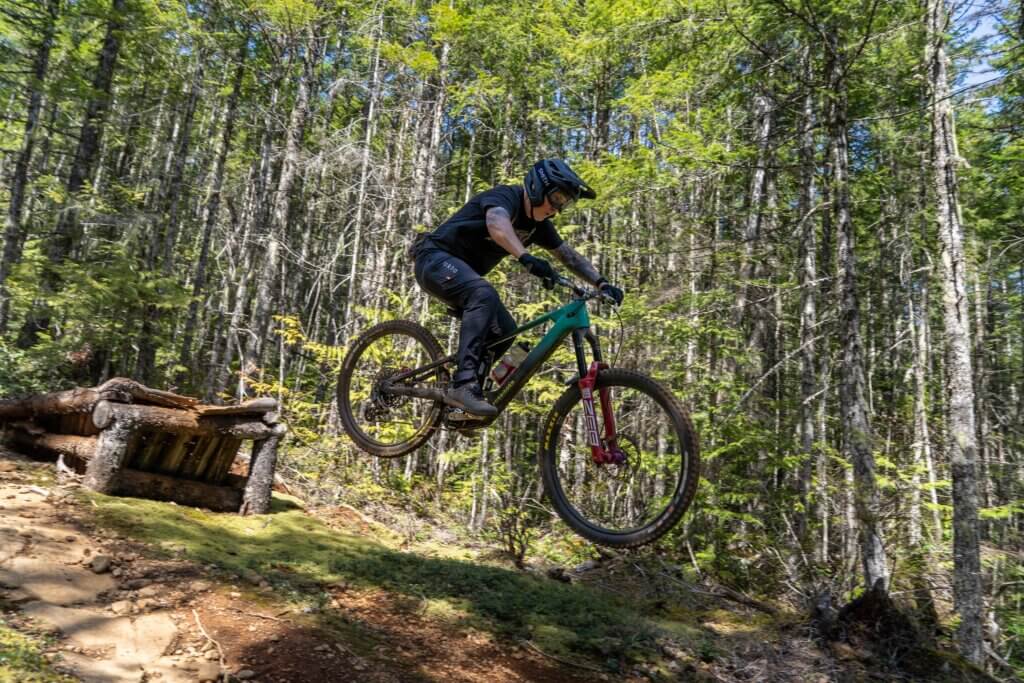
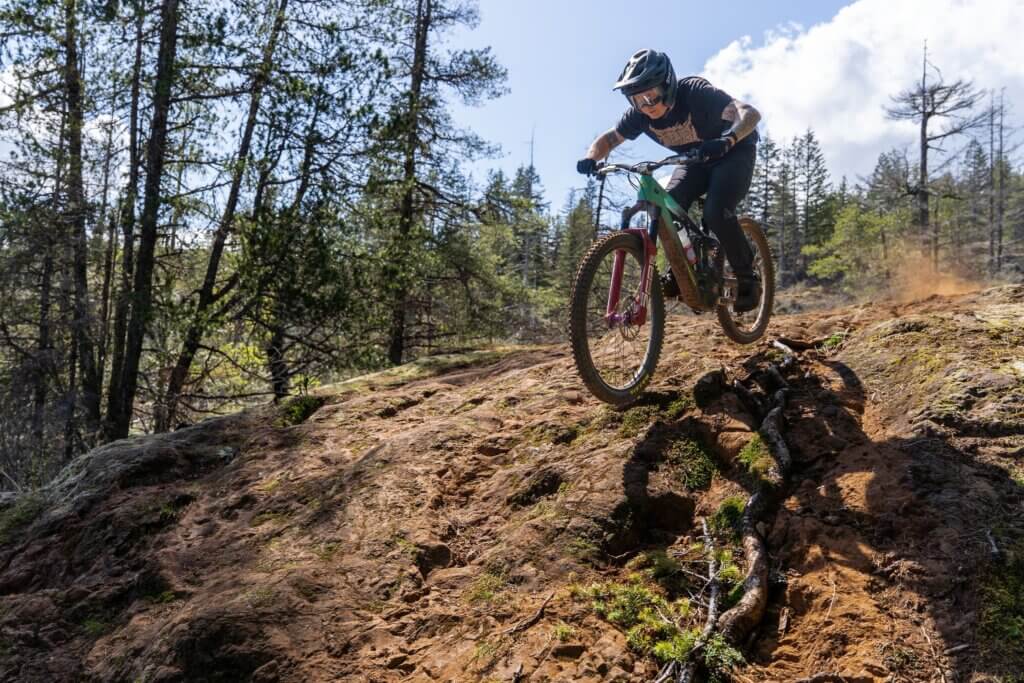
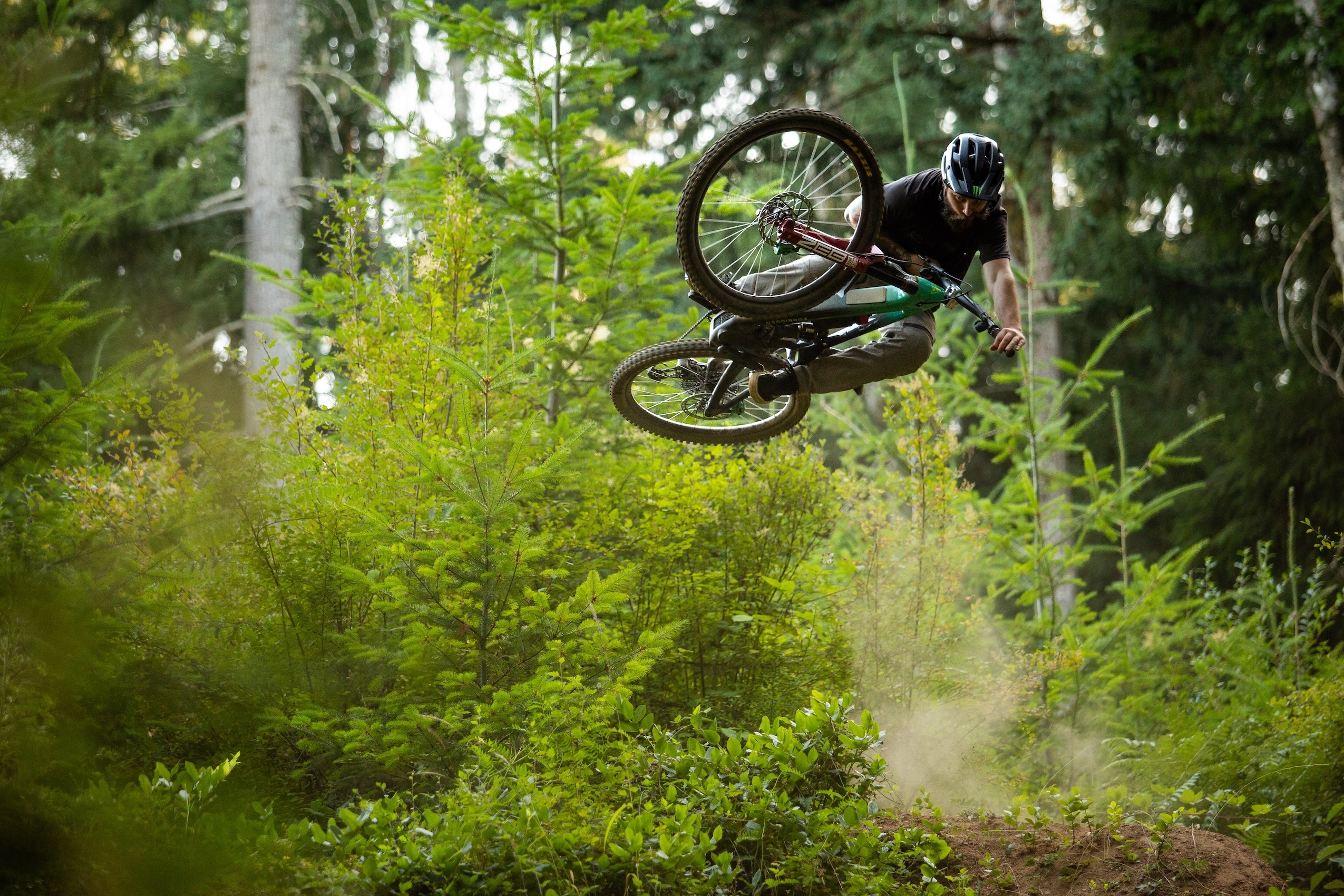
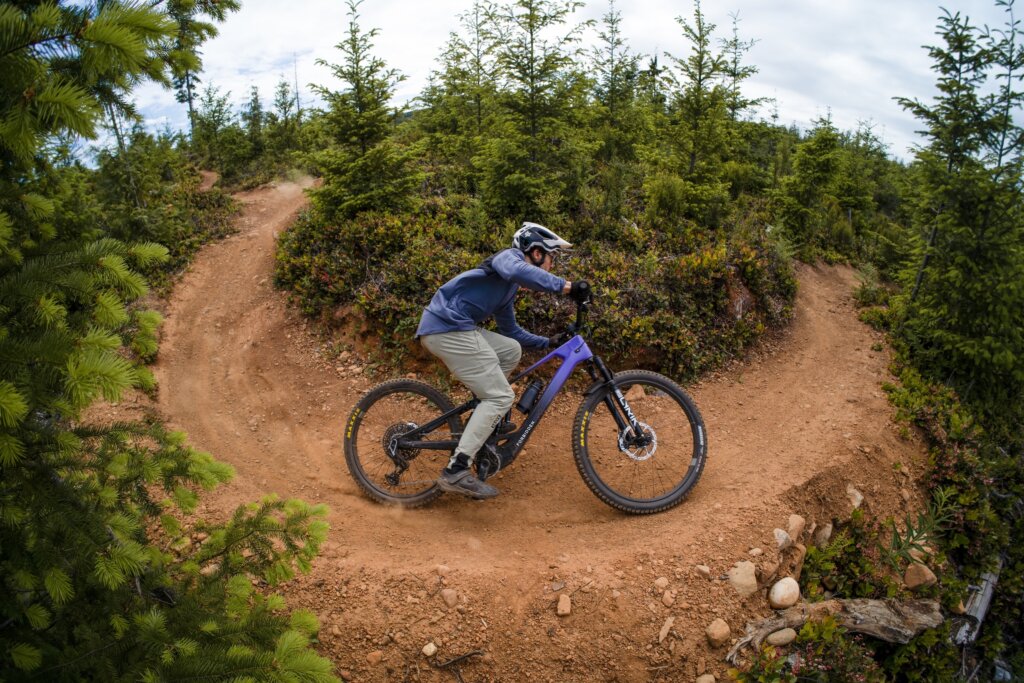
Our bikes are pretty light compared to some of our competitors but at the end of the day a 48- to 50-pound bike is still a 48- to 50-pound bike. We really sought to minimise the feeling of weight with our geometry and kinematic. We’ve had mountain bikers who’ve never ridden e-bikes before saying it’s still manoeuvrable and it’s still poppy, but it’ll plough when you need it to. And now, with the e-bike weight and the axle path, you end up with a bike that in many ways descends better than a non-motorised bike.
The main reason we ride bikes is for the descent. Now with e-bikes, you can make the descent better, you can do more laps, and they can turn any riding location into a bike park.
What motors were you looking at and why did you decide on the Avinox?
So we looked at a bunch of different motors, including Bosch, Fazua and DJI and we had a bike that was drawn up with a bunch of different motors that could fit in it, but we hadn’t done the final 3D modelling, and we were still trying to decide which motor to go with.
The partnership with DJI came about at a really good time. We were pretty lucky that through a chance conversation with one of our employees who lives in the UK we had a bit of a heads up that DJI had this motor coming, so we knew that we’d want to search them out at Eurobike.
We’d been pushing Avinox to get to an Amflow to test for a while. I was in Asia when the bike arrived and the guys were sending me messages about how great this thing was, so I was itching to get back and try it.
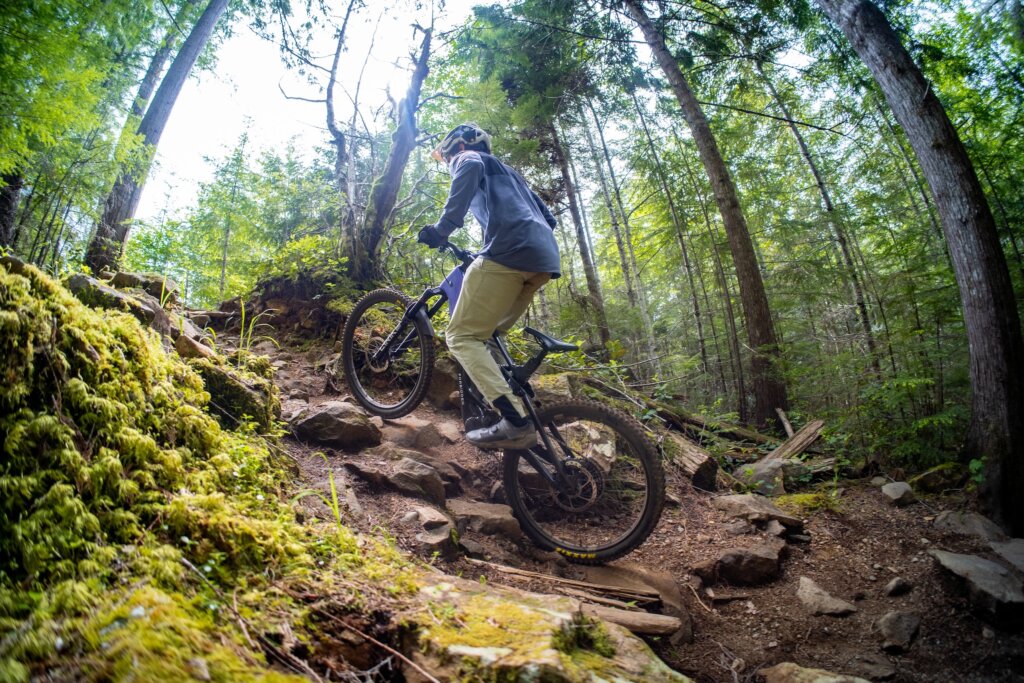
On my first ride, it was good descending conditions because it had been raining a bunch—just real nice dirt. But it was also very slimy on some of the climbs—the roots and rocks can be pretty slippy on some of our techy climbs around here. Riding up some steep techy, wet, slippery climbs, I was blown away by the amount of traction it had. I remember thinking: “This is, this is insanely good. This is their first product and they’ve nailed it. This is great.”
We already had the new bike in development with another motor but we realised that we could easily make a switch to run the DJI system. Going with Avinox still felt like a big risk though. Yes, DJI is a huge company that pretty much leads anything they get into. But a lot of other big names have tried to make e-bike motors and not executed on delivery, or their reliability wasn’t that good. But it seemed like it was worth the risk so we committed, had the tooling modified, and we got into it.
One of the things that is great with Avinox is it already feels like a good partnership.They’ve been very open to listening to our feedback. They’ve often said to me that they’re the technology experts, but we’re the mountain bike experts. So if we tell them something could be better, they usually listen and there’ll be a new firmware update. They’ve been having us beta test new firmware and stuff all along, just as I’m sure they have with other people, but it is good that they’re just that open to listening and learning.
You’re also a proponent of high anti-rise bikes, so bikes that preserve their geometry under braking. Was achieving a high anti-rise a nice side effect of opting for high-pivot suspension platforms or is that something you sought to design into the bikes?
It’s something that I’ve learned to like on a bike. For years I rode bikes with low anti-rise where you have to fight that forward-weight pitch under braking. When I first started riding high-pivot bikes more, which have a decent amount of squat under braking, it felt really good.
With the e-bikes, we worried that the change to a more traditional horst-link layout and the resulting lower anti-rise would become a negative on the trail, but the higher stack we use helps prevent your weight shifting forward. It’s ended up being a really neutral-feeling bike, as far as those things are concerned.
"As a whole bike the Druid eMTB is an insane package. It's so much fun—I think we’ve nailed that sweet spot."
The other feature of our e-bike kinematic is the predictability of the rate of progression. On our early bikes, we were trying to chase bottom-out resistance but still keeping the mid stroke open enough that it can react to impacts. Nowadays the shock manufacturers are putting so much effort into making shocks that can resist bottom-out forces through hydraulics and mechanical bumpers that you don’t have to worry about that as much on the kinematic side. That allowed us to use a more linear rate of progression throughout the whole stroke of the shock which in turn allowed us to have better shock tunes.
And with a more linear rate of progression you can have the bike open enough that it can track the ground, but as soon as you push into the travel it’s going to give you that pop back. That was key for our e-bikes because it offsets the extra weight. It also stays very consistent wherever you are in the travel.
When you want to let the bike run, it’s going to track the ground really well, and when you want to hop it over like a little gap it responds to your inputs.
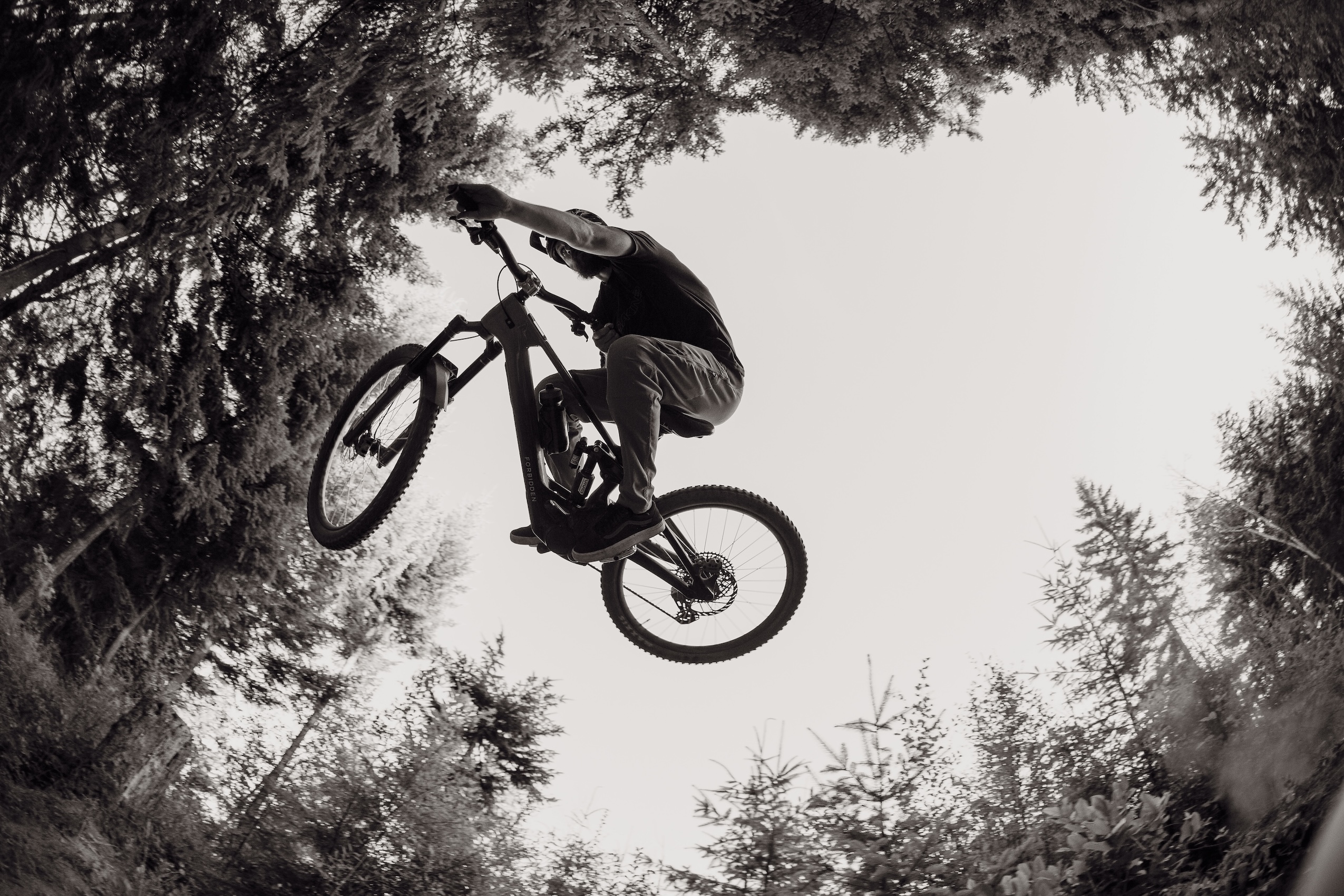
As a whole bike the Druid eMTB is an insane package. It’s so much fun—I think we’ve nailed that sweet spot.