

High-pivot eMTBs aren't all built alike. Here's what separates the engineered ones from the rest.
Before we start: my other company, 3Sixty Sports, distributes Forbidden Bike Company in New Zealand. So yes, I make money when a Forbidden sells, and I’m about to use Forbidden bikes as my examples. I’m not going to ask you to trust my impartiality. I don’t have any. What I can do is show my working. The geometry, the specs and the history in this piece are public and linked, so check them.
Five years ago I had to explain what an idler was. These days I can’t get through a launch season without another eMTB turning up with a little sprocket above the chainring and a paragraph about rearward axle paths. High pivot has gone mainstream. The engineering discipline that makes a high pivot worth owning has not, and with the torque modern motors shove through a drivetrain, that gap matters more than it ever did on a pedal bike.
None of it shows up on a spec sheet. Travel, head angle, watts. They all read the same in the brochure. So this is what I actually check, learnt over years of selling these bikes, servicing them and riding them. Some of it took me an embarrassingly long time to start checking.
The short answer
A high-pivot eMTB puts the main pivot up high and routes the chain over an idler pulley, so the rear wheel moves up and back as it compresses rather than straight up into whatever just hit it. On rough, fast, repeatedly square-edged terrain, that’s worth having. The efficiency cost people worry about is real but small — Pinkbike’s back-to-back trainer test measured about six watts, or roughly 2%, more power needed at the pedals on an idler bike — and on an e-bike, a motor is covering it.
But the architecture on its own doesn’t make a good bike, and this is where I think most buyers get sold short. What separates a high-pivot bike that’s been engineered as a system from one assembled around the idea comes down to four things: whether the geometry stays proportional across the size run, where in the stroke the axle path actually does its work, whether braking behaviour was tuned for that specific bike, and whether the idler was specced as a drivetrain component or as a pulley. That’s what the rest of this is about.
Weight balance: geometry that scales with the rider
Start with the thing nobody puts in the marketing. Where does your weight sit between the tyres?
Front-to-rear weight distribution decides how naturally both tyres stay loaded. A short back end gives you rear grip for free and front grip on subscription. You pay by shifting forward and weighting the bar through every corner, and you pay double once you’re tired. Longer, balanced rear ends grew out of exactly this problem, and Banshee’s Titan was early to it back in 2019.
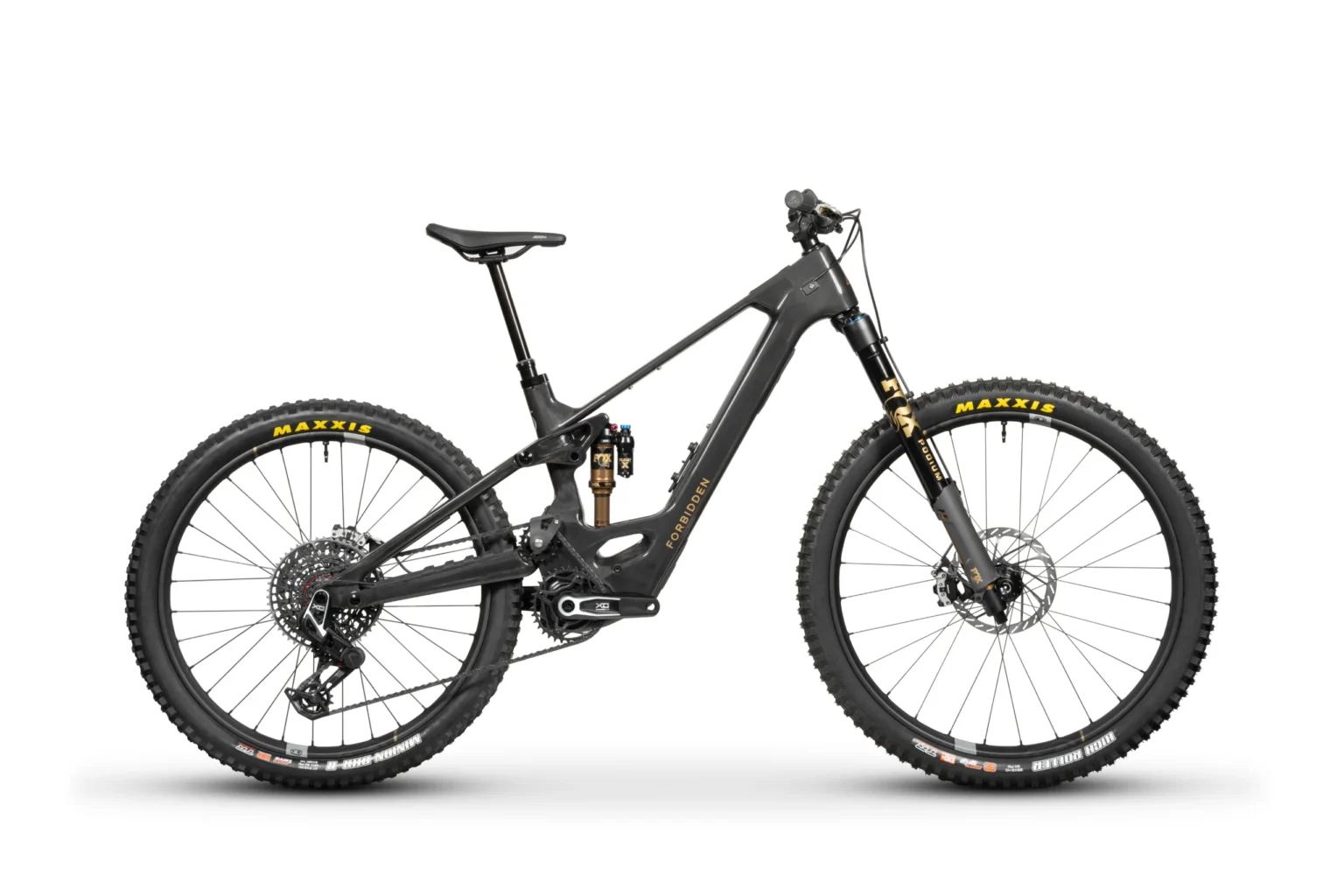
The number I check is rear-centre as a share of wheelbase. You can pull it off any geometry chart. On the Forbidden Druid E it’s 35.7 to 35.8 percent in every size. An S1 runs a 427mm rear-centre on a 1194mm wheelbase; an S4 runs 471 on 1317. Same proportion for a 165cm rider and a 195cm one, because the back end grows and the seat angle steepens as the frames get longer.
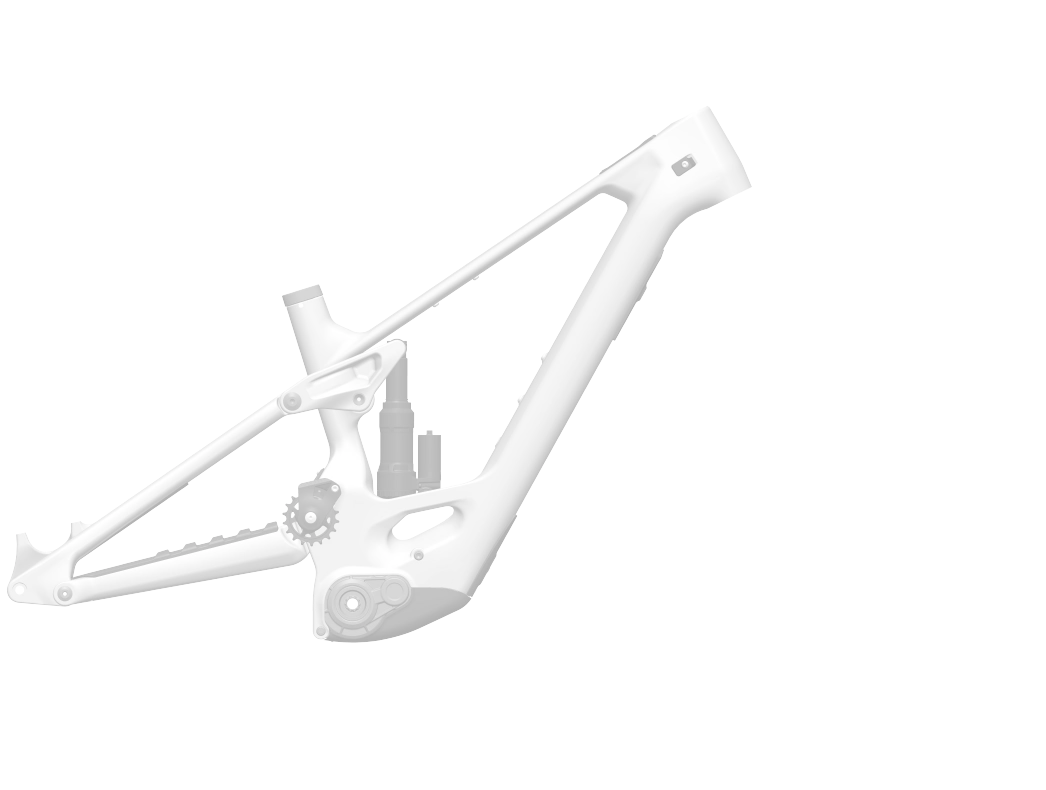
Now do the same maths on a bike with one chainstay length across four sizes. About 37 percent on the small frame, 33 on the big one. Plenty of fixed-stay bikes still ride well, but the relationship between rider position and rear-centre changes from size to size, and whatever balance the designer had in mind, not every rider is getting it. For me that’s reason enough to prefer proportional sizing, and it’s the first thing I look at on any size chart. Size-specific rear ends add real manufacturing and inventory cost, which is why so few brands bother. It’s also why I pay attention when one does.
Axle path: rearward where the hits happen
Every idler bike claims a rearward axle path. Fine. When?
The party trick of a rearward path is the square-edge hit. If the wheel is already moving up and back when it meets the edge, it gets out of the way and your speed survives. That isn’t the only thing an axle path does (it ties into leverage rate, damping and chain force) but it’s the thing you feel most. And square edges tend to arrive while the bike is riding around sag, not at bottom-out, so the top third of the stroke is where a rearward path earns its keep.
Which is why I read the shape of the curve rather than the headline. I want meaningful rearward movement early. A path that only gets interesting deep in the travel, then hooks forward again before bottom-out, is rearward on the chart and absent in the moment that counts. Loam Wolf measured the Druid E at roughly 11 of its 14.5mm of rearward travel before sag. That’s the shape I’m after, and Forbidden publishes the curve, so you don’t have to take my word or theirs on faith.
Anti-rise: proof that somebody chose
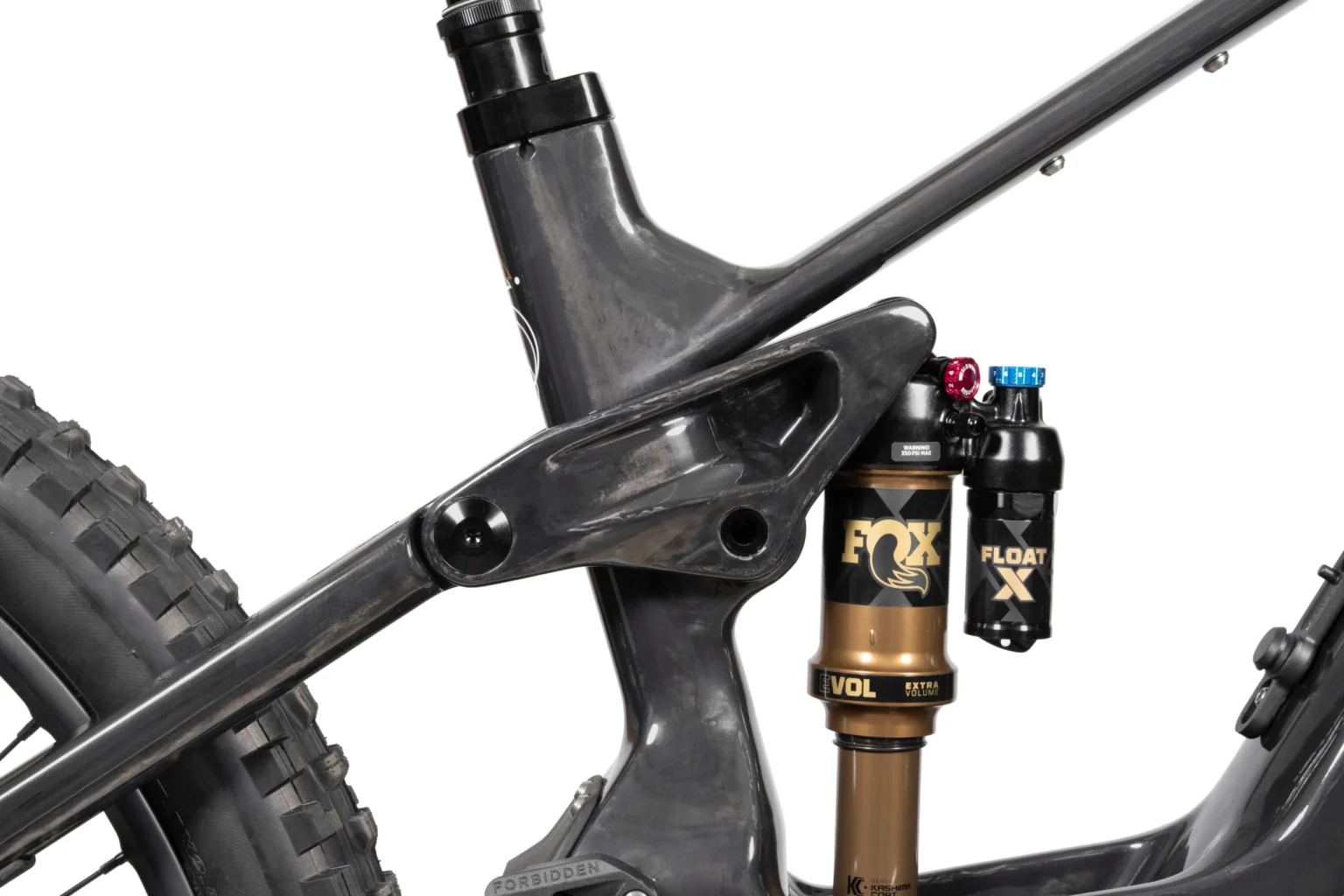
Anti-rise might be the least understood number in mountain biking, and it has the decency to have no correct answer. It describes how braking forces act on the rear suspension. Tune it high and the bike holds its shape under hard braking. Tune it low and the suspension keeps absorbing while you’re on the anchors. Both are defensible, and anyone who tells you one is simply better is selling something.
What I want is proof that somebody chose.
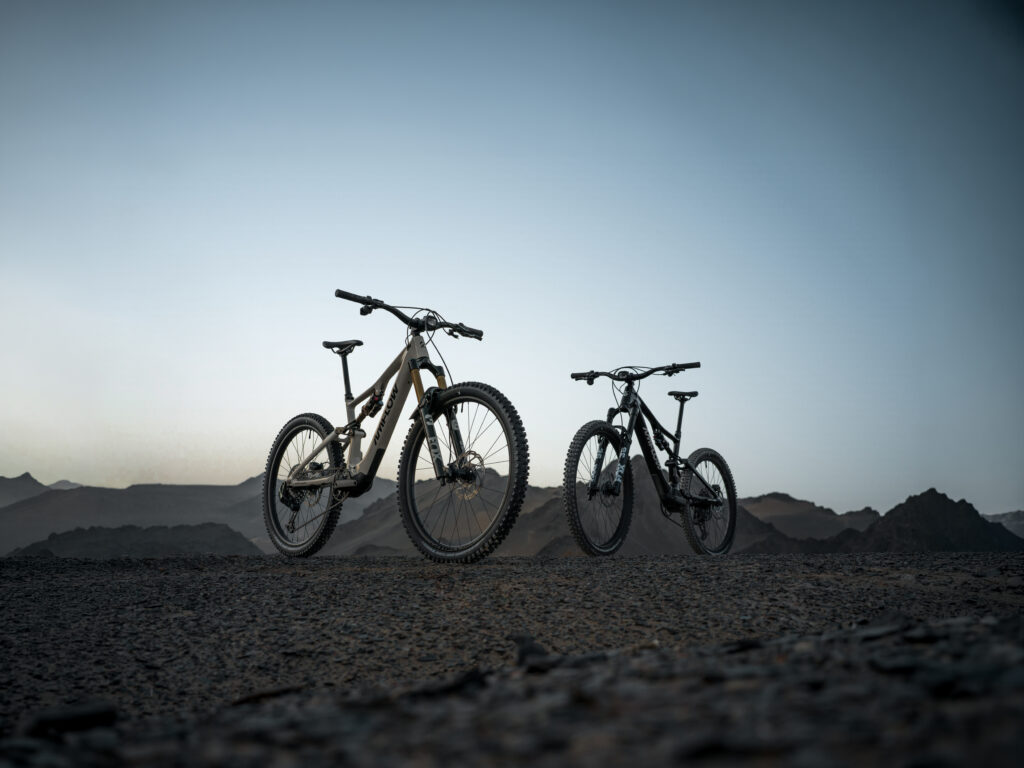
Forbidden’s pair is the example I know best, for obvious reasons, and by their own account the two bikes are tuned apart on purpose. The Druid E runs active and sensitive under brakes, a trail bike that stays supple while you drag brake into a corner. The Dreadnought E runs composed, holding its attitude on the steep, fast terrain it was built for. Same suspension family. Two answers, because there were two questions.
The pattern I walk past is one tune stretched across a whole range. It tends to happen when a suspension layout arrives from outside rather than being developed in the building, because the behaviour comes bundled with the licence. Nothing wrong with the tune, necessarily. It’s that nobody asked whether it was right for this particular bike, and when I ask a brand why their trail bike and their enduro bike brake identically, “they just do” tells me where the engineering stopped.
The idler pulley is where corners get cut
Want to know how seriously a brand took its high-pivot homework? Look at the pulley.
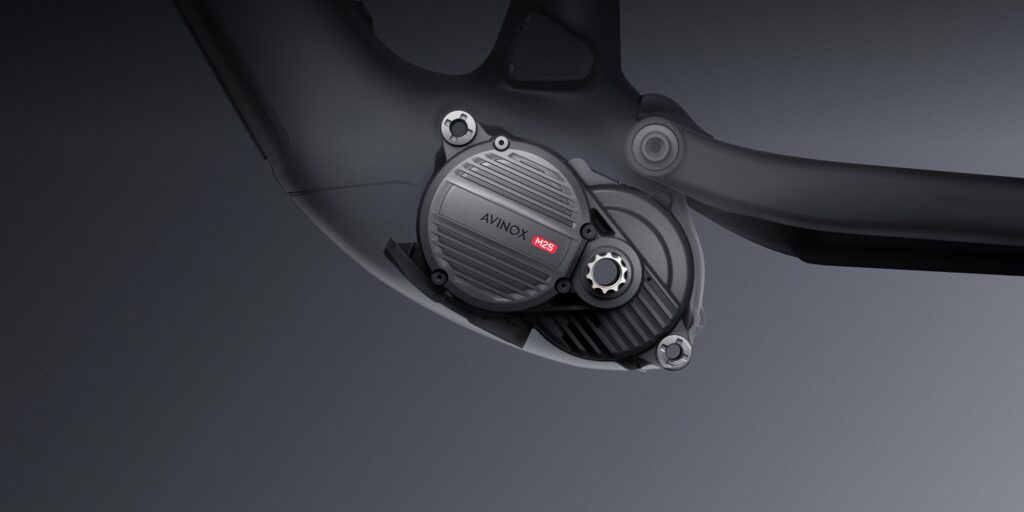
An idler carries your entire drive load, all day, at motor torque. The Druid E’s is an 18-tooth steel sprocket on two Enduro solid-lube bearings, and every part of that spec is a trade someone thought about. A bigger pulley bends the chain less as it passes over and puts more teeth against the load. Steel gives up a few grams for wear resistance in a part that is, whatever the packaging says, drivetrain. Two bearings share the support instead of asking one to do the whole job, which looks over-built right up until the middle of winter. I’ve had enough idlers apart on the bench to have opinions here. The spec I put back on the rack is the opposite one: the smallest, lightest pulley the packaging allowed, spinning on a single bearing, doing a structural job on a jockey-wheel budget.
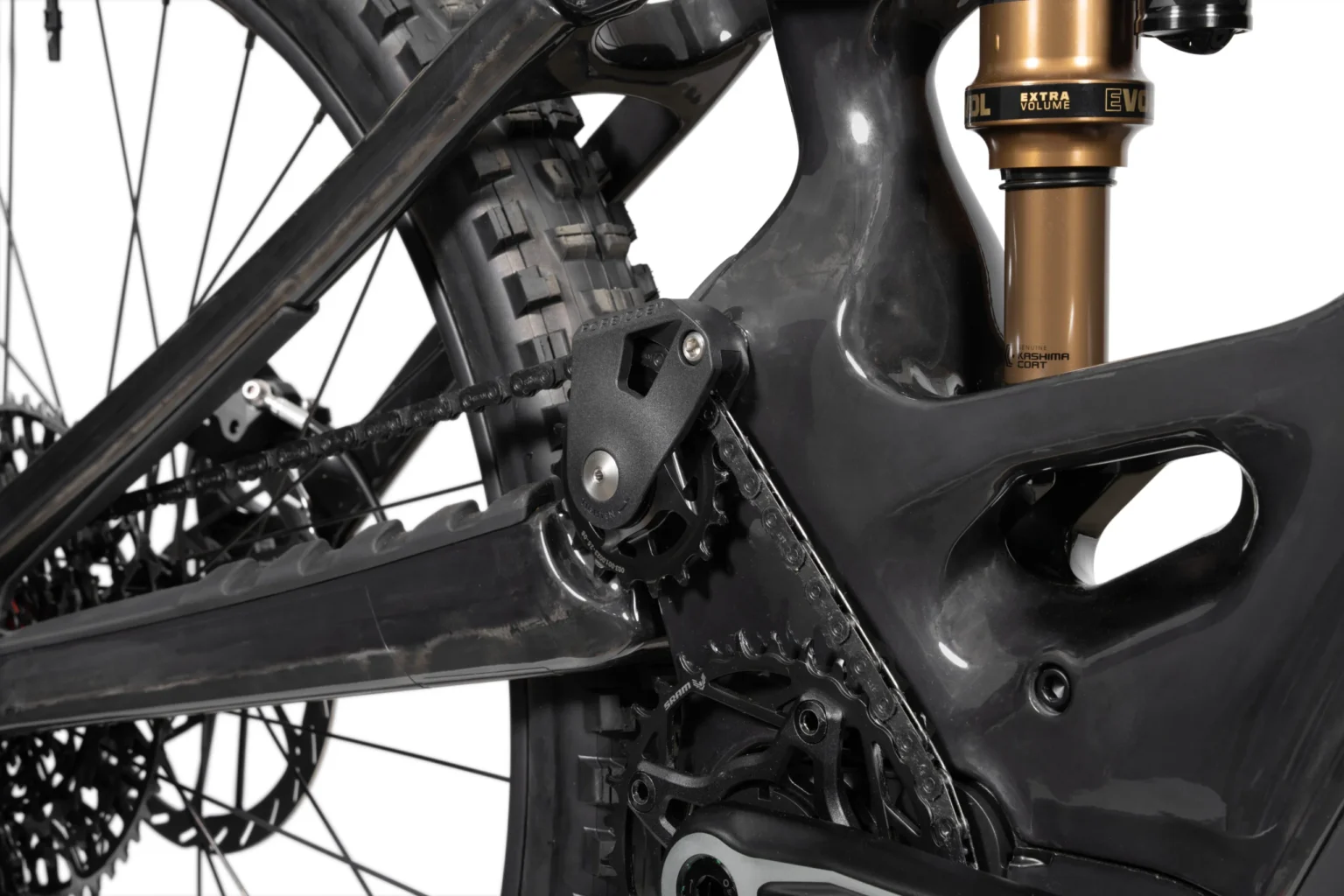
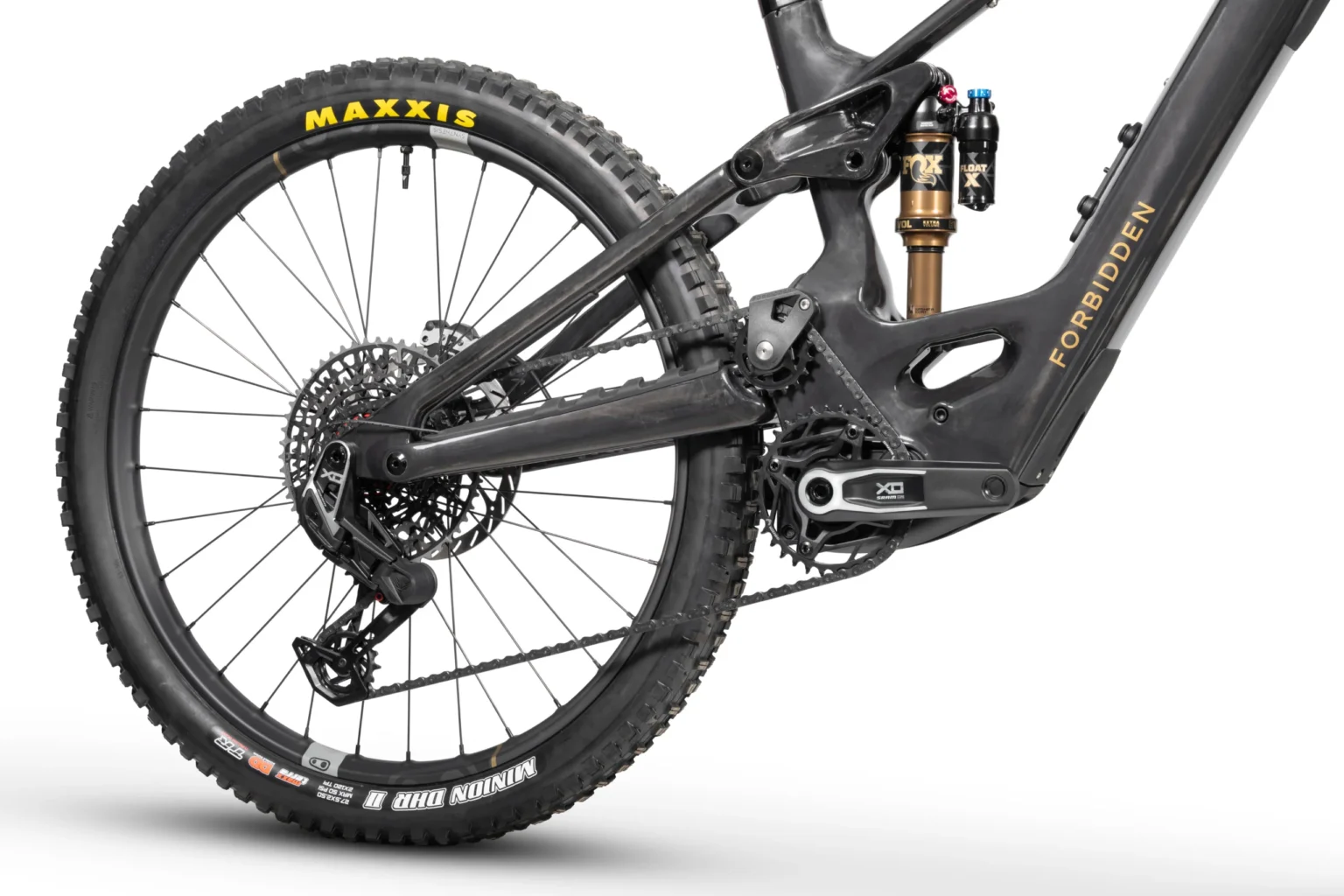
Where it mounts matters too. Forbidden hangs the idler on the frame and runs the same rear triangle across every size, so idler, ring and cassette keep the same relationship on an S1 as on an S4, and the chain’s influence on the suspension stays consistent through the stroke. Swingarm-mounted idlers change that relationship as the bike cycles. Engineers argue for both layouts, and the differences are subtler than either camp admits. Consistency is the one I want under me.
One more check, and anyone can do it from a side-on photo. Follow the chain. On a sorted design it wraps generously around the chainring, past the top of the ring. A guide isn’t automatically a red flag, because guides earn their keep on any bike that gets ridden hard. But if the design needs the guide because the chain barely engages the ring, ask why. Forbidden knows this lesson better than anyone. They learnt it in public. The first Druid ran a lower guide, and as Forbidden explained at the V2 launch, the idler moved rearward to increase chainring wrap until the guide had nothing left to do.
Scars: the development history
Which brings me to the last thing I look for, and it isn’t on any chart.
That Druid story. Not enough wrap on version one. Idler relocated, tooth count up from 16 to 18, steel where alloy had been, wear patterns studied. The bike has a history: something didn’t work, someone found it, and the next version changed because of it. Forbidden has been chasing the rearward-axle-path idea since the original Druid in 2019, back when it was still an oddity on anything without a number board, through the Druid V2 in 2023 and into today’s Trifecta V3 platform, built around the motor instead of adapted to one. Each pass found the platform’s limits in production and fixed them.
I’d rather buy that bike than a brilliant first attempt. Maybe the first attempt really is brilliant. It happens. But an e-bike puts vastly more load through its drivetrain and suspension in a day than a pedal bike can, and every shortcut gets amplified to match. Somebody has to be the test programme. I’d prefer it wasn’t you.
What I don’t get excited about
A high pivot that exists because marketing wanted one. The biggest rearward number on the internet. Flip chips by the fistful on a bike that hasn’t sorted its fundamentals. An idler that photographs well. A geometry chart full of individually excellent numbers whose relationships to each other were never designed.
Single numbers are easy. Systems are hard. Systems are the whole game.
So no, I’m not hunting a magic pivot height. I’m looking for evidence that the pieces were designed to work together, by people who made their mistakes somewhere other than my bike. Show me the geometry, the kinematics and the changelog, and I’m interested. Show me big numbers and a tagline, and I’m walking.
The Druid E and Dreadnought E are on our floor because they pass this list. Interests declared, evidence linked, conclusions yours. If you’d rather run the checklist on dirt than on paper, you know where we are.
Chase great dirt.