

Two motors, one system — which one belongs on your bike?
When Avinox launched its second-generation drive units in April 2026, the headline numbers did the talking. 150 Nm. 1,500 watts. Figures that sounded like motorbike territory a couple of seasons ago, now hanging off a 2.6 kg motor.
But there are two motors in the range — the M2 and the M2S — and the naming doesn’t make the difference obvious. They look nearly identical. They weigh nearly the same. One of them is dramatically more powerful.
So which one belongs on your next bike? Here’s the full picture.
The short answer
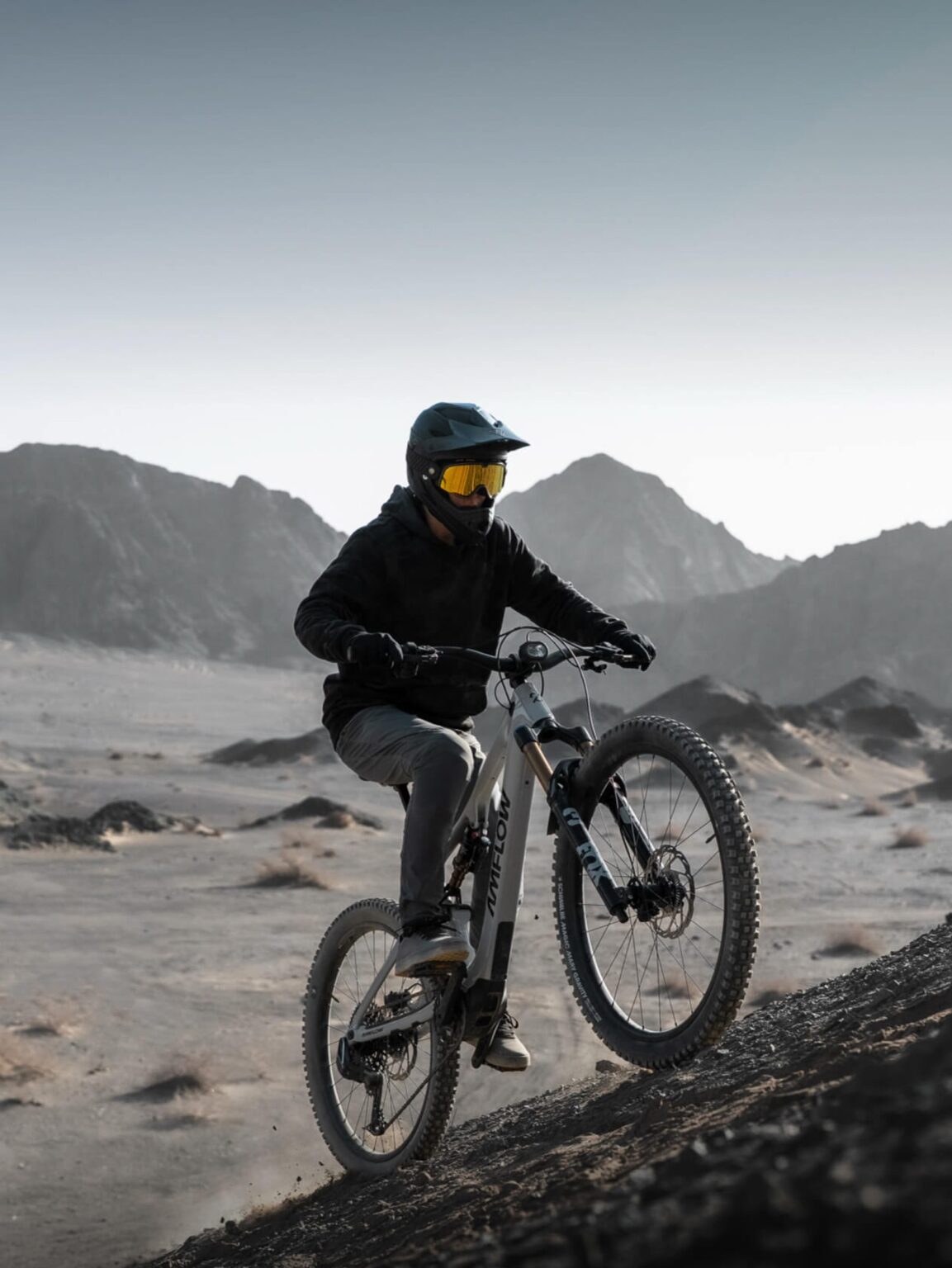
The Avinox M2 and M2S are second-generation eMTB drive units launched in 2026. The M2 delivers 110 Nm of torque and 1,100 W continuously, with a 125 Nm Boost mode. The M2S carries that same performance and adds headroom on top: 130 Nm and 1,300 W continuously, and a 30-second Boost of 150 Nm and 1,500 W when paired with the 700 Wh battery.
Read that carefully, because it’s the key to this whole comparison. The M2S doesn’t ride differently below 1,100 W — it rides the same, then keeps going. The difference between these motors isn’t quality, refinement or character. It’s purely how much top end sits above a level of power that was class-leading a year ago.
Avinox M2 vs M2S at a glance
| Avinox M2 | Avinox M2S | |
|---|---|---|
| Continuous torque | 110 Nm | 130 Nm |
| Continuous power | 1,100 W | 1,300 W |
| Boost mode (30 sec) | 125 Nm / 1,100 W | 150 Nm / 1,500 W* |
| Motor weight | 2.65 kg | 2.59 kg |
| Motor efficiency | 83% | 84.5% |
| Gear design | Helical gears | Dual-meshing gear design |
| Windings | Round copper wire | Flat copper wire |
*The M2S’s full 1,500 W Boost output requires the 700 Wh battery. With other batteries, peak output is lower.
What the two motors share
Before we split hairs, it’s worth being clear: these are siblings, not strangers. Ride either motor and most of the experience is identical.
Both run the same five assist modes — Eco, Trail, Turbo, Auto and Boost. Both use the same 2-inch colour touchscreen on the top tube, the same app, the same wireless controls. Both are claimed to sit under 45 dBA at full noise, which in practice means a subtle whir on the climbs and silence on the way back down.
Both generations also fixed the things riders actually complained about. Sealed low-resistance bearings cut pedalling drag by a claimed 41% over the first-generation motor, so the bike doesn’t fight you above the assist cut-off. And the freewheel is quiet on descents — no clacking gears when the motor’s doing nothing.
The smart features carry across too: turn-by-turn navigation through Komoot, heart-rate-linked assistance that adjusts power to keep you in a target zone, theft alerts, auto-unlock when you walk up to the bike, and Apple Find My built in.
If you’ve read our guide to how Avinox assist modes work, all of it applies to both motors. The difference isn’t how they behave. It’s how hard they can go.
Avinox M2: the refined all-rounder
The M2 is the successor to the motor that shook up the eMTB world on the original Amflow PL. And “successor” undersells it — torque is up, peak power is up 100 W, efficiency climbs to 83%, and the helical gear design runs quieter than before.
Keep some perspective here. The M2’s 1,100 W and 125 Nm Boost out-punches almost every other motor on the market, and it arrives with the same refinement, the same quiet freewheel and the same app ecosystem as the flagship. Barely a year ago, these numbers were the headline. Calling the M2 the “lesser” motor only makes sense inside the Avinox catalogue, and even there it’s misleading: up to 1,100 W and 125 Nm, the M2 and M2S are effectively the same motor.
Who the M2 suits
Most riders, most of the time — and that’s not a diplomatic dodge. 1,100 W is more power than the vast majority of riders ever deploy on real trails. On a typical climb, in Trail or Auto mode, an M2 and an M2S ride identically, because neither is anywhere near its ceiling.
The M2 appears across the range in both integrated and removable-battery bikes. If your riding is about flow, coverage and getting more laps in — rather than winning a torque shoot-out — the M2 gives away nothing you’ll notice.
Avinox M2S: the flagship
The M2S is where Avinox stopped iterating and started showing off.
The numbers first: 130 Nm and 1,300 W continuous, lifting to 150 Nm and 1,500 W for 30 seconds in Boost mode. That’s the most powerful production eMTB drive unit you can currently buy, and it isn’t close.
How it makes the power
The interesting part is how Avinox got there without adding bulk. The M2S swaps conventional round copper windings for flat copper wire, which packs more conductor into the same space and strengthens the magnetic field. Combined with a dual-meshing gear design, the result is a claimed 26% jump in power density over the first-generation motor — against 4.6% for the standard M2.
Heat is the enemy of sustained power, so the M2S adds cooling fins and internal temperature monitoring to hold its output on long alpine climbs rather than tapering off halfway up.
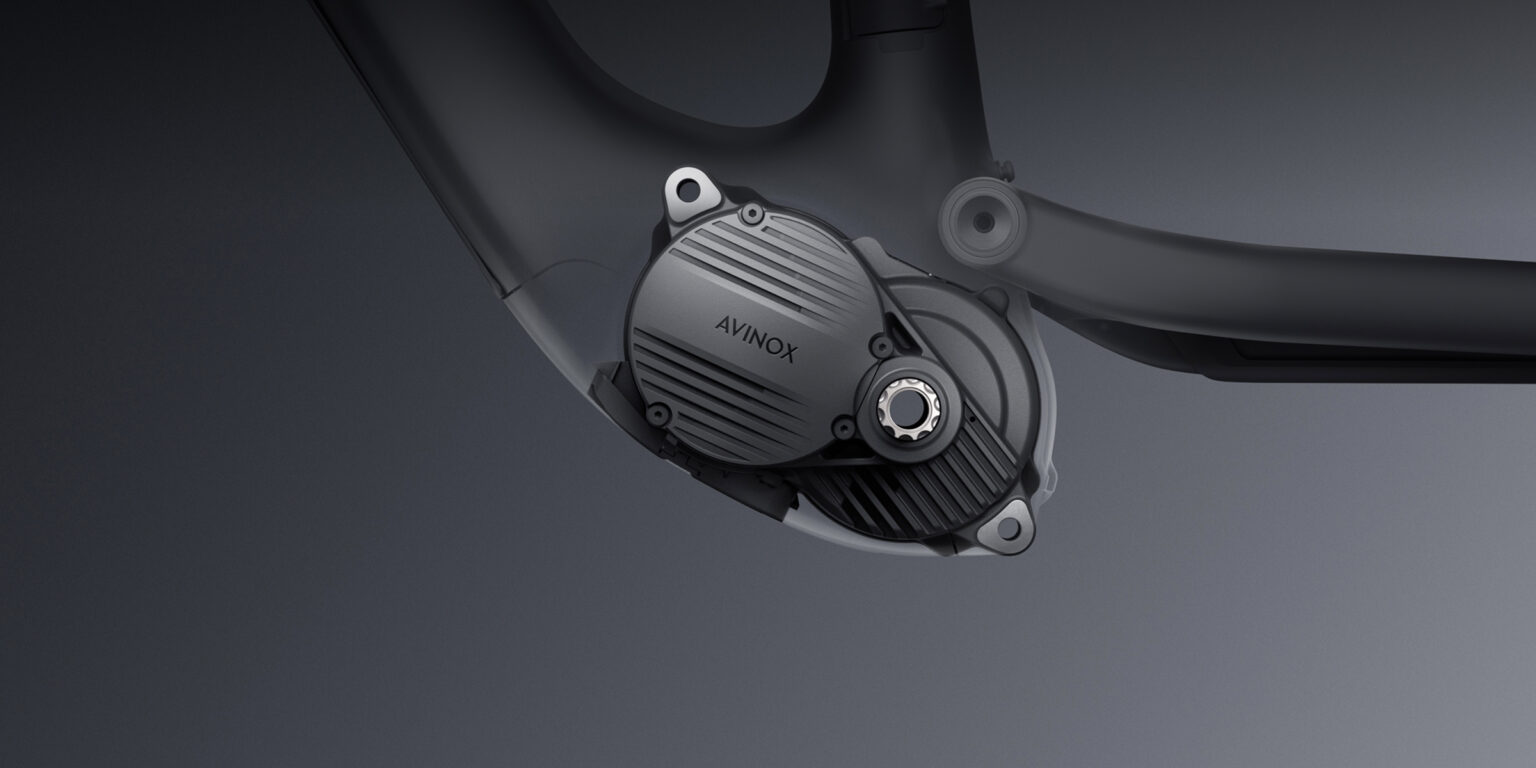
One condition worth knowing: the M2S’s full 1,500 W Boost is only available when it’s paired with the 700 Wh battery. It’s a system, and the battery is part of the equation.
Who the M2S suits
Riders who use climbs as a second descent. Riders doing shuttle-replacement laps where the uphill is purely a means to an end. Heavier riders, tandem-weight loads, steep technical terrain — anywhere torque is the limiting factor, the M2S raises the ceiling.
The honest caveat: power costs energy. Lean on Turbo and Boost and you’ll drain any battery quickly. The M2S is slightly more efficient than the M2 (84.5% vs 83%), but no efficiency gain outruns a 1,500 W habit. If you ride everything in Boost, plan your range accordingly.
Batteries: the other half of the system
Here’s the thing most Avinox M2 vs M2S comparisons miss: battery choice shapes how your bike lives day to day more than 20 Nm ever will — and in the M2S’s case, it decides how much power you actually get.
The battery range spans integrated packs (600 Wh at 2.87 kg, the new 700 Wh at 3.18 kg, and 800 Wh at 3.74 kg) and removable packs (600 Wh at 2.96 kg and 800 Wh at 4 kg). Both motors appear with both formats across the range — it’s a frame design choice, not a motor limitation. The removable 600 Wh can also mount externally as a range extender, taking a compatible bike to a combined 1,400 Wh.
The new 700 Wh battery is the standout. At 220 Wh/kg it’s one of the most energy-dense packs in the industry, and it’s the key that unlocks the M2S’s full 1,500 W Boost — pair the M2S with any other battery and peak output sits lower. With the 12-amp fast charger it goes from flat to 80% in roughly an hour and a quarter.
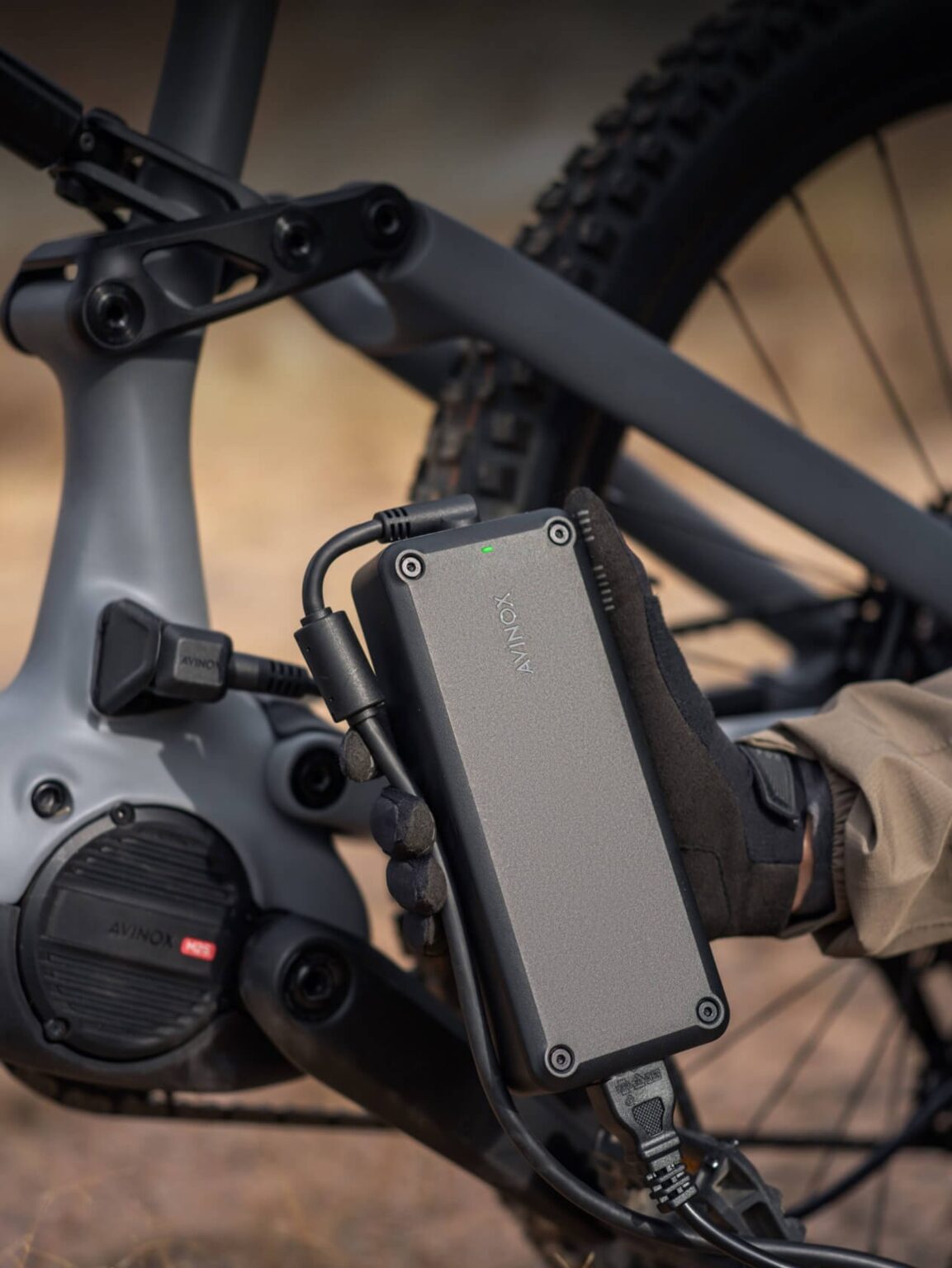
Battery management is handled well, too. You can cap charging anywhere between 70% and 100% to preserve long-term health, and Avinox claims 80% capacity retention after 500 charge cycles.
Which bikes run which motor?
This is where the comparison gets practical, because you don’t buy a motor — you buy a bike.
Amflow PX — both the PX Carbon and PX Carbon Pro run the M2S with the integrated 700 Wh battery. This is the pure performance play: maximum power, minimum bulk, and the battery that unlocks the full 1,500 W. Our Amflow PX and PR buyer’s guide covers the build differences in detail.
Amflow PR — the PR Carbon runs the M2, the PR Carbon Pro upgrades to the M2S, and both use the removable 800 Wh battery. The PR is the big-days bike: same geometry as the PX, but built around swappable range.
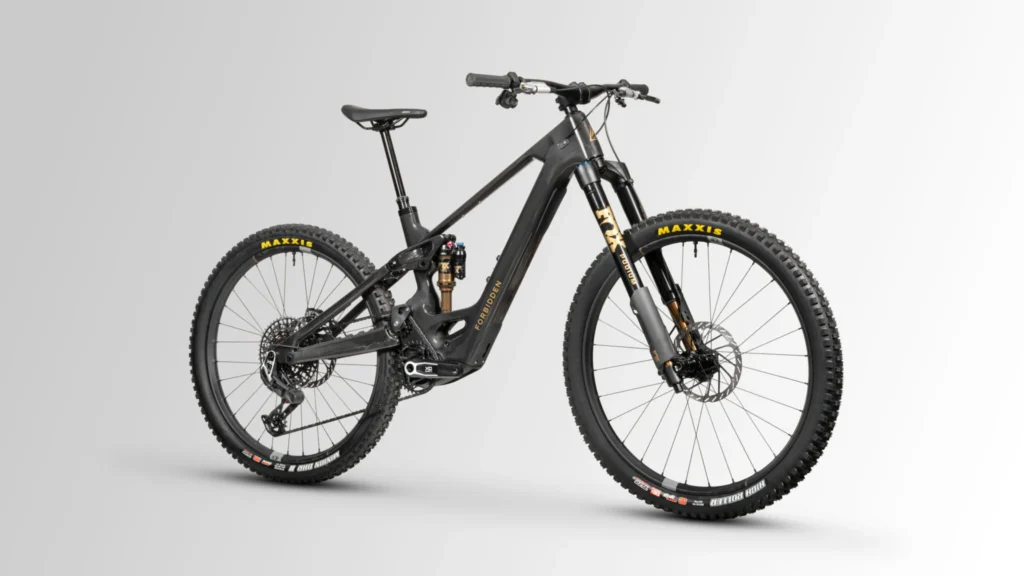
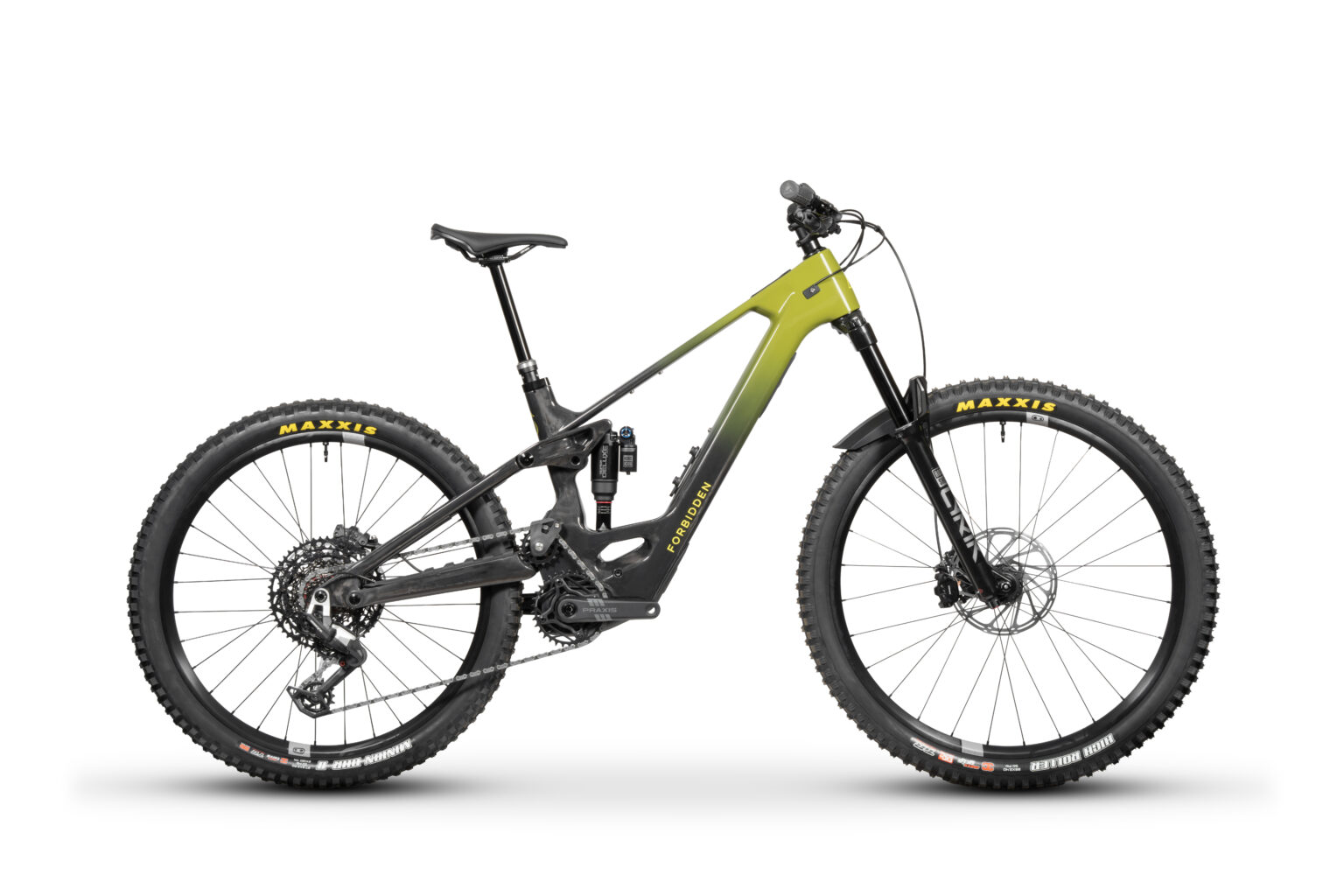
Forbidden Druid E and Dreadnought E — Forbidden splits its builds across both motors: the T1 and T2 builds run the M2S, while T3 and T4 run the M2. Same frame, same geometry, same suspension intent. Don’t let the motor badge steer you past a T3 or T4 — on the trail, the ride these builds deliver is defined by the frame and the 125 Nm they share with the flagship, not by the top-end headroom they don’t. If the build spec suits you, the motor won’t be the thing you’re missing.
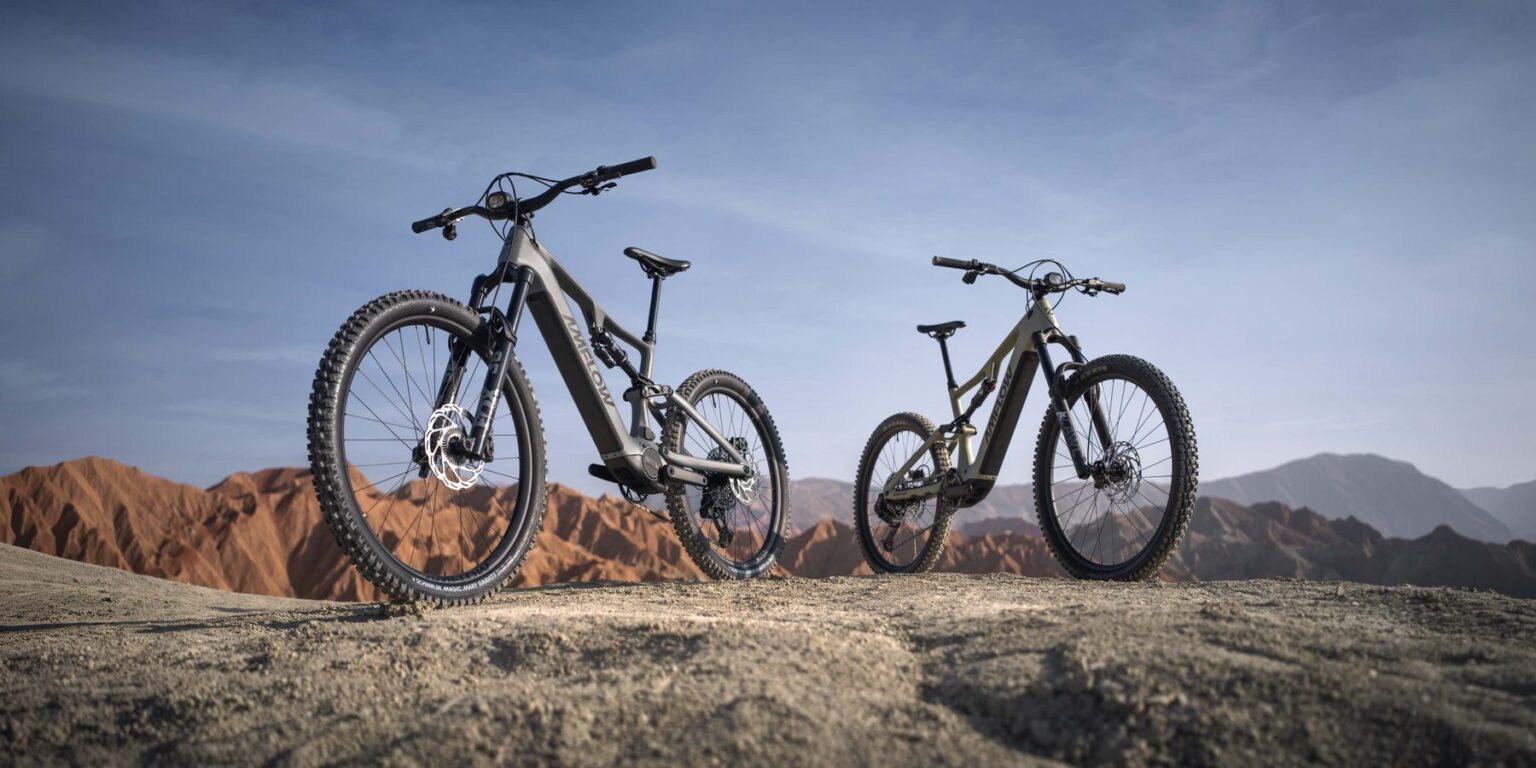
Beyond the brands we carry, the Avinox system now appears across more than twenty manufacturers, including Atherton, Pivot, Canyon, Mondraker, Commencal, Unno and Whyte. Two years ago it was one bike. That tells you something about how this system has landed.
Thinking about one of these bikes? Get in touch and book a test ride — the difference between reading 150 Nm and feeling it is considerable.
How to choose: M2 or M2S
If you’re weighing up the two motors, work through it in this order:
- Start with the bike, not the motor. Frame, geometry, suspension and build spec shape every second of every ride. The motor’s top end shows up in moments. A bike that suits you with the M2 beats a bike that doesn’t with the M2S, every single time.
- Be honest about how you climb. If you treat climbs as transport — which is most of us, most rides — the M2’s 1,100 W is already more than you’ll use. If you attack climbs flat-out, or you’re a heavier rider on genuinely steep terrain, the M2S’s headroom becomes real.
- Understand what the Boost gap actually is. The M2’s Boost lifts torque to 125 Nm. The M2S’s lifts both torque and power, peaking at 150 Nm and 1,500 W for 30 seconds — provided it’s running the 700 Wh battery. That gap lives in crux moves and ledgy pitches, not in general riding.
- Sort your range logistics. Removable battery for carpark swaps and indoor charging, or integrated for cleaner packaging — both motors appear with both formats, so pick the format that fits your riding life.
There’s no wrong answer here, because there’s no lesser motor here. The M2 would have been the class leader last season. The M2S simply added a higher ceiling above it.
The bigger picture
The M2 vs M2S split mirrors what’s happened across eMTB: the market has stopped asking “how much power is possible?” and started asking “how much do you actually want?” Avinox’s answer is to give you both options at essentially the same weight, wrapped in the same quiet, refined, deeply tunable system.
For riders, that’s a good problem. Whichever badge is on the down tube, you’re getting the benchmark drive system of 2026.
Ready to ride one? Shop our Amflow range, browse the Forbidden Druid E, or come see us — we’ll match you to the right motor for the trails you actually ride.
Avinox M2 vs M2S: FAQs
Is the Avinox M2 a lesser motor?
No. Up to 1,100 W and 125 Nm — more output than almost anything else on the market — the M2 and M2S perform the same, with identical refinement, modes, display and app features. The M2S’s advantage exists only above that level, in a top end most riders rarely touch. A bike isn’t a compromise because it runs the M2.
Is the Avinox M2S heavier than the M2?
No — surprisingly, it’s lighter. The M2S weighs 2.59 kg against the M2’s 2.65 kg, despite producing 200 W more continuous power. Flat copper windings and a denser internal layout pack more output into less mass.
How long does Avinox Boost mode last?
Boost runs for 30 seconds per activation on both motors. On the M2 it delivers 125 Nm at 1,100 W; on the M2S it delivers 150 Nm and 1,500 W when paired with the 700 Wh battery. It’s designed for crux moves and steep pitches, not sustained climbing.
Do the M2 and M2S use the same batteries?
Yes — both motors run across the same Avinox battery ecosystem, in integrated and removable formats, and the pairing is a frame design choice rather than a motor limitation. The one system-level detail: the M2S needs the 700 Wh battery to deliver its full 1,500 W Boost.
Is the M2 the same as the original Avinox motor?
No. The original motor peaked at 120 Nm and 1,000 W in Boost. The M2 lifts that to 125 Nm and 1,100 W, runs quieter helical gears, cuts pedalling drag by a claimed 41%, and improves efficiency to 83%.
Which bikes at Outset run the Avinox M2S?
The Amflow PX Carbon and Carbon Pro, the Amflow PR Carbon Pro, and the T1 and T2 builds of the Forbidden Druid E and Dreadnought E. The Amflow PR Carbon and Forbidden T3/T4 builds run the M2.
Does the extra power of the M2S hurt range?
Only if you use it. Motor efficiency is marginally better on the M2S (84.5% vs 83%), so like-for-like riding gives similar range. Ride hard in Turbo or Boost, though, and consumption climbs fast — that’s physics, not a flaw.